News
After the $6.3B Hack, Is Your Crypto Safe?
Binance lost $6.3bn from its hot wallets. Exchanges are now publishing cold-storage figures — here is how to read them and check your own exchange.
In this article
Update, 16 November 2026: Binance has reopened withdrawals on 87 networks, with full reopening targeted by the end of next week. See our follow-up: Binance Hack Recovery: Withdrawals Are Back — Mostly.
On 29 October 2026, hackers drained roughly $6.3 billion from Binance's internet-connected hot wallets — the largest cryptocurrency theft on record. The money is mostly back: Binance says it has now replaced all of the affected assets. But the more interesting story is what happened next. Within two weeks, rival exchanges started publishing a number they had rarely shared before — how much of your money they actually keep offline — and one exchange invented a whole new standard to prove it. If you hold crypto on any exchange, these disclosures are the clearest window you have ever had into how safe your money really is.
What happened on 29 October
Attackers got into Binance through a fake job interview that compromised employee systems, then sent fraudulent withdrawal requests from the exchange's hot wallets — the online wallets used to process day-to-day withdrawals. The FBI has attributed the theft to TraderTraitor, a North Korea-linked hacking group. Binance says no private key leaked.
Recovery moved fast. Binance reported about 95% of affected assets replenished within days, about 98% by 5 November, and on 12 November said all stolen assets had been replaced. Roughly $2.85 billion of the stolen funds was frozen or intercepted. Even so, customers pulled $3.64 billion in net withdrawals within hours of reopening, and Bitcoin fell to a six-week low of $76,275.
Why proof of reserves was not enough
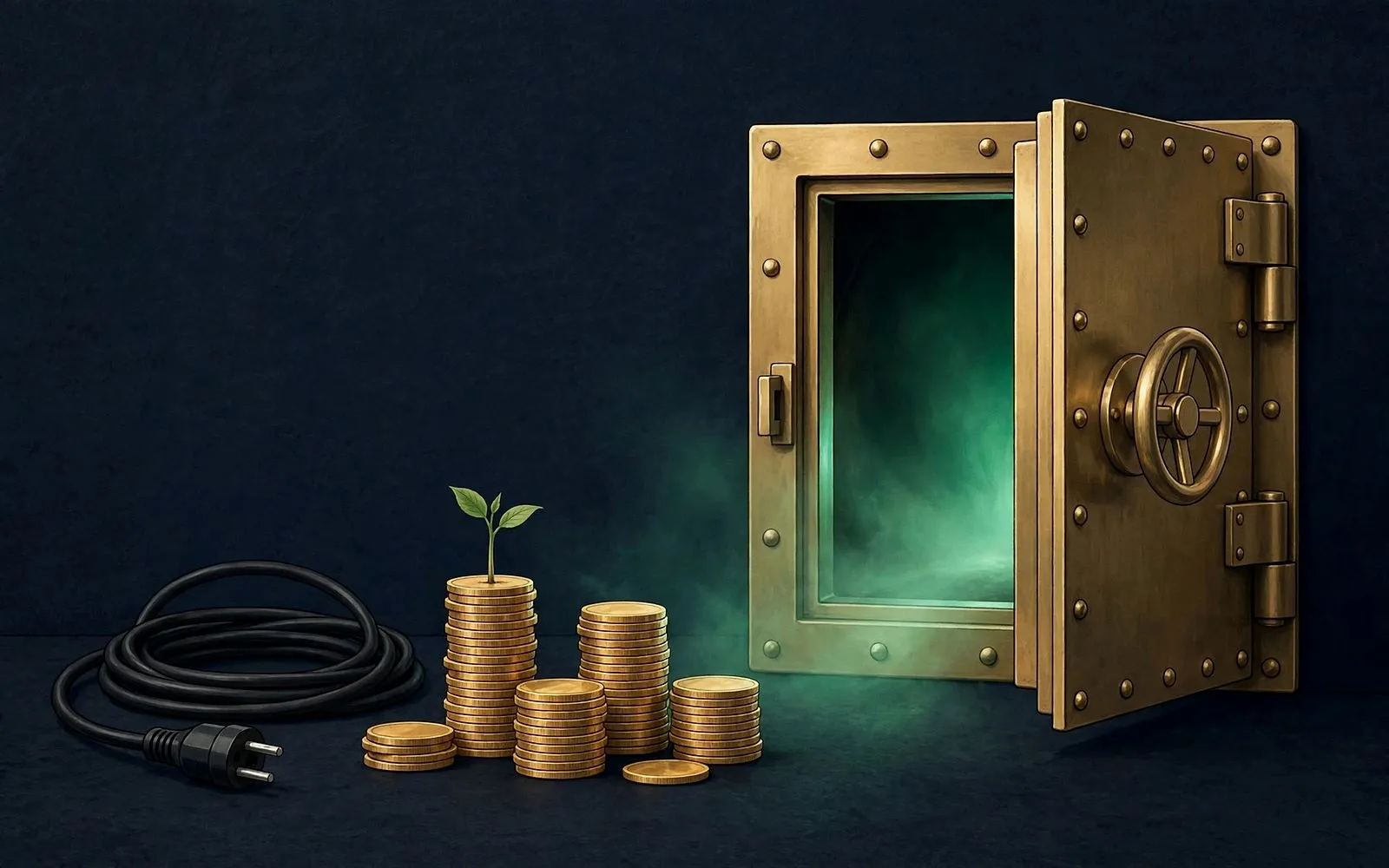
After the FTX collapse in 2022, exchanges began publishing proof of reserves: cryptographic evidence that they hold at least as much crypto as their customers are owed. Binance had done exactly that. The problem the hack exposed is that proof of reserves answers the wrong question. It shows the assets exist. It says nothing about where they sit — and assets in an internet-connected hot wallet can be moved by anyone who gets in. Cold storage, wallets kept offline, cannot be drained remotely. So the question that matters is not only "does the exchange have my coins?" but "how much of them are offline, out of reach?"
The hack exposed a fundamental weakness in the proof-of-reserves model: Binance had published proof that it held enough assets to cover customer balances, but a large share of those assets sat in hot wallets that proved vulnerable.
The numbers exchanges are now publishing
| Exchange | Cold storage share | What it covers |
|---|---|---|
| Coinbase | More than 99% of customer assets | Held 1:1, customer property, not lent without authorisation |
| Gate | 88.26% of holdings offline | Cold storage covers 104.58% of customer assets |
| Upbit (South Korea) | 99.17% offline | Reported to the Financial Supervisory Service |
| Bithumb (South Korea) | 94.76% offline | Reported to the Financial Supervisory Service |
| Coinone (South Korea) | 85% offline | Reported to the Financial Supervisory Service |
| Binance | Not disclosed as a percentage | Proof of reserves expanded from 10 to 44 tokens |
Coinbase made its disclosure in a blog post on 4 November, saying it was untouched by the breach and that its custody vault assets sit entirely in cold storage. Gate went further and launched a new framework called Proof of Security, which measures whether an exchange holds enough in cold storage to cover all customer balances even if its hot wallets were completely compromised. Gate reported total reserves of $8.69 billion — 118.49% of customer assets, or about $1.18 backing every $1 owed — with an independent audit underway. Binance completed a new proof-of-reserves snapshot on 4 November covering 44 tokens, up from 10.
The number to look for: the cold-storage percentage. A high proof-of-reserves ratio means little if most of the assets sit in hot wallets. Ask your exchange for both figures — total reserves and the share held offline.
Regulators moved first in South Korea
South Korea's Financial Services Commission held an emergency meeting on 2 November, directing major exchanges to raise cold-wallet storage ratios, run 24-hour withdrawal monitoring, and build extra reserves. Under South Korea's Virtual Asset User Protection Act, exchanges must already keep at least 80% of customer assets in cold wallets. No other major regulator has yet set a cold-storage floor, but the Korean response is being watched as a possible template.
The market has already voted with its feet. Binance's share of spot trading fell to about 42%, from roughly 48% before the hack and about 51% in mid-August, according to Kaiko data cited by The Business Times. OKX rose to about 14% and Coinbase to about 9.6%. And the threat has not gone away: on 12 November, the US Justice Department said North Korean hackers had stolen more than $400 million in cryptocurrency over the past 18 months.
What this means for your money: a five-point check
You cannot audit an exchange yourself, but you can run five quick checks before you leave meaningful sums on one:
- Read the cold-storage figure, not just proof of reserves. Look for a published cold-storage percentage and a proof-of-reserves report you can verify yourself. If an exchange publishes neither, that is your answer.
- Check whether the figures are audited. Self-reported numbers are a start; an independent audit is worth far more. Gate's audit is still underway — treat unaudited claims as provisional.
- Test withdrawals with a small amount. Slow, capped or unexplained withdrawal delays are the earliest warning sign of trouble.
- Do not keep everything in one place. Spread holdings across two exchanges, or move long-term holdings to self-custody — a hardware wallet you control.
- Remember what is not protected. In the UK, crypto held on an exchange is not covered by the Financial Services Compensation Scheme, and in the US it is not FDIC-insured. If the exchange fails, there is no deposit guarantee to fall back on.
Do not mistake "replaced" for "recovered". Binance replenished the stolen assets from its own resources — the coins themselves were largely laundered through about 12,000 wallets in under four days, according to Elliptic. The customers were made whole; the stolen crypto was not, for the most part, clawed back.
Frequently asked questions
Is my crypto safe on Binance now?
Binance says all affected assets have been replaced, and withdrawals reopened on 87 networks on 14 November, with full reopening targeted by the end of the following week. It now publishes proof of reserves across 44 tokens. But it has not published a cold-storage percentage, so you cannot yet compare its offline holdings with Coinbase's 99%-plus or Gate's 88%.
What is the difference between proof of reserves and proof of security?
Proof of reserves shows an exchange holds enough assets to cover what it owes customers. Proof of security, Gate's new standard, shows enough of those assets are held in cold storage to cover customer balances even if every hot wallet were drained. The first answers "does the money exist?"; the second answers "can it be stolen?"
Should I move my crypto to a hardware wallet?
For money you do not plan to trade soon, self-custody removes exchange risk entirely — but it replaces it with your own responsibility for seed phrases and device security. Many people split the difference: trading funds on an exchange, long-term holdings in cold storage they control.
Key takeaways
- The $6.3 billion Binance hack exposed the gap in proof of reserves: it proves assets exist, not that they are stored safely.
- Coinbase says more than 99% of customer assets sit in cold storage; Gate's new Proof of Security standard reports 88.26% offline and reserves at 118.49% of customer assets.
- South Korea's regulator acted within days, enforcing an 80% cold-storage floor and 24-hour withdrawal monitoring.
- Binance has replaced all stolen assets, but its market share has slipped to about 42% as traders move funds elsewhere.
- Check your exchange's cold-storage figure and audit status, test withdrawals, and never treat an exchange account as a protected savings account — it is not covered by the FSCS or FDIC.
The Binance hack will be remembered less for the money stolen than for the question it forced into the open: not whether exchanges hold your coins, but where they keep them. Your next step is simple: open your exchange's security page today and find its cold-storage figure. If you cannot find one, that tells you everything you need to know.
Sources
The MoneyHabit editorial desk researches, writes and reviews every article against our editorial policy.
The Sunday Habit
One useful money idea, every week.
A short, practical email every Sunday — no spam, no selling your address, unsubscribe anytime.
Advertisement
More in Money News & Explainers

Money News & Explainers · News
MEXC's Crypto Card Is Dead: What Cardholders Must Do
MEXC killed its Global Card less than three months after launch. Your balance, subscriptions and records all have deadlines — here's what to do first.
18 November 2026 · 10 min read
Money News & Explainers · News
Mercado Bitcoin's $48.6M Hack: What Happened Next
Brazil's largest crypto exchange lost $48.6M on 2 November. Cash is moving again — but crypto is still frozen. The full timeline, and what it means for you.
18 November 2026 · 10 min read

Money News & Explainers · Explainer
Hong Kong's Crypto Licensing Bill: What It Means for You
Hong Kong will license crypto dealers, advisers, managers and custodians by year-end — and only 2 of 36 stablecoin applicants made the cut.
18 November 2026 · 10 min read