News
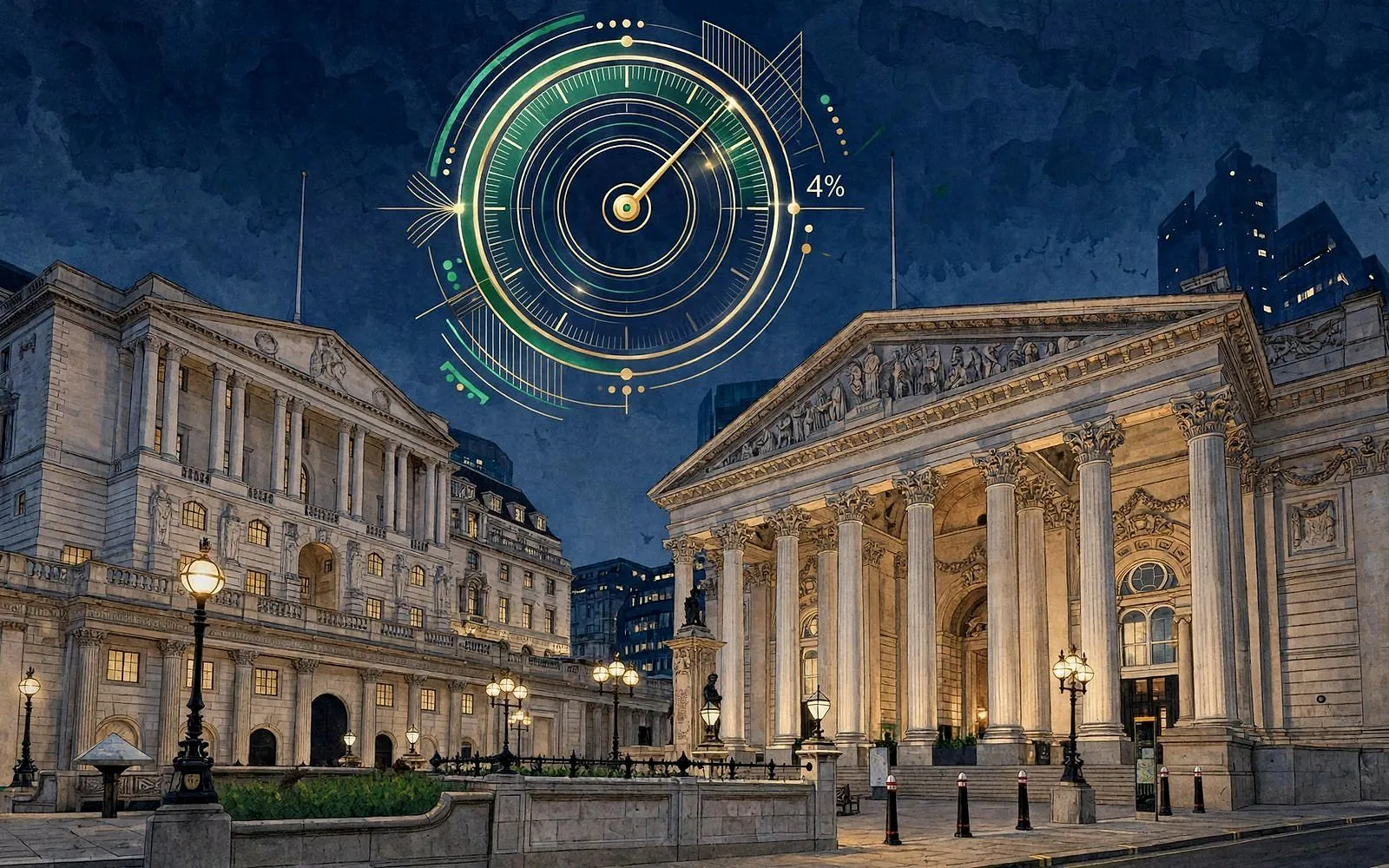
Bank Rate Hits 4%: Your Mortgage, Savings and What's Next
Bank Rate rose to 4% on 5 November — the first rise in over three years. What it costs borrowers, what savers gain, and what happens next.
In this article
- The decision in brief
- Why the Bank acted now
- What it means for your mortgage
- The strange twist: fixed rates could get cheaper
- What it means for your savings
- The Budget sting: savers will pay more tax from April 2027
- What happens next?
- The global picture: rates are rising again
- What to do now
- Frequently asked questions
- Key takeaways
The decision in brief
On Thursday 5 November 2026, the Bank of England raised Bank Rate from 3.75% to 4%. It is the first increase in more than three years — the last rise was in August 2023 — and it ends a run of six consecutive meetings where the rate was held. The Monetary Policy Committee voted 8 to 1 in favour, with Catherine Mann the lone dissenter, arguing for a bigger rise to 4.25% instead.
The reason is inflation. Consumer Prices Index inflation stood at 3.5% in the 12 months to September 2026, up from 3.1% in August and well above the Bank's 2% target. The Bank now expects inflation to climb to around 5% by the middle of 2027, pushed higher by energy prices linked to the conflict in the Middle East, which the Bank's November Monetary Policy Summary notes is now in its ninth month. Governor Andrew Bailey stressed the rise was warranted by higher energy prices, but was not the start of a cycle of increases — what happens next depends largely on the Middle East and whether energy costs feed into wages and wider prices.
For households, the move cuts two ways. Borrowers on tracker and variable mortgages will pay more within weeks. Savers, on the other hand, should see the best savings rates edge higher — though, as ever, the gains arrive more slowly than the pain. Here is what the 4% rate means for your money, in numbers.
Why the Bank acted now
The Bank's own words explain the decision. The Monetary Policy Committee said that "while the direct effects of higher energy prices are clear, and will continue to feed into firm and household energy bills, there remains limited evidence of knock-on effects on other prices and wages. However, the degree of inflationary pressure in the pipeline is now sufficient to warrant an increase in Bank Rate."
In plain terms: the Bank does not yet see a wage-price spiral, but it does see enough inflation building up in the pipeline — mainly through energy — that waiting felt riskier than acting. Nicholas Mendes, mortgage manager at broker John Charcol, called it "a precautionary move rather than a sign the economy was overheating", adding that "with inflation rising and expected to climb further early next year, the MPC chose to act before higher energy costs could feed into wages and wider prices."
The Bank raised rates not because the economy is overheating, but to stop higher energy prices leaking into wages and everything else. That distinction matters — it is why the next move is far from certain.
It is also worth noting what the Bank did not do. It did not signal a series of rises. Bailey was explicit that the path from here depends mainly on the Middle East, and that further rises are likely to be avoided only if there is real progress towards settling the conflict. The next decision is on Thursday 17 December 2026.
What it means for your mortgage
If you are on a tracker mortgage, the effect is automatic and fast. Your rate rises by the full 0.25 percentage points, which MoneySavingExpert puts at roughly £15 a month more for every £100,000 of mortgage debt. Our own calculation on a £200,000 repayment mortgage over 25 years confirms the scale: moving from 4.5% to 4.75% lifts the monthly payment from about £1,112 to about £1,140 — an extra £29 a month, or roughly £343 a year.
| Mortgage balance | Extra per month | Extra per year |
|---|---|---|
| £100,000 | ~£14 | ~£171 |
| £200,000 | ~£29 | ~£343 |
| £300,000 | ~£43 | ~£514 |
| £400,000 | ~£57 | ~£686 |
Illustrative: 25-year repayment mortgage, rate rising from 4.5% to 4.75%. Your exact increase depends on your remaining term, balance and rate.
If you are on a standard variable rate (SVR) — the rate you roll onto when a fixed deal ends — expect your lender to pass on up to the full 0.25 points, though some may pass on slightly less. SVRs are normally far more expensive than the best fixed or tracker deals, and right now a typical SVR sits between 4.9% and 6.9%. If you are on one, this rise is the nudge to switch: the top two- and five-year fixed deals currently start from around 4.9%, which for many borrowers is cheaper than their SVR even after the rise.
If you are on a fixed rate, nothing changes until your deal ends. But if your fix ends in the next three to six months, now is the time to start looking. Many mortgage offers can be secured several months in advance, and you can usually switch to a cheaper deal if one appears before completion. Check product-transfer offers from your existing lender too — they are often quicker and cheaper than a full remortgage.
The strange twist: fixed rates could get cheaper
Here is the counterintuitive part. A rise in Bank Rate does not automatically mean higher fixed mortgage rates. Fixed deals are priced off swap rates — the market's view of where interest rates are heading — not off Bank Rate itself. Fixed rates have already risen over the past six months while Bank Rate stayed flat, because markets were pricing in exactly this rise and more.
As Martin Lewis explained on The Martin Lewis Money Show Live on 20 October, if the Bank raises rates by less than the market feared, fixed rates can actually edge down. Capital Economics, for example, expects only two more rises of about half a point in total before rates start falling again — a milder path than the market has priced in. If that view proves right, "we could be in a perverse scenario, where base rates go up, but because they don't go up as much as the markets expect them to, fixed rates get, not much, but get a little bit cheaper."
There are already signs of it. Barclays, Nationwide, Santander and Halifax have just lowered some of their rates, and there are still a fair few sub-5% fixes available. The lesson for borrowers: do not assume a Bank Rate rise means you should grab the first fix you see. Compare, and remember that a rate you can lock in today can often be swapped for a cheaper one before completion if the market moves your way.
Coming off a fix in the next six months? Start the search now, lock in a rate you can live with, and keep checking — if a cheaper deal appears before your completion date, most lenders let you switch for free.
What it means for your savings
Savers are the winners on paper, but the win is smaller and slower than the mortgage pain. Since the last rate announcement in September, the top easy-access savings rates have climbed slightly — you can now get 4.5% or more with the top accounts. MoneySavingExpert's benchmark easy-access rate is currently 4.57% from Oxbury Bank, and it notes rates of up to 6% are available elsewhere. If you can lock money away, RCI Bank pays 5.3% fixed for two years, Afin Bank pays 5.4% for five years, and MBNA (part of Lloyds) pays 5.1% for one year.
But the average saver earns far less. Moneyfacts put the average easy-access savings rate at 2.56% on a £10,000 balance at the start of November — barely above half the best rate, and below September's 3.5% inflation. The gap is worth real money:
| Balance | At 2.56% (average) | At 4.57% (best easy-access) | Extra per year |
|---|---|---|---|
| £5,000 | £128 | £229 | £101 |
| £10,000 | £256 | £457 | £201 |
| £25,000 | £640 | £1,143 | £503 |
| £50,000 | £1,280 | £2,285 | £1,005 |
Interest before tax, at the rates quoted above. Your own figures will vary with the account and the tax you pay.
Two things to keep in mind. First, at 4.57% against 3.5% inflation, the best easy-access accounts are only just beating inflation in real terms — around 1% a year in purchasing-power terms. At the 2.56% average, your money is still losing value. Second, banks are under no obligation to pass the rise on to savers at all, or quickly. Tracker mortgages move within weeks; savings rates drift up over months, if they move. Check your rate today rather than assuming the rise has reached you.
Do not wait for your bank to pass the rise on. Millions of savers sit on rates far below the best available, and the gap — over £1,000 a year on a £50,000 balance — is the single easiest win in personal finance right now.
The Budget sting: savers will pay more tax from April 2027
The rate rise arrives alongside a less welcome change from the Autumn Budget on 28 October. From 6 April 2027, tax rates on savings and property income rise by a further two percentage points across all bands — 24% for basic-rate taxpayers, 44% for higher-rate and 49% for additional-rate taxpayers — while the Personal Savings Allowance stays frozen at £1,000 for basic-rate and £500 for higher-rate taxpayers.
That matters because more savers will now pay tax on their interest. A basic-rate taxpayer with £10,000 earning 4.57% makes £457 of interest a year — inside the £1,000 allowance, so no tax. But with £25,000 at the same rate, the interest is £1,143, and £143 of it is taxable at 24%, costing about £34. On larger balances the bite grows, and the frozen allowance means the tax net widens every year as rates and balances rise.
The good news from the same Budget: the annual Cash ISA limit is being retained at £20,000 — it had been due to fall to £12,000 for under-65s from April. Interest inside an ISA is tax-free, so for anyone with savings above the Personal Savings Allowance, filling the ISA first is now more valuable than ever. A new First Time Buyer ISA arrives from April 2029, and existing Lifetime ISA holders keep their accounts under the current rules.
What happens next?
Nobody knows — and the experts disagree, which is itself useful information. Here is the range of views:
- The market's view: traders are pricing in another rise as early as February 2027, a second in the spring and a third before the end of the year, taking Bank Rate to around 4.75% by Christmas 2027. A few weeks ago the market was pricing in 5% by the end of 2027.
- Scotiabank's economists: expect the Bank to skip December, then hike again by 0.25 points in February 2027 to 4.25%, with inflation peaking at 4.8–4.9% in the second half of 2027.
- Capital Economics: expects only about two more rises in total before rates start coming down again — a much milder path than the market has priced.
- John Charcol's view: with pay growth slowing and the jobs market softer, there is little sign yet of the broader inflation that would justify a long series of increases. If inflation peaks early next year as expected, pressure for further rises should ease.
Sarah Coles, head of personal finance at AJ Bell, summed up the uncertainty: "This is very unlikely to be the last of the rises. The market is pricing in another rise as early as February next year, with a second in the spring and a third before the end of the year. At the moment, it's expecting us to reach Christmas 2027 with a rate of 4.75%. Of course, this isn't nailed on."
The honest reading: plan for rates to stay around 4% or a little higher for at least the next year. Do not budget on cuts, and do not panic about 5% either. The next hard data point is the 17 December decision.
The global picture: rates are rising again
The UK is not alone. The US Federal Reserve held its rate at 3.75%–4% on 28 October, but two of its twelve voters wanted a rise — a hawkish split. In Australia, the Reserve Bank raised its cash rate to 4.85% on 3 November, its fifth rise of 2026 and the highest in nearly 18 years, with the big four banks passing the full rise to variable home loans from 13 November. The pattern is the same everywhere: energy-driven inflation is forcing central banks that spent 2024 and 2025 cutting rates to reverse course.
For UK households, the practical consequence is that the era of steadily falling borrowing costs is over for now. Anyone who planned a remortgage, a big purchase on credit, or a savings switch on the assumption that rates would keep drifting down should re-run the numbers at today's rates.
What to do now
Five moves, in order of urgency:
- Check your mortgage type today. Tracker or SVR? Your payment rises within weeks. Fixed? Note the end date — if it is within six months, start comparing deals now.
- If you are on an SVR, get off it. With typical SVRs at 4.9%–6.9% and the best fixes starting around 4.9%, staying put is usually the most expensive option. Speak to your lender about a product transfer if a full remortgage looks difficult.
- Check your savings rate. If you are earning near the 2.56% average, switching to a top easy-access account at 4.57% is worth £201 a year on £10,000 — and over £1,000 on £50,000. Move the money, then diarise to check again when your fix ends.
- Use your ISA allowance. With savings tax rates rising in April 2027 and the £20,000 Cash ISA limit retained, sheltering interest inside an ISA is worth more than it was. If you have savings above the Personal Savings Allowance, prioritise the ISA.
- Budget for 4%–4.75%, not for cuts. Build your 2027 budget on Bank Rate staying where it is or edging up. If rates fall instead, that is a bonus — not a plan.
Frequently asked questions
Will my mortgage go up straight away?
If you are on a tracker, yes — your rate rises by the full 0.25 points, usually within weeks, adding roughly £15 a month per £100,000 borrowed. If you are on an SVR, your lender will likely pass on up to the full rise. If you are on a fixed rate, nothing changes until the fix ends.
Will my savings rate go up too?
Probably, eventually — but not automatically and not by the full amount. Banks pass rises to borrowers fast and to savers slowly. The top easy-access accounts already pay 4.57%, but the average is only 2.56%. Check your rate and switch if you are below the best.
Could fixed mortgage rates actually fall after a rate rise?
Yes. Fixed rates follow swap rates — the market's expectation of future rates — not Bank Rate itself. If the Bank raises by less than markets feared, fixed deals can edge cheaper. Several lenders cut fixed rates in the days around this decision.
When is the next Bank Rate decision?
Thursday 17 December 2026. Markets currently expect a hold, with the next rise priced in for February 2027, but that depends on inflation and wage data in the meantime.
Does the rate rise affect my credit cards or loans?
Most credit cards and personal loans are fixed-rate products, so the rise does not change what you pay on existing borrowing. New borrowing may get slightly more expensive over time, and the rise makes the case for clearing expensive card debt — at average card rates above 20% — even stronger.
Key takeaways
- Bank Rate rose to 4% on 5 November 2026 — the first increase since August 2023, voted 8 to 1, driven by energy-led inflation at 3.5% and expected to peak near 5% in mid-2027.
- Tracker mortgages rise by the full 0.25 points — about £15 a month per £100,000 borrowed, or £29 a month on a £200,000 loan. SVR borrowers should expect a similar rise and should consider switching.
- Fixed-rate borrowers are unaffected until their deal ends, and fixed deals could even get cheaper, because they follow market expectations rather than Bank Rate itself.
- Savers can now get 4.57% easy-access and over 5% fixed — but the average easy-access rate is only 2.56%, so switching is worth £201 a year on £10,000.
- From April 2027, tax on savings interest rises to 24%/44%/49% while the Personal Savings Allowance stays frozen — making the retained £20,000 Cash ISA limit more valuable than ever.
- Markets price Bank Rate at about 4.75% by Christmas 2027, but forecasters disagree widely. Budget for rates staying at 4% or a little higher, and treat any cut as a bonus.
The Bank of England has made its first move in over three years, and it is a reminder that the direction of travel has changed: the cutting cycle is over, and rates are, for now, going up. The households that come out best are the ones that act on the numbers rather than the headlines — checking their mortgage type, switching off an SVR, moving savings to the top rate, and sheltering interest inside an ISA before the April 2027 tax rise. Do those four things this week, and the 4% rate costs you as little as possible — and might even pay you.
Sources
- MoneySavingExpert — Bank of England hikes base rate to 4%
- House Brief — Bank Rate rises to 4%: what it means for mortgages
- Scotiabank — Hawkish BoE Hike, with More to Follow (5 Nov 2026)
- Mortgage One — Bank of England Raises Rates to 4% (Nov 2026)
- Landlord Knowledge — Bank of England lifts base rate to 4% in 8-1 vote
- Vision / Simply Platform — News in Review: Autumn Budget 2026
- Finder — RBA Survey: fifth rate hike of 2026 leaves average borrower $6,460 a year worse off
The MoneyHabit editorial desk researches, writes and reviews every article against our editorial policy.
The Sunday Habit
One useful money idea, every week.
A short, practical email every Sunday — no spam, no selling your address, unsubscribe anytime.
Advertisement
More in Money News & Explainers
Money News & Explainers · News
Bank Rate Hits 4%: What the Rise Means for Your Money
Bank Rate is 4% — the Bank of England's first hike in over three years. What it costs borrowers, what it pays savers, and five moves to make this week.
5 November 2026 · 8 min read
Money News & Explainers · Explainer
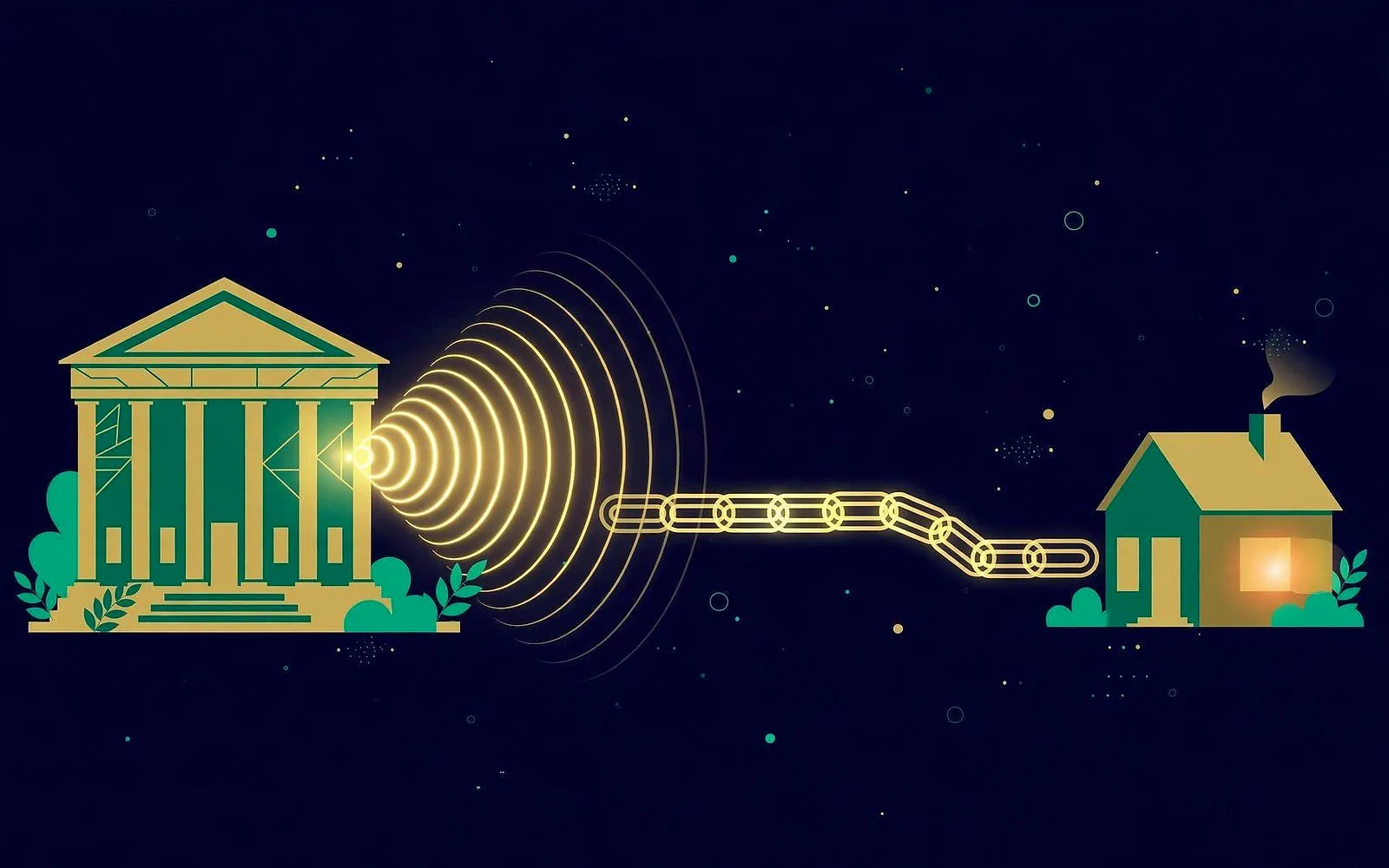
How Interest Rate Decisions Actually Reach Your Mortgage
Two central banks raised rates in one week. Here's how those decisions travel to your mortgage, savings and house price — and what to do about each.
9 November 2026 · 14 min read

Money News & Explainers · News
Pakistan National Savings Rates Rise: What Savers Get Now
National Savings has revised its profit rates for November 2026. We break down every scheme, what tax takes, and whether your money still beats 9.6% inflation.
19 November 2026 · 10 min read