Guide
Gas Prices Spiked Again: Cut Your Fuel Bill
Brent crude hit $116.72 and US petrol averaged $4.29 a gallon. You can't control the pump price — but driving style, tyres and trips can cut your fuel bill.
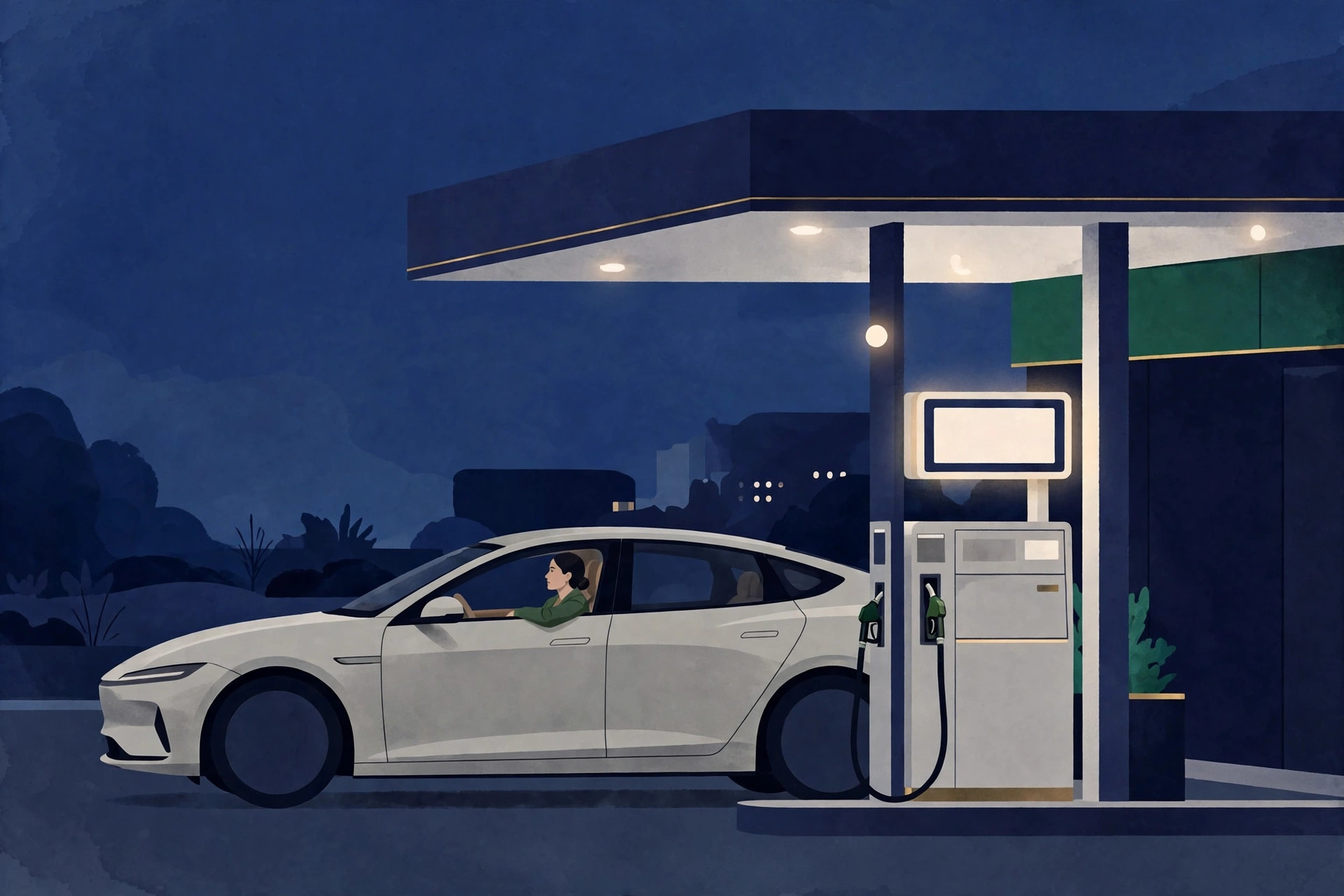
Petrol prices have jumped again, and this time the spike is hard to miss. Brent crude closed at $116.72 a barrel on Friday 24 October 2026 — its highest close since April — while the US national average for a gallon of regular petrol hit $4.29, up from $3.07 a year ago. The American Automobile Association (AAA) says this month is on track to be the most expensive October ever for petrol prices. If your fuel bill has suddenly grown teeth, you are not imagining it — and there are practical ways to shrink it again.
The trigger is supply, not demand. Attacks by Iran-backed Houthi militants on targets across Saudi Arabia, the world's largest crude exporter, plus a standoff in the Strait of Hormuz — the waterway through which much of the world's oil moves — have pushed crude higher for three straight weeks. Brent is up roughly 6% in a week, from under $97 at the start of October. Until that tension eases, pump prices will stay elevated — so control the part of the bill you actually influence: how much fuel you use.
What the spike costs a typical driver
Fuel is one of the few household costs where a small change in price hits immediately and in full. Take a driver covering 12,000 miles a year in a car averaging 25 miles per gallon. At $4.29 a gallon, that is 480 gallons a year — about $2,059 a year on fuel alone. Lift that average to 30 miles per gallon and the same driving needs only 400 gallons, or about $1,716 — a saving of roughly $343 a year, without driving a single mile less.
At $4.29 a gallon, every extra mile per gallon is worth real money. Going from 25 to 30 mpg on 12,000 miles a year saves about $343 — no lifestyle change required.
Drive differently: the biggest free saving
How you drive matters more than what you drive. The US Department of Energy's FuelEconomy.gov puts the numbers plainly:
- Ease off the accelerator. Aggressive speeding and sudden braking can cut fuel economy by 10% to 40%. Smooth, anticipatory driving is the single biggest free saving available.
- Watch your speed. Each 5 mph over 50 mph cuts fuel economy by about 7%. Cruising at 65 instead of 75 pays for itself quickly at today's prices.
- Use cruise control on open roads to hold a steady speed instead of drifting up and down.
- Cut idling. An idling engine uses roughly a quarter to half a gallon of fuel per hour and gets zero miles per gallon. If you are waiting more than a minute or two and it is safe to do so, switch off.
Treat the accelerator as a dimmer switch, not an on-off button: gentle starts and coasting toward red lights cost seconds, not minutes.
Keep the car in fuel-saving shape
Maintenance is not glamorous, but at $4.29 a gallon it pays unusually well:
- Tyre pressure. FuelEconomy.gov notes economy drops about 0.2% for every 1 psi below the recommended pressure across all four tyres. Check monthly — the correct figure is on the sticker inside the driver's door.
- Fix an out-of-tune engine. Repairing a car that is noticeably out of tune can improve efficiency by around 4% on average.
- Use the recommended grade of motor oil. The wrong grade can cost 1% to 2% in fuel economy.
- Lighten the load. An extra 100 pounds costs roughly 1% in fuel economy, and a roof-top cargo box can cut it by 2% to 17%. Take the box off when you are not using it.
Quick win for this week: check your tyre pressures and take the roof box off. Those two five-minute jobs can be worth 5% or more in fuel economy — about $100 a year for the average driver at current prices.
Drive fewer miles, without missing out
The cheapest gallon is the one you never buy. Combining errands into one trip helps twice over: fewer miles, and less driving with a cold, inefficient engine.
- Carpool or share the school run with a neighbour a few days a week — halving your trips halves that fuel cost.
- Work from home one extra day if your employer allows it; for a 20-mile round-trip commute, one day a week saves roughly 1,000 miles a year.
- Walk or cycle the shortest trips. Trips under a mile are the least fuel-efficient of all, because the engine barely warms up.
- Compare prices before you fill up. Prices can vary sharply between stations in the same town, and price-tracking apps can save several dollars per tank.
Buy smarter at the pump
| Habit | What it saves | Effort |
|---|---|---|
| Smooth driving, steady speed | 10–40% of fuel use | None — just attention |
| Correct tyre pressure | ~0.2% per psi under-inflated | 5 minutes a month |
| Removing roof box and excess weight | 2–17% (roof box); ~1% per 100 lbs | 10 minutes once |
| Combining trips | Fewer miles + warmer engine | A little planning |
| Shopping around for fuel | Several dollars per tank | One app check |
Do not let a high fuel bill push you into a bad financial decision. Trading in a paid-off car for a new, more efficient one on finance will almost never pay for itself in fuel savings alone — the monthly payment will dwarf anything you save at the pump. Fix the driving and the maintenance first.
US and UK: the same spike, different numbers
The oil shock is global, but it lands differently on each side of the Atlantic: US drivers buy by the gallon and watch the AAA average; UK drivers buy by the litre and pay fuel duty plus 20% VAT on top of the wholesale price. The saving habits, though, are identical in any car, in any country.
Frequently asked questions
Will petrol prices fall soon?
Not certainly. Prices are driven by Middle East supply fears and will ease if tensions de-escalate, but analysts expect oil to stay elevated into the US midterm elections — so budget as if high prices persist.
Does premium petrol give better mileage?
Not in cars designed for regular fuel. Premium has a higher octane rating, which prevents knocking in high-compression engines, but it contains no extra energy. If your manual says regular is fine, premium is money spent for nothing.
How much can I really save?
A realistic combined saving from driving style, tyres, weight and trip planning is 10% to 20% for most drivers. On our 12,000-mile example at $4.29 a gallon, 10% is about $206 a year — and for higher-mileage drivers, proportionally more.
Key takeaways
- Brent crude hit $116.72 on 24 October 2026 and US petrol averaged $4.29 a gallon — the most expensive October on record.
- You cannot control the pump price, but you can control consumption: driving style alone can save 10–40% of fuel.
- Check tyre pressures monthly, ditch the roof box, fix an out-of-tune engine, and combine short trips.
- Do the maths before any big move: a new car payment will dwarf fuel savings, and premium petrol is wasted money in a car built for regular.
- Budget as if high prices persist for a while — and bank the savings when they eventually ease.
Your next step
Start with the free stuff this week: check your tyres, empty the boot, and drive your next tank as smoothly as you can. Note your miles per gallon for that tank — most drivers are surprised how quickly the number moves. If the saving sticks, it is a permanent pay rise from your own car, whether oil is at $97 or $117 a barrel.
Sources
- Transport Topics / AP — Oil prices hit levels not seen since March (AAA $4.29, Brent $116.24)
- AAA Newsroom — National average $4.27, most expensive October ever
- South Shore Press — Brent settles $116.72, WTI $103.27, Oct 24 2026
- FuelEconomy.gov — Gas mileage tips
- CNN — Consumers fed up with high gas prices, Michigan sentiment Oct 2026
More in Smart Spending

Smart Spending · Guide
Why $300K Earners Live Paycheck to Paycheck
Goldman Sachs found 36% of workers earning over $300K say they live paycheck to paycheck. Here's how lifestyle inflation eats raises — and how to fight it.
24 October 2026 · 6 min read

Smart Spending · Guide
Loud Budgeting: Say It Out Loud, Keep More Money
Loud budgeting means saying your spending limits out loud instead of making excuses. Here's how the viral trend works, why it works, and scripts you can use.
23 October 2026 · 6 min read

Smart Spending · Guide
Cut Your Energy Bills: Habits That Actually Work
The UK energy price cap rose to £1,723 in October — and January could be worse. These free usage habits take real money off your winter bills.
22 October 2026 · 6 min read