Guide
Gift Cards: The Money Trapped on Plastic
Americans hold about $27 billion in unused gift cards. Here's why the money gets stuck — and five ways to free it before it disappears.
In this article
- The $27 billion sitting in drawers
- Why the money gets stuck
- What the law actually protects
- Five ways to free trapped gift card money
- 1. Spend it — strategically
- 2. Sell it for cash
- 3. Swap it for a card you will use
- 4. Donate it
- 5. Cash it out where the law allows
- The traps that eat gift card money
- The retailer that goes bust
- Gift card draining
- Scams that demand gift cards
- Open-loop cards: the fees that nibble
- Giving gift cards well
- Frequently asked questions
- Key takeaways
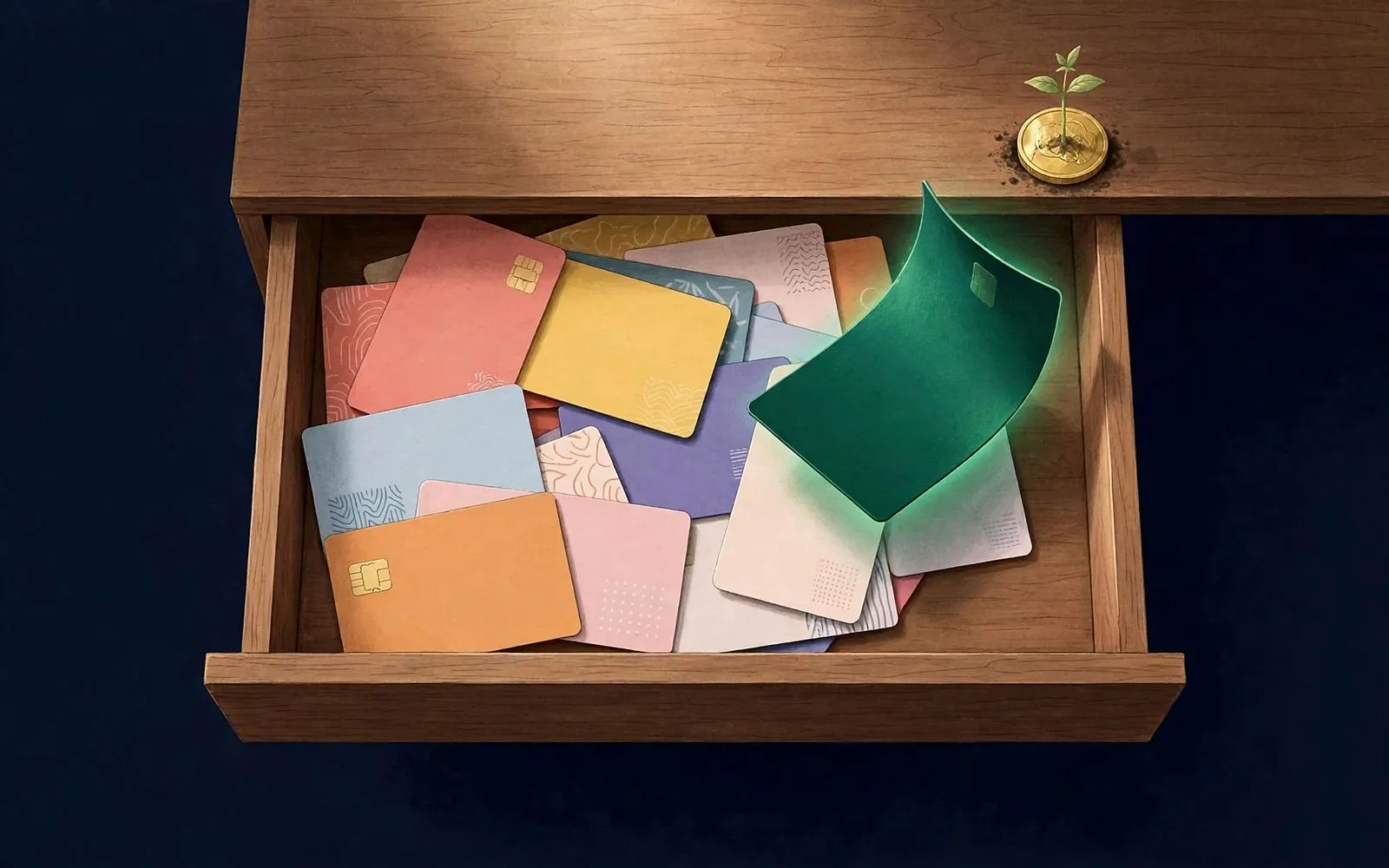
Somewhere in your home, there is money you have already been given and never spent. It might be a $50 card from a shop you never visit, a $25 restaurant card from two Christmases ago, or a $15 balance left on a card you used once. You are not alone: 43% of American adults hold at least one unused gift card, voucher or store credit, worth $244 on average — about $27 billion sitting idle across the country. And with gift cards set to be the most-wanted present again this Christmas, the pile is about to grow. This guide explains why the money gets stuck, what the law actually protects, and the five practical ways to free it before it disappears.
The $27 billion sitting in drawers
Gift cards are the most popular present in America and the most commonly wasted one. The National Retail Federation's October 2026 survey found that 47% of US consumers want to receive a gift card this holiday season — ahead of clothing, books and beauty products — and expected holiday gift card spending of $29.1 billion, up from $28.6 billion in 2024. The gift card is the safe present: it cannot be the wrong size, the wrong colour or the wrong taste. But "safe" for the giver often means "forgotten" for the receiver.
Bankrate's survey of US adults, published in November 2026, puts numbers on the forgetfulness. The average unused balance per holder has roughly doubled in a few years: $116 in 2021, $175 in 2022, $187 in 2023, and $244 in 2024. Millennials carry the biggest forgotten balances at $332 on average, followed by Gen X at $255, baby boomers at $227 and Gen Z at $142. Households earning $100,000 or more are the most likely to hold one — 55% do — with an average of $348 sitting unused.
Most of that money is not lost, just delayed. But some of it is gone for good: 20% of adults say they have had a gift card expire before they could use it, 17% have lost one, and 12% had the shop close before they spent it. Retailers even have a name for the value that is never redeemed — "breakage" — and they book it as revenue. Starbucks recognised $222.4 million of breakage in its 2025 financial year, while Amazon carried $5.6 billion of unredeemed gift card balances on its books at the end of 2025, up from $3.3 billion at the end of 2019.
Gift cards are real money. The $244 sitting on the average holder's unused cards buys a week's groceries, a month of petrol, or a decent chunk of a credit card bill — if it ever gets spent.
Why the money gets stuck
Five reasons explain almost every stranded balance:
- The wrong shop. A well-meaning relative buys a card for a store you never visit, or an online-only brand you do not use. The card is thoughtful; the shop is not yours.
- The awkward remainder. You spend $43 of a $50 card and the $7 left behind feels too small to bother with — until three of those remainders add up to $21.
- The drawer. Physical cards go into a drawer, a wallet pocket or a handbag and are forgotten. Bankrate found 71% of holders have kept a card for a year or more.
- The expiry date. Some cards do expire, and the date is usually printed small. In the US, federal law sets a floor (see below); in the UK, there is no statutory minimum at all.
- The closed shop. If the retailer goes bust, the card usually dies with it — 12% of holders have already lived this one.
What the law actually protects
Your rights depend heavily on where you live, and the difference between the US and the UK is stark.
| Rule | United States | United Kingdom |
|---|---|---|
| Minimum expiry | Funds cannot expire for at least 5 years from issue or the last load (CARD Act / Regulation E) | No statutory minimum — expiry is set by the retailer's own terms |
| Typical expiry in practice | 5 years or more; many big retailers never expire | Most retailers set 12–24 months; some as short as 6 months |
| Dormancy or inactivity fees | Only after 12 months of inactivity, and at most one fee per month | No specific rule — fees must be in the terms and fair under the Consumer Rights Act 2015 |
| Retailer goes bust | Gift card holders are unsecured creditors; recovery is rare | Same — unsecured creditor, administrators may stop honouring cards at any time |
| Small-balance cashback | Several states require cash back for small balances — in California, cards with under $10 left can be redeemed for cash | No general right to cash back; it depends on the retailer's terms |
| Deposit protection | Gift card balances are not bank deposits — no FDIC cover | Gift card balances are not deposits — no FSCS cover |
The US five-year rule is the single most useful fact in this article: if a store gift card was issued in the last five years, the money on it has not expired under federal law, whatever the date printed on the card might suggest. Fees are a different matter — a general-use Visa or Mastercard gift card can start charging a monthly fee after a year of inactivity, which is why those cards are the worst kind to leave sitting around. In the UK, the position is weaker: expiry dates are legal as long as they were made clear at the point of purchase, and a very short expiry can only be challenged as an unfair term under the Consumer Rights Act 2015. If you are in the UK, check the date the moment a card arrives, not the day you finally want to use it.
Check before you assume it is dead. Many retailers will extend an expired card or reinstate the balance as a goodwill gesture if you ask — especially if it expired recently. The worst they can say is no, and the card is worthless to you either way.
Five ways to free trapped gift card money
1. Spend it — strategically
The simplest route is also the most valuable: use the card at full face value. The trick is to stop waiting for the perfect purchase. Use the card for something you would buy anyway — groceries at a supermarket that sells gift cards, petrol, a prescription, a birthday present for someone else. If the balance is small, ask whether the shop lets you split a payment: most do, so a $7 remainder can cover part of a $40 shop and the rest goes on your debit card. If the card is for a shop you genuinely never use, skip to the next options — but first check whether the retailer sells its cards' value online or lets you use them at a sister brand. Some groups share balances across brands, which turns a useless card into a useful one.
2. Sell it for cash
Resale marketplaces will buy your unwanted card for a percentage of its face value. Expect to lose something — the buyer needs a margin — but a card sitting in a drawer is worth nothing, and 80 cents in the pound beats zero. Typical payouts for major brands run from 60% to 92% of face value, depending on the brand, the platform and how much demand there is for that retailer.
| Where | Typical payout | How it works |
|---|---|---|
| CardCash | Up to 92% of face value | Instant online offer; paid by PayPal or cheque within days; trade-in credit can pay 5–10% more than cash |
| Raise / GCX (Gift Card Exchange) | 75–90% before fees | Marketplace — you set your own price and wait for a buyer; seller commission around 15% |
| GiftCash | Around 76% on average | Instant quote for major brands; fast payout |
| Coinstar Exchange kiosks | 60–80% | In-store kiosks; instant cash, but the lowest rates and a $20 minimum balance |
Our own maths, labelled: a $100 card sold at 85% puts $85 in your pocket; the same card at a 70% kiosk rate puts $70 in it. The gap is worth a two-minute comparison. Sell the cards for popular retailers first — Amazon, Target, Walmart, Starbucks and Visa/Mastercard cards fetch the highest percentages, while cards for small local shops may only fetch 50–60%, if a buyer exists at all. Partially used cards can usually be sold too, though some platforms set a minimum remaining balance. Only use established marketplaces, never a stranger from a classified ad who wants the card numbers first — that is how the money disappears twice.
3. Swap it for a card you will use
If cash is not the goal, trade the card for one you actually want. CardCash and similar platforms let you exchange one retailer's card for another's, usually at a better rate than a cash sale — trade-in credit can be worth 5–10% more than the cash offer. Gift card exchange communities and some supermarket customer-service desks also run swaps. The maths is simple: a $50 card for a shop you never visit, swapped for a $45 card at your regular supermarket, is $45 of real spending power recovered from $0.
4. Donate it
Charities, schools, food banks and shelters often accept gift cards — a supermarket or restaurant card is genuinely useful to them, and a card you will never spend is better in their hands than in your drawer. Some charities accept cards by post; others take them through gift card donation programmes run by the resale platforms. Keep the receipt and the card details, and check with the charity first rather than assuming they can use a niche retailer. In the US, a donation of a gift card to a registered charity can generally be claimed as a non-cash charitable donation — keep the receipt and confirm the rules with your tax adviser, as the treatment depends on your circumstances.
5. Cash it out where the law allows
In some US states, the law is on your side. California requires retailers to give cash back for gift cards with under $10 remaining, and several other states have similar small-balance rules. Some retailers also have their own cash-back policies for low balances, even where the law does not require it — it costs nothing to ask at the till. The same logic applies in reverse when you receive a card: if you are handed a card with a small balance, spend it down to under the threshold and ask for the cash. It is a small win, but it is real money.
Never pay anyone with a gift card. No real business, government agency or utility will ever ask you to pay a bill, a tax, a fine or a fee by buying gift cards and reading out the numbers. The US Federal Trade Commission puts it bluntly: only scammers ask for that. If someone demands gift cards as payment, it is a scam — hang up.
The traps that eat gift card money
The retailer that goes bust
A gift card is a prepayment, not a deposit. If the retailer collapses, you join the queue of unsecured creditors — and you are near the back of it. Administrators can stop honouring gift cards at any point, and even when they do honour them, it is usually for a short window. The practical rule is simple: if a retailer you hold a card for is in the news for the wrong reasons, spend the card now. The same applies to experience vouchers and travel gift cards. In the UK, one extra route exists: if the gift card was bought on a credit card and the single purchase was over £100, a Section 75 claim under the Consumer Credit Act may recover the money — worth trying if the card was bought recently and the retailer has failed.
Gift card draining
A newer fraud targets the cards hanging on shop racks. Thieves copy the card number and PIN from the packaging, put the card back on the shelf, and monitor the balance online. The moment a genuine buyer loads money onto it, the thieves drain it — sometimes within minutes. A multi-agency investigation in Texas in 2026 dismantled one such ring, recovering hundreds of tampered cards representing more than $100,000 in potential losses from a single day of activity. Protect yourself: buy cards from behind the counter or from the retailer's own website where possible, inspect the packaging for tampering or a scratched-off PIN cover, keep the receipt, and use the card promptly after buying it.
Scams that demand gift cards
Gift cards are the scammer's favourite payment method because the money moves fast, is hard to trace and is almost impossible to reverse. The FTC recorded $212 million reported lost to gift-card scams in the US in 2024, across more than 41,000 reports — and $233.4 million in 2025, the highest annual figure its dashboards show, with losses in the first half of 2026 already at $154.1 million. Target cards alone accounted for roughly $35 million in 2024, more than twice any other brand, and the median loss for victims who paid with a Target card was about $2,500. Romance scams paid with gift cards cost $63.5 million in 2025. The scripts vary — a "government agent" demanding a fine, "tech support" needing payment, a boss asking an employee to buy cards urgently, a new romantic partner in a crisis — but the demand is always the same: buy gift cards and send the numbers. If you have already sent the numbers, contact the card issuer immediately (the FTC lists the phone numbers for the major brands), keep the card and receipt, and report it at ReportFraud.ftc.gov. Speed matters: if the money has not yet been spent, the issuer can sometimes freeze it.
Open-loop cards: the fees that nibble
Visa, Mastercard and American Express gift cards are the most flexible — they work almost anywhere — and the most expensive to hold. They usually carry a purchase fee of $4–$7, and after 12 months of inactivity they can start charging a monthly fee that quietly eats the balance. A $50 open-loop card left for two years can be worth noticeably less than $50 by the time you use it. If you are given one, spend it first, before the store-specific cards. If you are buying one as a present, consider a store card for a shop the person actually uses instead — no purchase fee, and usually no dormancy fee either.
Giving gift cards well
The best gift card is one that gets spent. A few habits make that far more likely:
- Match the shop to the person, not to you. A supermarket or petrol card gets used; a niche boutique card gathers dust.
- Give a usable amount. Very small balances are the ones that get stranded — $25 or more is far more likely to be spent than $5.
- Send it digitally when you can. E-gift cards cannot be lost in a drawer, arrive instantly, and usually let the recipient add them straight to the retailer's app.
- Include the receipt and the expiry date. The recipient needs the purchase proof if anything goes wrong, and knowing the date creates a reason to use it.
- Skip the open-loop card unless you must. The purchase fee is money that never reaches the recipient.
Frequently asked questions
Do gift cards expire?
In the US, the funds on a store gift card cannot expire for at least five years from issue or the last load under federal law, and many big retailers never expire at all. In the UK there is no statutory minimum — most retailers set 12 to 24 months, and some as little as six — so check the date when you receive the card.
Can I get cash back for a gift card?
Usually only at a discount, by selling it on a resale marketplace (typically 60–92% of face value). In California and a few other US states, retailers must give cash for cards with under $10 left. A few retailers also refund small balances as a matter of policy — ask at the till.
What happens to my gift card if the shop goes bust?
Almost always, very little. You become an unsecured creditor, and administrators may stop honouring cards immediately. Spend the card as soon as you hear a retailer is in trouble. If you bought the card on a credit card for over £100 in the UK, a Section 75 claim may help.
Is it safe to sell a gift card online?
Through an established marketplace such as CardCash, Raise/GCX or GiftCash, yes — with normal caution. Never send card numbers to a private buyer before payment, and never sell through social media DMs or classified ads, where gift card scams are rife.
Can I use a gift card after it expires?
Sometimes. Retailers often extend an expired card or reinstate the balance as a goodwill gesture, particularly if it expired recently. In the US, if the card was issued within the last five years, the funds should not have expired under federal law at all. Ask — the card is worthless to you otherwise.
Key takeaways
- Americans hold about $27 billion in unused gift cards — $244 per holder on average — and 43% of adults have at least one.
- In the US, gift card funds cannot expire for at least five years under federal law, and dormancy fees can only start after 12 months of inactivity.
- In the UK there is no statutory minimum expiry — most retailers set 12 to 24 months — and a failed retailer leaves cardholders as unsecured creditors.
- Resale marketplaces typically pay 60–92% of face value; a $100 card sold at 85% puts $85 back in your pocket.
- No legitimate business or government agency will ever ask you to pay with gift cards — that demand is always a scam.
- Buy cards from behind the counter, inspect the packaging, keep the receipt, and spend open-loop Visa/Mastercard cards first — their fees start after a year.
Gift cards are not a bad present — they are the most-wanted present in America for a reason. They only become bad money when they sit forgotten in a drawer while fees, expiry dates and bankrupt retailers quietly take their cut. So take ten minutes this week: gather every card you own, check the balances and the dates, and spend, sell, swap or donate them. The average holder is sitting on $244. That is not a rounding error — it is a week's groceries, and it is already yours.
Sources
- Bankrate gift card survey (via GCN)
- VirtWave — Gift Card Statistics 2026
- VirtWave — Gift Card Scam Statistics 2026
- The Penny Hoarder — Sell Gift Cards
- Well Kept Wallet — Sell Gift Cards
- Which? — Gift vouchers and cards: your rights
- Sprintlaw UK — Gift voucher expiry laws
- TheStreet — Gift card draining scam
- Consumer Protection UK — Gift cards and vouchers: five rules
The MoneyHabit editorial desk researches, writes and reviews every article against our editorial policy.
The Sunday Habit
One useful money idea, every week.
A short, practical email every Sunday — no spam, no selling your address, unsubscribe anytime.
Advertisement
More in Smart Spending
Smart Spending · Guide
Children's Place Bankruptcy: Use Your Gift Card by Dec. 12
The Children's Place filed for Chapter 11 on 8 November. Gift cards and rewards points stop working on 12 December — here's what to do before then.
17 November 2026 · 10 min read
Smart Spending · Guide
Loyalty Cards and Points: Worth It or a Trap?
Loyalty cards promise free money for shopping you'd do anyway — but a quarter of all points are never used. Here's what they're really worth.
15 November 2026 · 10 min read
Smart Spending · Guide
Buying in Bulk: When It Saves Money — and When It Doesn't
Bulk buying can cut grocery bills by 20–35% — but only if you buy the right things and use them all. Here's when it pays, and when it doesn't.
10 November 2026 · 14 min read