Guide
Normalize It: The Frugal Habits Worth Keeping
Jeff Rose's 'Normalize it' post went viral — leftovers, home coffee, a paid-off car. We ran the maths on each habit, and graded the critics too.
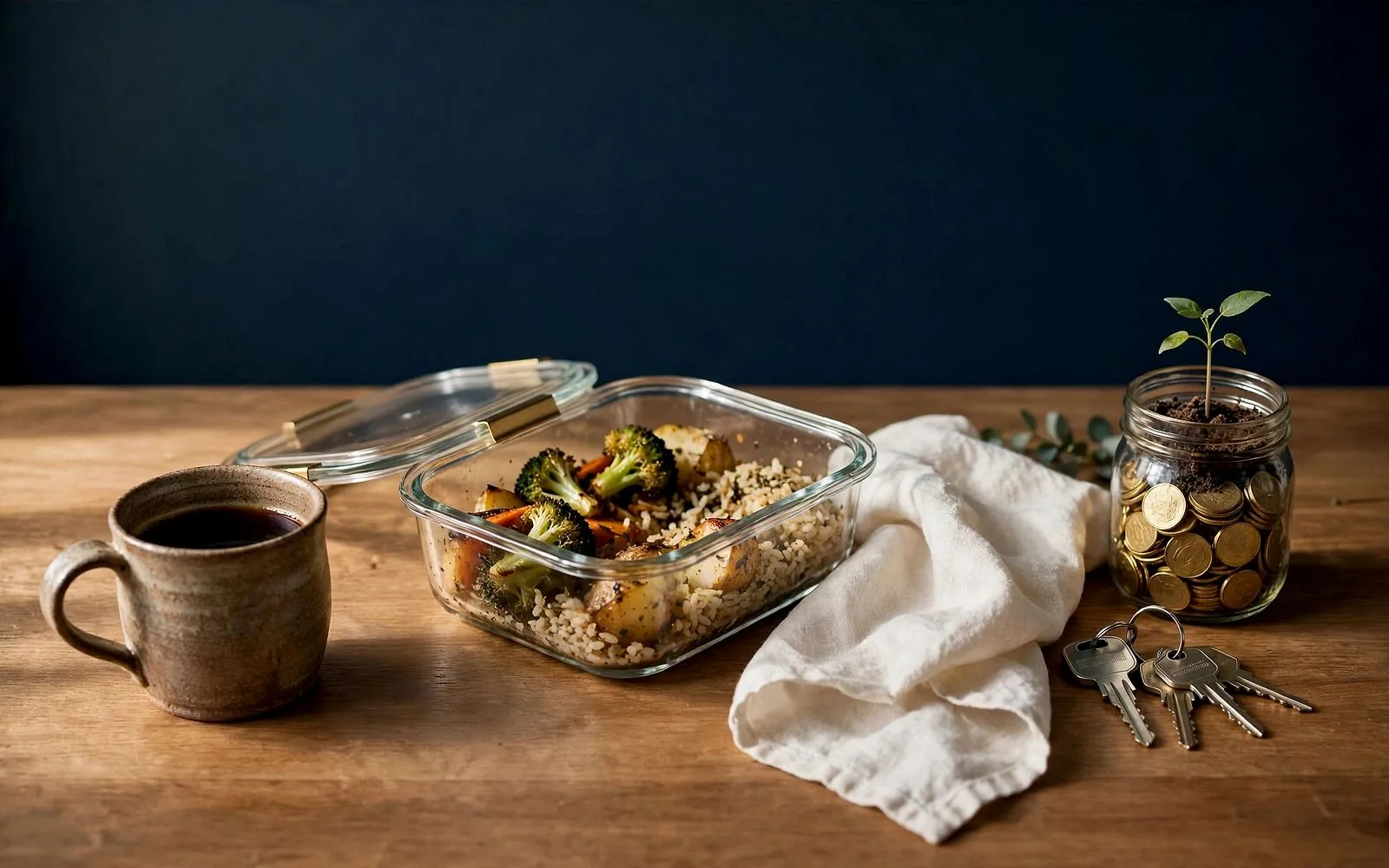
In this article
- The post, and why it hit a nerve
- Habit 1: Coffee from home
- Habit 2: Leftovers for lunch
- Habit 3: A paid-off car — the big one
- The three habits, side by side
- What the research says about boring wealth
- The critics aren't wrong — and that matters
- When frugality backfires: frugal fatigue
- How to normalize it without hating your life
- Frequently asked questions
- Key takeaways
Three sentences broke the internet's money corner this week. "Leftovers for lunch. Coffee from home. A paid-off car. Normalize it." Certified financial planner Jeff Rose posted it on 18 November, and it collected around 49,000 likes — along with one of the fiercest arguments personal finance has seen in months. Supporters posted photos of packed lunches and paid-off cars; critics called it out of touch in an economy where wages have barely kept up with prices. We ran the maths on all three habits, checked the research, and graded the critics too.
The post, and why it hit a nerve
Rose's post works because it names three things most people treat as signs of falling behind — and flips them into signs of getting ahead. Leftovers are for when money is tight, home coffee is for before you can afford the café, an old car is for until you can upgrade. The post says: no — these are the goal, not the waiting room.
The pushback was immediate and, in places, fair. "Must be nice to have the option to do otherwise," one commenter wrote. Others pointed out that wages have stagnated while housing, healthcare and groceries have surged — and that saving a few dollars on coffee will not fix a rent payment that doubled. That objection deserves a real answer, and we will get to it. First, the numbers: the post's fans are not wrong either, because these three habits are worth far more than they look.
Habit 1: Coffee from home
The average latte now costs about $5.60 in the US, according to Empower's analysis of its users' spending — before tax, tip, syrup or oat milk. Buy one every weekday and that is $1,456 a year. Buy one every day including weekends and it passes $2,000. The same drink made at home costs roughly $0.60 to $1.00 a cup in beans and milk, or about $220 to $365 a year for a daily cup.
Take the middle of the range: a $0.85 home latte, five days a week, 52 weeks a year, costs $221 against $1,456 at the café — a saving of about $1,235 a year. The equipment is not the obstacle people assume: a $50 drip maker pays for itself in about three to four weeks of skipped café trips, and even a $500 espresso machine breaks even in roughly four months at one latte a day. Ground coffee averaged $9.25 a pound in October 2026 (BLS), so the home cup stays cheap even after the recent jump in bean prices. In the UK, a bought lunch-and-coffee routine runs £7–£12 a day against roughly £40–£60 a month for a packed lunch — typically over £1,000 a year saved.
The version that actually sticks: brew at home three or four days a week and keep the café for the visits you would genuinely miss. Two café lattes and three home brews a week costs about $715 a year instead of $1,456 — you keep $741 and you never feel deprived.
Habit 2: Leftovers for lunch
This is the habit the post's critics mocked most — and the one with the second-biggest number. A $15 bought lunch, five days a week, 50 working weeks a year, costs $3,750. A packed lunch of leftovers costs about $5 a day, or $1,250 a year. The gap is $2,500 a year, for food you already cooked.
Lunch got much more expensive while nobody was watching. The Bureau of Labor Statistics' "food away from home" index — restaurant meals and takeout — is up about 39% since September 2019. The same $15 lunch would have cost roughly $10.77 back then. Your salary probably did not rise 39% in the same period.
"Wealth is what you accumulate, not what you spend." — Thomas J. Stanley and William D. Danko, The Millionaire Next Door
Habit 3: A paid-off car — the big one
The first two habits save thousands. This one saves tens of thousands, and it is the hardest to accept, because a car is the most visible thing most of us own. Experian's Q2 2026 data puts the average new-car payment at $765 a month — $9,180 a year — on an average of $43,610 financed over about 69.5 months at 6.35% APR. The average used-car payment is $542 a month. Edmunds' Q3 2026 figures run higher: a $787 average payment and $9,938 of interest over the life of the loan.
A paid-off car costs $0 a month in payments. Keep a reliable car for five years after the loan ends instead of trading it in, and you keep $45,900 at the average new-car payment. Invested at a 7% average annual return, that same $9,180 a year would grow to roughly $52,800 over five years. That is illustrative, not a promise — markets do not return 7% every year — but it shows the scale: a car payment is a second rent, paid to a depreciating asset.
The trap to avoid: a paid-off car is only a win if it is reliable. Pouring $400 a month into repairs on a car that strands you is not frugality, it is a bad trade. Keep the car while repairs stay well below a replacement payment, and start saving for the next one the month the loan ends.
The three habits, side by side
| Habit | The "normal" version | The frugal version | Saved per year |
|---|---|---|---|
| Coffee from home | $5.60 café latte, weekdays | $0.85 home latte, weekdays | ~$1,235 |
| Leftovers for lunch | $15 bought lunch, 250 days | $5 packed lunch, 250 days | ~$2,500 |
| A paid-off car | $765/month average new-car payment | $0 payment, reliable older car | ~$9,180 |
| All three, all-in | — | — | ~$12,915 |
| All three, the 80/20 way | — | Café twice a week, pack 3 days, keep the car | ~$10,921 |
The 80/20 row is the honest one. Almost nobody switches all three habits to maximum overnight and keeps it up. But even the relaxed version — café twice a week, packed lunch three days, and simply not replacing a working car — keeps nearly $11,000 a year.
What the research says about boring wealth
Rose's post echoes the most durable finding in personal-finance research. In The Millionaire Next Door, Thomas Stanley and William Danko surveyed hundreds of American millionaires and found that about 80% were first-generation affluent — they built their wealth in their own lifetimes rather than inheriting it. The typical millionaire in their study lived in a modest home, drove a used car, and lived well below their means. Exceptional accumulators typically save 15–20% of income; high earners who accumulate little save under 5%. The difference is rarely income. It is the gap between income and spending, defended every day by habits exactly like the three in Rose's post.
The critics aren't wrong — and that matters
Now the other side, because a guide that ignores it would be dishonest. The critics' core claim is that small savings cannot fix a cost-of-living problem, and the data backs them up. From 2019 to October 2026, the all-items Consumer Price Index rose about 30% and grocery prices rose about 33%, while average hourly earnings for production and non-supervisory workers rose 38% in nominal terms — just 6% in real terms. In the year to September 2026, pay rose 3.2% while prices rose 3.7%, so real earnings actually fell. Housing is worse: the payment on a typical new home has roughly doubled since 2020 as mortgage rates rose from under 3% to over 7%.
So yes: skipping lattes will not fix a housing market. The honest framing is that frugality is the margin, not the whole game — up to ~$12,900 a year is life-changing for an emergency fund and irrelevant against a $500,000 house price gap. Both things are true at once. The useful question is which levers you actually control, and these three are among them.
When frugality backfires: frugal fatigue
There is a second honest objection, from inside the frugality movement itself: cut back on everything at once and most people rebound — the budgeting version of a crash diet. Financial planners call it frugal fatigue: the exhaustion that follows months of saying no to every small pleasure, which often ends in one large, regrettable splurge that wipes out the savings.
The fix is to budget for joy on purpose: protect the treats that genuinely make your week better, and cut the spending you do not even notice — the third streaming service, the forgotten subscription, the café visit that is habit, not pleasure. A budget that leaves room for a life is one you will still follow in a year. One that bans everything is abandoned by February.
How to normalize it without hating your life
Do not overhaul everything on Monday — start with the habit that annoys you least and automate the saving:
- Coffee: buy decent beans and a mug you like. Make the home cup genuinely good, not a punishment. Keep two café visits a week as a ritual, not a habit.
- Lunch: cook one extra portion at dinner, four nights a week. That is four packed lunches with zero extra cooking time. Buy lunch on the fifth day.
- Car: the month your loan ends, auto-transfer the same amount into a savings account labelled "next car". You will not miss money you never had to spend — and in five years you can buy the next car with cash.
If your rent or bills rose faster than any coffee habit could offset, the bigger levers are income, housing and benefits. Frugality is a tool, not a verdict on your character.
Frequently asked questions
Is making coffee at home really worth $1,200 a year?
For a daily latte drinker, yes — about $1,235 a year at the averages above. For a black-coffee drinker buying a $3.52 drip coffee, roughly $550 to $700 a year. The more elaborate your café order, the bigger the saving. Run your own numbers with your actual order and frequency.
Does a paid-off car actually save $9,180 a year?
It saves the payment you are no longer making — $765 a month at the national average. You still pay insurance, fuel, maintenance and possibly more repairs. The saving is real while the car stays reliable; budget a $100–$150 monthly repair reserve from the freed-up payment and the maths still wins.
What if I genuinely enjoy café coffee and eating out?
Then keep them — deliberately. The 80/20 version in this article keeps two café visits and two bought lunches a week and still saves nearly $11,000 a year. The point of "normalize it" is not to ban pleasure. It is to stop paying for pleasure you do not actually feel.
Can small habits really build wealth?
On their own, no — they build the margin that makes investing possible. Wealth builders defend a gap between income and spending and invest it consistently. The habits create the gap. What you do with the gap — emergency fund, debt payoff, investing — is what builds the wealth.
Key takeaways
- Jeff Rose's viral "Normalize it" post names three habits — leftovers, home coffee, a paid-off car — that together are worth up to ~$12,900 a year at current US averages.
- The paid-off car is the big number: the average new-car payment is $765 a month, and keeping a reliable car five years past payoff keeps ~$45,900.
- The research backs the boring version: about 80% of the millionaires Stanley and Danko studied were first-generation affluent and lived well below their means.
- The critics have a point too: real wages rose only ~6% from 2019 to late 2026 while prices rose ~30%. Frugality is the margin you control, not a fix for housing or wage stagnation.
- The version that lasts is the 80/20 one: brew most days, pack most lunches, keep the car — and keep the treats you would genuinely miss.
Normalize it does not mean romanticize it. Leftovers, home coffee and an old car are not moral achievements, and nobody should be shamed for buying a latte. But they are quietly one of the largest sums most households can redirect without earning a dollar more — nearly $11,000 a year on the relaxed version. Start with one habit this week and automate the saving the day the money frees up. The post went viral because it named something people already suspected: looking rich and being rich are different jobs, and the second one starts in your own kitchen.
Sources
- Jeff Rose — 'Normalize it' post (Good Financial Cents, Facebook)
- Experian — Average Car Payment in 2026
- NerdWallet — What's the Average Car Payment Per Month?
- Lucky Friday — Daily Coffee vs Home Brewing: The Real Math
- Money Crashers — A Latte Every Workday Costs Over $1,000 a Year
- Sisters & Dollars — The Cost of Eating Lunch Out: $15 a Day = $3,750 a Year
- BookBrowse — The Millionaire Next Door (excerpt)
- BMRL — Inflation & Wages in the United States, 2019–2026
- Ask Fin — Eating Out vs Cooking at Home Cost UK
The MoneyHabit editorial desk researches, writes and reviews every article against our editorial policy.
The Sunday Habit
One useful money idea, every week.
A short, practical email every Sunday — no spam, no selling your address, unsubscribe anytime.
Advertisement
More in Money Habits

Money Habits · Guide
Grew Up Broke? 7 Money Habits Scarcity Leaves Behind
Growing up without money leaves habits that outlast the poverty itself. The research behind the seven most common ones — and how to loosen them.
19 November 2026 · 10 min read
Money Habits · Guide
5 Money Rules Worth Breaking (and What to Do Instead)
A viral creator broke five classic money rules to get ahead — from 50/30/20 to the latte factor. Here's what each rule gets wrong, and what to do instead.
18 November 2026 · 10 min read

Money Habits · Habit
4 Money Habits That Build Real Financial Security
A new survey of 3,241 savers reveals the four habits behind financial wellness in 2026 — and which generation is winning the money game.
18 October 2026 · 6 min read