Review
Round-Up Apps: Do They Actually Work?
Spare-change saving is viral again. We review round-up apps like Acorns and Moneybox — the real math on how much they save, what they cost, and who they're for.
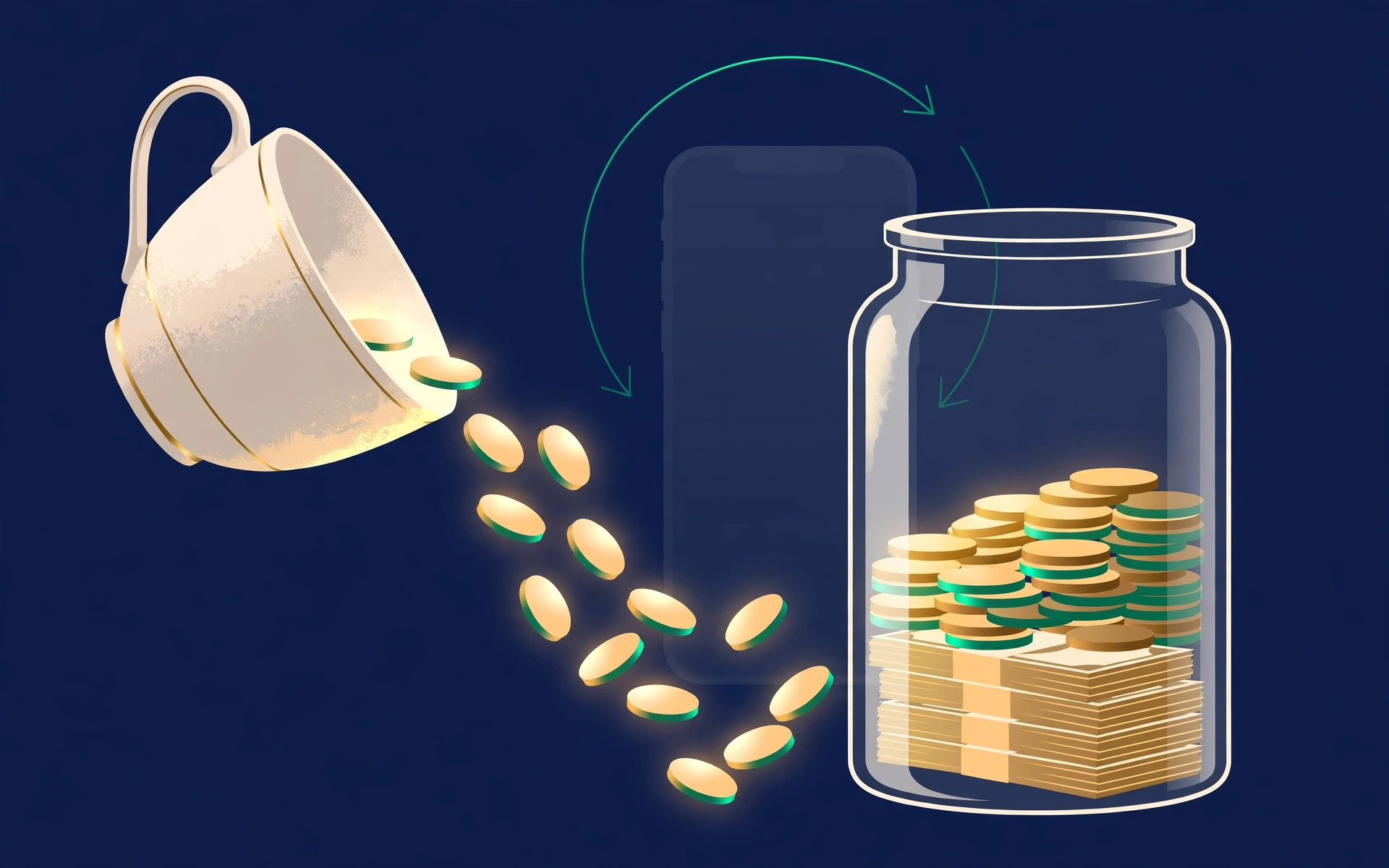
Spare-change saving is having a moment. One recent viral Facebook reel — 33,000 likes and counting — shows a man slicing open a water jug he'd wrapped in duct tape and filled with loose bills and coins for roughly ten months. He estimates the haul at "over $10,000." Meanwhile TikTok keeps pushing digital piggy-bank apps and savings challenges, with over 1.9 billion views reported under the #cashstuffing hashtag. But does digitising the piggy bank actually work — or is it just satisfying content? We reviewed the leading round-up apps and ran the numbers.
How round-up apps work
The mechanism is disarmingly simple. Link your card, and the app rounds every purchase up to the nearest pound or dollar, whisking the spare change into a savings pot or investment account. Buy a coffee for $3.40 and 60 cents slides into savings without a conscious decision. Most apps add a multiplier (2x, 3x, even 10x), and some banks bake the feature straight into current accounts — meaning you may not need a separate app at all.
Think of round-ups as willpower replacement, not wealth building. They work because they ask nothing of you — no monthly budget meeting, no transfer to remember. The moment an app asks you to do work, its advantage over a standing order evaporates.
The math: how much can spare change really save?
The honest numbers are encouraging but modest. Moneybox's own data, reported by The Scottish Sun, suggests British users save an average of £12.37 a week through round-ups — about £1.75 a day, or roughly £643 a year. The same report estimates that £1.75 a day compounded for ten years could reach a maximum pot of £12,400, depending on whether the money sits in savings or gets invested.
The key variable is your transaction count. The math only works if you spend frequently by card. Use these as rough guides, not promises — your totals depend on how you spend:
| Card transactions per week | Approx. round-up saving | Yearly total |
|---|---|---|
| ~10 (light user) | ~£2–£5/week | ~£100–£260 |
| ~20 (average user) | ~£10–£15/week | ~£520–£780 |
| ~30 (heavy user) | ~£15–£25/week | ~£780–£1,300 |
Use these as rough guides, not promises — your totals depend on how you spend, not on the app's marketing.
Reviewed: the apps behind the hype
Acorns (US): the original spare-change app
Acorns rounds linked-card purchases up to the nearest dollar; once round-ups reach $5 they're swept into a diversified ETF portfolio. Multipliers of 2x–10x and recurring deposits are available. Pricing rose on August 17, 2026: new customers pay $4/month Bronze, $8/month Silver or $12/month Gold (earlier signups keep grandfathered rates; tiers rechecked on Acorns' official pricing page October 24, 2026). At $48 a year, Bronze is a heavy drag on a small balance but a competitive ~0.48% on $10,000.
Verdict: best for Americans who want spare change invested on autopilot and will use the bundled accounts. A poor deal if you'll only round up small sums.
Moneybox (UK): round-ups into savings or investments
Moneybox rounds purchases up to the nearest pound, collects them into a weekly batch debited each Wednesday, and allocates them to your chosen product — Cash ISA, Simple Saver, Stocks & Shares ISA, Lifetime ISA or pension. A 2x multiplier option doubles every round-up.
As of August 2026 the Cash ISA paid 4.52% interest against 3.4% on the Simple Saver — worth checking, since a near-zero round-up pot quietly loses to inflation. Fees are modest: £1/month plus 0.45–0.58% annual management and 0.12–0.30% fund costs, with 1.5 million users and £16 billion under administration as of mid-2026.
Verdict: the strongest UK option if round-ups feed real goals — a house deposit in a Lifetime ISA or tax-free Cash ISA saving. Investment fees demand a balance big enough to matter.
Plum and your bank's own round-ups
We reviewed Plum separately — it analyses spending and pulls what it estimates you can afford, on top of classic round-ups. And before downloading anything, check your current account: Monzo, NatWest, Starling and others offer free in-app round-ups. Free beats a subscription when the feature is identical.
| App | Region | Round-ups go to | Cost | Minimum before money moves |
|---|---|---|---|---|
| Acorns | US | Diversified ETF portfolios | $4–$12/mo (flat) | $5 sweep threshold |
| Moneybox | UK | Savings, Cash ISA, Stocks & Shares ISA, LISA, pension | £1/mo + investment fees | Weekly batch (Wednesdays) |
| Plum | UK | Savings & investments (auto-calculated amounts) | Free to paid tiers | Varies by plan |
| Bank in-app round-ups | Varies | Savings pot at the same bank | Usually free | Immediate |
Round-ups aren't a wealth-building strategy — they're a willpower replacement. They'll never substitute for deliberate saving, but they will beat saving nothing.
Watch the fee trap. Flat subscription fees hit small savers hardest: if you only round up £100 a year, a £12 subscription plus investment fees eats a double-digit share of it. Light spenders should use a bank's free round-up feature instead. And never round up money you'll need next month into a market-linked portfolio — investments can fall as well as rise, and withdrawing early can mean selling at a loss.
Frequently asked questions
How much can I realistically save with round-ups?
Provider data puts the average at around £12.37 a week (~£640 a year) for active Moneybox users. Your total scales with how often you pay by card — ten transactions a week saves far less than thirty.
Are round-up apps free?
Bank in-app round-ups usually are. Standalone apps mostly charge a flat subscription — Acorns from $4/month, Moneybox £1/month plus investment fees — which is fine on healthy balances but punitive on tiny ones. Divide the annual fee by your expected annual savings before signing up.
Is my money protected in these apps?
In the UK, cash savings and investments sit inside standard consumer protections within their limits, depending on the underlying provider — check the app's terms. In the US, brokerage balances carry SIPC coverage against broker failure. Neither protects you from market losses.
Can I just do this myself for free?
Yes — a weekly standing order into a separate savings account does the same job with no fees and more control. Apps win only on automation and multiplier tricks.
Should spare change go to savings or investments?
Savings if it's your emergency cushion or a short-term goal; investments only for money you won't touch for years, and only once you understand the risk. Many apps let you split round-ups across both.
Key takeaways
- Round-ups turn spending into painless saving: average active users put away roughly £640 a year, scaling with transaction count.
- Acorns ($4–$12/mo) suits Americans who want spare change invested; Moneybox (£1/mo) suits Brits aiming round-ups at ISAs, LISAs or pensions.
- Flat subscription fees punish tiny balances — light spenders should use a bank's free round-up feature.
- Round-ups supplement, never replace, deliberate saving: investments can fall, and the fee math must beat doing it yourself.
Your next step
Open your banking app today and search for "round-ups" or "save the change" — if it's there, switch it on with a 2x multiplier and check back in 30 days. If your bank doesn't offer it, pick the app that matches your goal (investing in the US, ISA saving in the UK) and run the fee math before you subscribe. Either way, you've just turned every coffee into a tiny act of saving.
Sources
- The Scottish Sun — Moneybox spare-change data
- MoneyToTheMasses — Moneybox review 2026
- MoneyAppReviews — Moneybox review 2026
- MoneyVersus — Acorns fee analysis, Oct 2026
- CostToCancel — Acorns pricing recheck, Oct 24 2026
- Michael Ryan Money — Acorns pricing & Form CRS
- Blackcat — cash stuffing in 2026
- Nasdaq — 5 TikTok savings hacks
- The Em Word — bank round-ups
More in Apps & Software Reviews

Apps & Software Reviews · Review
Net Worth Trackers: Build a Spreadsheet or Use an App?
Everyone is asking "what app is that?" after a viral net worth screenshot. We compare spreadsheets vs. Empower, Monarch, Kubera, and Simplifi to find your fit.
31 October 2026 · 7 min read

Apps & Software Reviews · Review
Debt Payoff Apps Reviewed: Tools Behind the Viral Journeys
Millions watch strangers pay off debt one micropayment at a time. These are the tracker apps behind the viral payoff journeys — and which ones actually work.
30 October 2026 · 7 min read

Apps & Software Reviews · Review
Rocket Money Review: Worth It, or DIY It Free?
Rocket Money is all over Reels for finding forgotten subscriptions. What the free tier does, what Premium costs, and whether the negotiation fee is worth it.
29 October 2026 · 6 min read