Guide
Stop Relying on Credit to Get Through the Month
NerdWallet's October index: 38% of Americans expect to lean on credit this month. If your card has become your backup plan, here's a realistic way out.
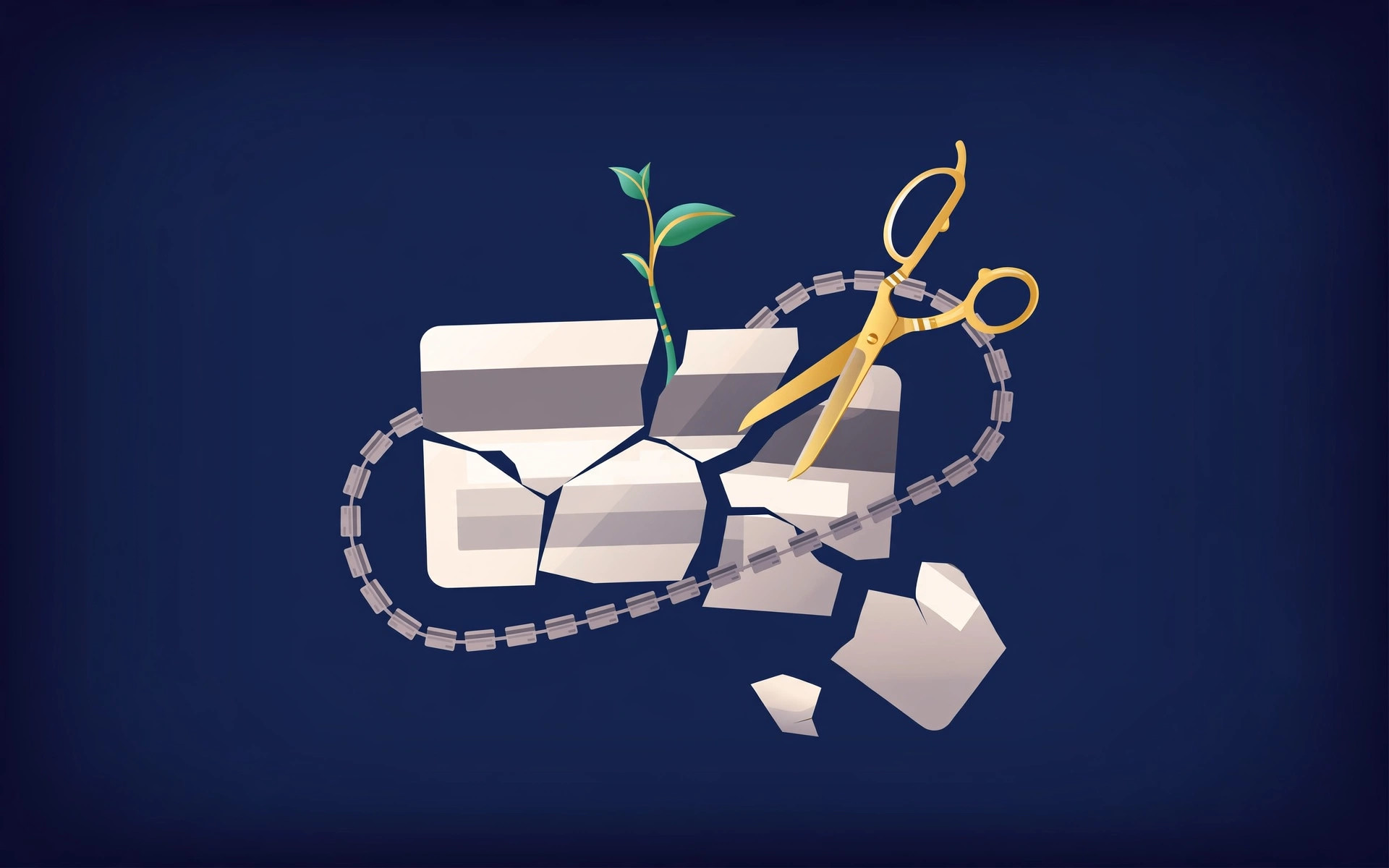
There's a difference between using a credit card and relying on one. The first is a payment choice. The second is a warning light — and right now it's flashing for a lot of households.
NerdWallet's October 2026 Consumer Financial Resilience Index found that 38% of Americans expect to rely on credit for at least some expenses this month, up from 35% in September — climbing to 54% of parents with minor children, 53% of Gen Z and 51% of millennials. The backdrop: consumer prices rose 3.7% year over year in September, driven largely by gasoline, and prices have outpaced hourly earnings for three straight months. Meanwhile, debt-payoff videos are going viral on social media, with creators walking viewers through the real math of five-figure balances.
If your card has quietly become your backup plan, this guide is for you. Not a lecture — a plan.
Why so many people are swiping to survive
The index — a monthly survey of 2,020 U.S. adults by The Harris Poll, taken October 6–8 — tells a two-sided story. On one side, 78% say they feel in control of their finances, a six-month high. On the other, nearly two in five expect to lean on credit, and 65% expect a recession within the next 12 months.
That gap between feeling in control and having cash is the real story. Asked about a surprise $1,000 expense, 67% said they could cover it — but that splits into 81% of households earning $100,000+ versus 39% earning under $50,000. Credit fills the space between what people feel and what they have — and with the Fed having raised rates in September (at least one more hike likely before year-end), those balances could get costlier to carry, just as holiday and heating bills arrive.
The true cost of the monthly-credit habit
Occasionally leaning on credit isn't a moral failure — but it's expensive. Here's what carrying a $1,000 balance looks like at a typical ~21% APR:
| Payment strategy | Time to clear | Interest paid |
|---|---|---|
| Minimum (~$25/month) | Nearly 6 years | Roughly $735 |
| Fixed $100/month | About 11 months | Roughly $112 |
| Fixed $250/month | About 4 months | Under $50 |
The figures are illustrative, but the shape is universal: minimums stretch a balance for years; larger payments collapse it in months. Payment size matters more than the rate.
"Turning to credit to get through the month isn't unusual when prices are climbing, but it gets more expensive when rates are rising too. If you're carrying a balance, put extra payments toward the card with the highest APR first, and ask your issuer about a lower rate or look into a 0% balance transfer offer." — Kimberly Palmer, NerdWallet's personal finance expert
The escape plan: five moves that work
1. Find the real gap
List one month of spending in three buckets — fixed essentials, variable essentials, everything else — and subtract from your take-home pay. The gap is usually a specific, fixable number. A number you can name is a number you can plan around.
2. Stop the new charges first
For the next 30 days, pay variable spending with cash or debit and keep the credit cards out of your wallet — physically and digitally. New charges during a payoff attempt are the number-one reason these plans fail.
Keep one card on a single small recurring bill, set to autopay in full — the account stays active and your credit file stays healthy, without giving spending a new home.
3. Attack the balances in the right order
Pay minimums everywhere, then throw every spare dollar at the balance with the highest APR — the avalanche method. When it's clear, roll its payment into the next-highest. Two accelerators: ask your issuer for a lower rate (a short call can shave points off with decent payment history), and consider a 0% balance transfer — typically a 3–5% one-time fee but 12–21 months of paused interest, as long as you clear the balance before the promo ends.
4. Build a small buffer — even before the debt is gone
Start with $500 in a separate account, funded by small automatic transfers — $25 a week gets you there in five months. Without a buffer, every surprise goes straight back onto the card.
Don't build a full emergency fund and attack debt at maximum speed simultaneously — split effort means neither finishes. Small buffer first, then the balances, then a bigger fund. One job at a time.
5. Time your bills to your paydays
Some of the "can't get through the month" feeling is a timing problem, not an income problem. Many lenders and utilities will move your due date on request — spread the big bills across your pay cycle so each paycheck covers a roughly equal share. A free fix that takes a few phone calls.
A note for UK readers
The dynamics are the same in the UK — when prices outrun pay, the card fills the gap. The products differ (0% balance-transfer deals are tightening; minimum-payment rules differ), but the plan travels well: measure the gap, stop new charges, avalanche the highest-APR balance first, build a small buffer, re-time your bills.
Frequently asked questions
Is it really that bad to put monthly expenses on a credit card?
Not automatically. Pay the full balance every month and a card is just a payment method. The problem starts when balances carry over: at typical rates, an unpaid $1,000 can cost hundreds in interest. The NerdWallet finding isn't about card use; it's about card dependence — needing the card because the cash isn't there.
Debt or savings first?
Both, in sequence. Build a small starter buffer (~$500) first, because without it every surprise becomes new debt. Then direct everything extra at the highest-APR balance. Once the revolving balances are gone, grow the buffer into a full emergency fund of 3–6 months of essentials.
Will paying off my cards hurt my credit score?
Paying down balances almost always helps — it lowers your credit utilization ratio, one of the biggest scoring factors. Keep the accounts open after paying them off; long history plus low utilization is the ideal combination.
What if my income genuinely doesn't cover my expenses?
Then no budgeting trick fixes it alone — name that honestly. Negotiate bills, sell what you don't use, find short-term extra income — and if debts are unmanageable, talk to a nonprofit credit counseling agency (US) or StepChange/Citizens Advice (UK) before things escalate. These services are free and exist for exactly this situation.
Key takeaways
- NerdWallet's October 2026 index: 38% of Americans expect to rely on credit this month — 54% of parents, 53% of Gen Z, 51% of millennials — as inflation hit 3.7% and prices outran wages for a third straight month.
- Break the cycle in order: measure the gap, stop new charges, avalanche the highest-APR balance first, build a $500 buffer, re-time bills to your paydays.
- Two cheap accelerators: ask your issuer for a lower rate, and consider a 0% balance transfer — only with a plan to clear it before the promo ends.
- If income truly doesn't cover expenses, free nonprofit credit counseling (US) or StepChange/Citizens Advice (UK) exists for exactly that situation.
The card became your backup plan gradually — a grocery run here, a fuel fill-up there — and you'll unwind it the same way: gradually, deliberately. The move that changes the story isn't a windfall. It's this week's first honest look at the gap, and one payment bigger than the minimum.
Sources
More in Debt & Credit Education

Debt & Credit Education · Guide
Balance Transfer Cards: Use 0% Deals Before They Shrink
0% balance transfer deals are about to get worse, warns Martin Lewis. Here is how the cards work, the real cost of the fee, and how to use them to crush debt.
20 October 2026 · 8 min read

Debt & Credit Education · Guide
Buy Now, Pay Later: How It Works and Its Traps
BNPL feels like free money — four easy payments, zero interest. But 47% of users paid late last year. Here is how it really works and when it traps you.
19 October 2026 · 6 min read

Debt & Credit Education · Explainer
Auto Loan Delinquencies at a Record High: Stay Safe
Auto loan delinquencies just hit a record high in the US. Here's what's driving it, what long loans really cost, and how to finance a car safely.
18 October 2026 · 9 min read