Guide
Subscription Audit: Stop Paying for What You Don't Use
New UK subscription rules take effect 1 January 2027, forcing easy cancellation. Run this 20-minute audit now and stop paying for what you don't use.
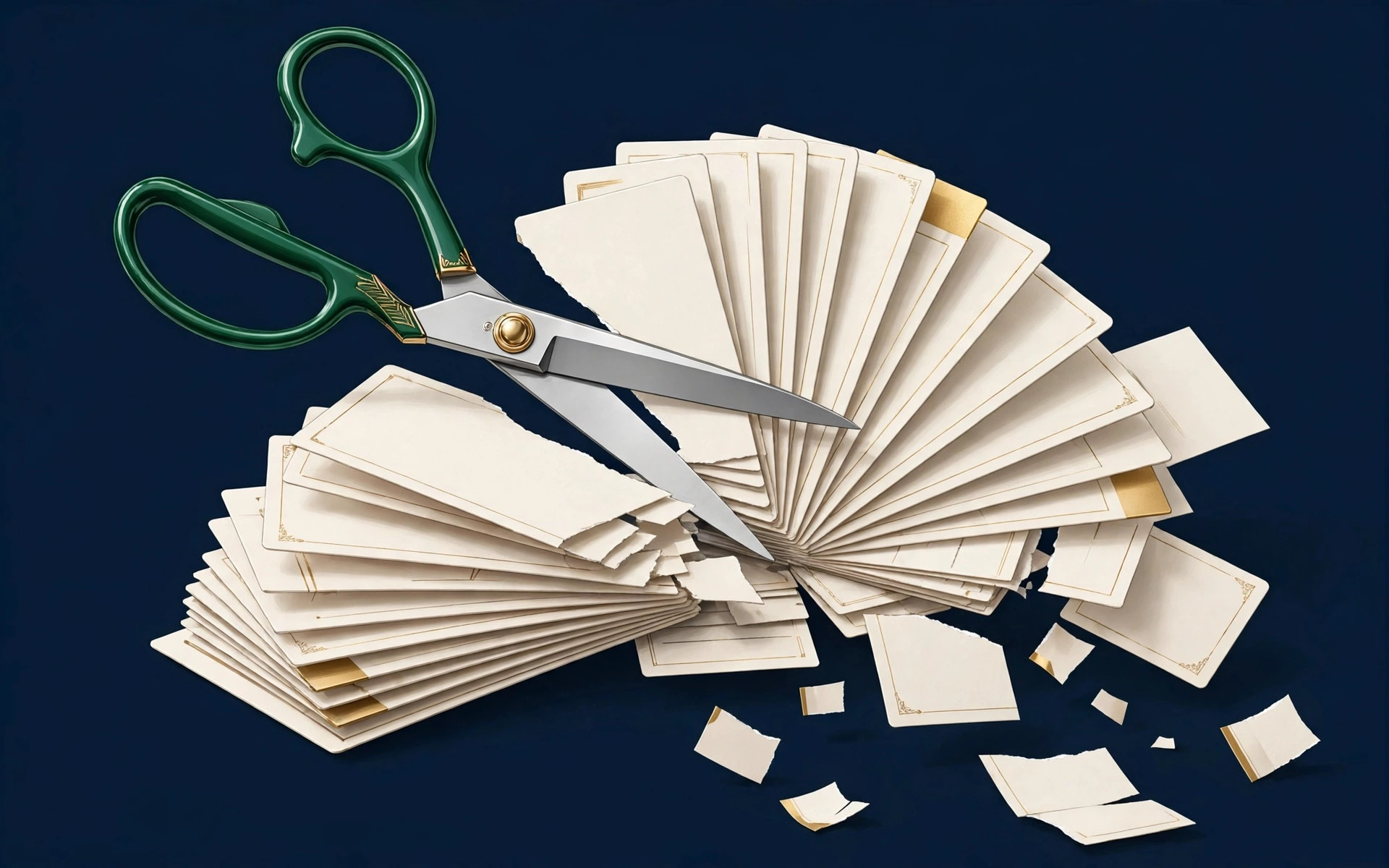
Your subscriptions are leaking money, and the leak is invisible by design. A 2026 survey of 1,272 US adults found that 59.9% had at least one paid subscription going unused each month, at an average wasted value of $26.79 a month — over $320 a year, dripping out of cards and bank accounts on autopilot. Meanwhile 70% of respondents admitted they had forgotten to cancel a free trial at least once, getting locked into a paid plan they never meant to buy.
Here is the good news: regulators are finally treating this as a trap, not a habit. On 19 October 2026 the UK government published draft guidance on a new subscription-contracts regime that takes effect on 1 January 2027 — businesses will have to send renewal reminders, make cancellation genuinely easy, and give buyers a 14-day cooling-off period on renewals. Signing up online will have to mean cancelling online.
You don't have to wait for January, though. Here is how to run a subscription audit this weekend and plug the leak yourself.
Why the leak stays hidden
Ask people what they spend on subscriptions and the answer keeps coming back around $111 a month — yet when US consumers were made to itemise every recurring charge, the real figure was closer to $250. That roughly two-fold perception gap comes from a 2026 survey roundup: we remember the streaming service and the gym, and forget the cloud storage bump, the app trial from March, and the annual fee that hit once. The mechanics are universal: 72% of consumers put every subscription on auto-pay, and once a payment needs no action, it needs no attention either. CNET's 2026 survey found millennials waste the most of any generation on unused subscriptions, at $29 a month.
The two-fold gap between what we think we spend and what we actually spend is not a data error. It is the finding.
The 20-minute audit
Set a timer. Twenty minutes is enough, because you are only answering one question per payment: would I buy this again today?
- Export the evidence. Pull three months of statements from your main bank account and cards. Search for recurring amounts — streaming, apps, cloud storage, gym, delivery memberships, news, software. Small amounts hide best: the $4.99 here and the £7.99 there add up to real money.
- List them all in one place. Name, monthly or annual cost, next renewal date, and the last time you actually used it. Anything with no use in 30 days goes straight to the kill list. Anything you can't remember signing up for is already guilty until proven innocent.
- Triage into three piles. Keep and love (used weekly). Downgrade or pause (used occasionally — check for a cheaper tier or pause option). Cancel today (unused in 30+ days, duplicates, or forgotten trials). Be ruthless with duplicates: two music services, two cloud backups, three streaming platforms you rotate past each other.
- Cancel before you negotiate. Most cancellation flows now offer a discount or pause to make you stay. Only accept the retention offer if the service was already in your keep pile at full price.
- Note every renewal date. The survivors go into your calendar with a reminder a week before each annual renewal. Subscriptions are cheapest when you re-audit them, not when they auto-renew.
A quick test for anything you're unsure about: cancel it now. If you genuinely miss it within two weeks, resubscribe — you will have spent two weeks of the fee instead of twelve months of it.
The cancellation traps to watch for
Audit done is not the same as cancellation completed. Providers know that every extra click between you and the cancel button saves them another billing cycle: retention flows that offer a pause instead of a cancellation, screens with no visible cancel option, chat-only cancellation windows, and trial-to-paid conversions that happen at midnight with no reminder.
If you cannot find a cancel button, don't hunt for twenty minutes — check the provider's help page, your app store subscription settings (Apple and Google both centralise these), or your card issuer's recurring-payment controls. And screenshot the cancellation confirmation: disputed charges are much easier to win with proof.
The law is increasingly on your side. In the US, the Restore Online Shoppers' Confidence Act already requires online sellers to disclose subscription terms clearly and provide a simple way to stop recurring charges — the FTC used it in 2025 to extract a $2.5 billion Amazon Prime settlement over enrollment and cancellation practices. In the UK, easy cancellation becomes law in January 2027: under the Digital Markets, Competition and Consumers Act regime, signing up online will have to mean being able to cancel online, with fines of up to £300,000 or 10% of worldwide turnover.
How the rules compare: UK vs US vs Australia
| Where | The rule | Status |
|---|---|---|
| UK | Clearer up-front info, renewal reminders (including trial conversions), straightforward online cancellation, 14-day cooling-off on renewals of 12 months+ | In force 1 January 2027 |
| US | The FTC's "click-to-cancel" rule was vacated in July 2025 — but the ROSCA statute still requires simple cancellation, and roughly 30 states have their own auto-renewal laws | Statute and state laws in force; new federal rulemaking started 2026 |
| Australia | Bill banning subscription traps — mandatory disclosure of contract duration and an easy, straightforward cancellation method | Passed July 2026; in effect 1 July 2027 |
Entering a subscription online will soon have to mean being able to cancel online. Anything harder than that is a design choice, not an accident.
Make future subscriptions behave
The audit clears the backlog; these three habits stop it rebuilding.
1. The three-question signup test. Before any trial or subscription, answer in writing: what problem does this solve, when will I next re-check it, and what is the true annual cost (that "$9.99 a month" is $119.88 a year)?
2. Never let a trial convert unannounced. Set a calendar reminder for two days before every free trial ends, with the cancellation link in the note. A 2026 US survey found 70% of people had forgotten to cancel a trial at some point, costing them $34.31 on average — and for more than a fifth, that surprise bill meant borrowing from a relative.
3. Route subscriptions through one card. Put every recurring payment on a single card (or a virtual card number your bank lets you pause). Reviewing one statement a month becomes your permanent early-warning system.
Frequently asked questions
What counts as a subscription?
Anything that charges you on a schedule: streaming, apps, cloud storage, gym, delivery memberships, news sites, software, insurance add-ons, meal kits, and annual plans that renew without warning.
Should I cancel annual plans I'm not using?
Yes — check refund terms first, since many refund unused months. Even with no refund, cancelling stops next year's charge, usually the bigger win.
What if there is no cancel button?
Cancel through app store settings if you subscribed in-app, or ask your card issuer about recurring-payment controls. Screenshot everything — under the UK's new regime and US state auto-renewal laws, burying cancellation is increasingly the provider's problem.
How often should I re-run the audit?
Quarterly — it takes ten minutes once the list exists. Do the full twenty-minute version twice a year, ideally before the holidays and in January, when annual plans tend to renew.
Key takeaways
- A 2026 US survey found 59.9% of adults pay for at least one unused subscription each month — wasting $26.79 a month on average.
- Run a 20-minute audit: export three months of statements, list every recurring charge, triage into keep, downgrade, or cancel.
- From 1 January 2027, UK rules require renewal reminders, online cancellation for online signups, and a 14-day renewal cooling-off period.
- In the US, the FTC's click-to-cancel rule was vacated in 2025, but the ROSCA statute and roughly 30 state auto-renewal laws still apply.
- Set calendar reminders before every trial ends, and route all subscriptions through one card you review monthly.
The subscription economy runs on your inattention — auto-pay was designed to make payments invisible, and invisibility is where the waste lives. Spend twenty minutes this weekend making every recurring charge visible again, and let the new wave of cancellation rules finish the job. Your next step: open your last three months of statements and highlight every recurring charge. That's minute one of twenty, already done.
Sources
- Wilson Sonsini — UK CMA prepares for new consumer protection regime (Oct 21, 2026)
- Self Financial — Cost of Unused Paid Subscriptions 2026 survey
- SubscriptionShame Q2 2026 Report (citing CNET/YouGov 2026 State of Subscriptions survey)
- QubeQ — FTC click-to-cancel rule status 2026 (vacated July 8, 2025)
- PayKings — Free trial subscription billing rules after click-to-cancel (incl. FTC/Amazon $2.5B settlement)
More in Money Habits

Money Habits · Habit
Viral Money Trends 2026: Keep, Adapt, or Skip
From moneymaxxing to No Buy 2026, this year's viral money trends get honest verdicts: which habits are worth keeping, which need adapting, and which to skip.
29 October 2026 · 8 min read

Money Habits · Habit
Soft Saving: The Gentle Way to Build Real Wealth
Soft saving is Gen Z's gentler answer to extreme frugality: save a sustainable amount monthly, enjoy life now, and let consistency build wealth over time.
28 October 2026 · 8 min read
Money Habits · Habit
The November Money Challenge: 10 Moves, One Month
The viral November Money Challenge lists 10 money moves for one month. Here is how to do it sensibly, and how to adapt it if money is tight.
27 October 2026 · 7 min read