Explainer
Thailand Now Lets Tourists Pay With Crypto
Thailand’s new WORPT app lets foreign tourists convert USDT or USDC into baht and pay by QR code — no Thai bank account needed. How it works and what it costs.
In this article
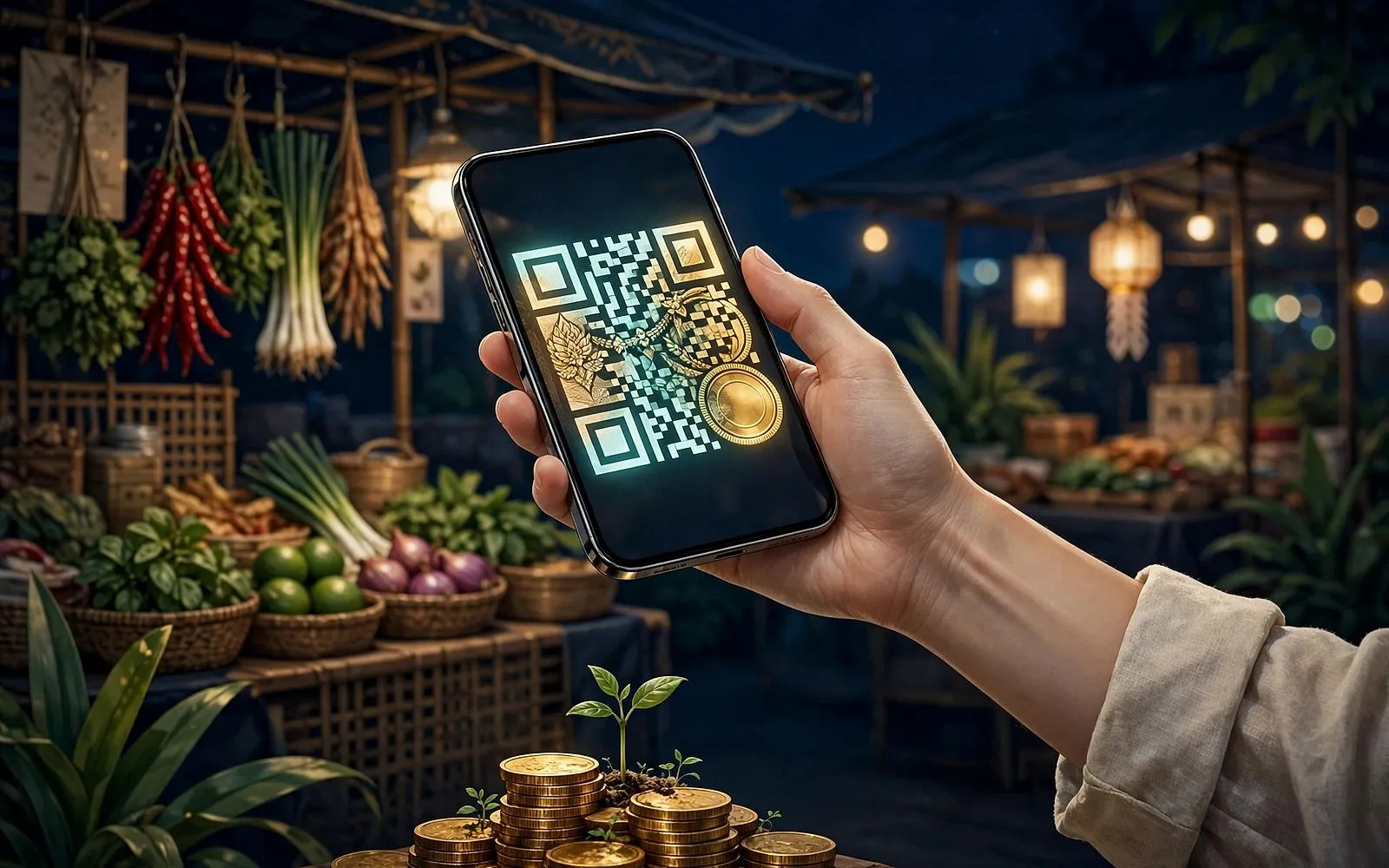
Thailand has just opened a new way to pay for your holiday. On 13 November 2026, Thai fintech firms Wipay and Waan Exchange launched WORPT, an app that lets foreign tourists convert cryptocurrency into Thai baht and pay by scanning the QR codes locals use. No Thai bank account, no cash exchange booth, no ATM queue required.
It is the first app to go live under TouristDigiPay, the Thai Securities and Exchange Commission's sandbox for tourist crypto payments. If you hold stablecoins and you are heading to Bangkok, Phuket or Chiang Mai, it changes the maths of how you pay — but only in specific ways, and with limits worth knowing first.
What WORPT actually does
WORPT is a bridge, not a shop till that takes crypto. You deposit a supported stablecoin, it converts it into Thai baht held in an electronic-money wallet, and you spend that baht by scanning a merchant's Thai QR PromptPay code. The merchant never sees crypto: they receive ordinary baht through the existing payment system.
The app was jointly developed by Waan Exchange (Waanx), a digital asset exchange and broker licensed by Thailand's SEC, and Wipay, an electronic-money provider licensed by the Bank of Thailand. It has been available to download since 26 October 2026, with the official launch event held on 13 November. Wipay is targeting crypto holders from South Korea, Japan, the Middle East and Southeast Asia, and projects 200,000 users in the first year and 15 billion baht — about $440 million — in payments over the 18-month trial. Launch-day coverage put the user figure slightly lower, at 150,000 over 18 months. Either way, these are company forecasts, not results.
How it works, step by step
- Download WORPT from the App Store or Google Play. It is for foreign tourists only — Thai nationals cannot use it.
- Verify your identity. The app runs passport checks and transaction monitoring under the sandbox's anti-money-laundering rules, so expect a short wait.
- Send USDT or USDC to your WORPT wallet. Only these two stablecoins are supported, and only on the Ethereum network (ERC-20). Sending them on another network risks losing the funds.
- Convert to baht. The app converts your stablecoins into a baht balance, charging a 1.5% conversion fee that includes VAT.
- Pay by scanning Thai QR codes at participating merchants — restaurants, shops, hotels and malls. The Mall Group is among the participating retailers, though no full merchant list has been published.
The one detail that matters most: WORPT only accepts USDT and USDC on Ethereum. Bitcoin, Solana, and USDT sent on Tron or any other network are not supported. Double-check the network before you send — crypto sent to the wrong network is usually gone for good.
What it costs
The headline cost is simple: a 1.5% conversion fee, VAT included. Convert crypto worth 10,000 baht and you pay 150 baht; convert 50,000 baht and you pay 750 baht. That is the main fee for converting in. Converting leftover baht back costs another 1.5%, sending USDT out costs 1 USDT, and QR payments are free only until 31 March 2027; an inactivity fee applies after three months without use.
How does that compare with the usual ways tourists pay in Thailand? The comparison matters, because Thailand is famously expensive for cash:
| Way to pay | Typical cost | What to watch |
|---|---|---|
| WORPT (USDT/USDC → baht) | 1.5% conversion fee | Ethereum network fee to send the coins; 100,000 baht wallet cap; no cash withdrawals |
| Foreign card at a Thai ATM | 220 baht per withdrawal, flat | Same fee whether you take 1,000 or 30,000 baht; your home bank may add 1–3% on top |
| Multi-currency travel card (Wise, Revolut) | Mid-market rate on card spending | Still pays the 220 baht Thai ATM fee on cash withdrawals; free ATM allowance is limited |
| Cash exchanged at a booth | Rate spread, varies widely | Airport counters are usually the worst rate; downtown booths are typically better |
Worked example — all figures below are our own calculations. On a 50,000-baht trip budget, WORPT's 1.5% costs 750 baht. Five ATM withdrawals of 10,000 baht cost 1,100 baht in Thai ATM fees alone, before your home bank's charges. Two withdrawals of 25,000 baht cost 440 baht in Thai fees — cheaper than WORPT, if you are comfortable carrying that much cash. The app wins for travellers who make many small payments by QR and want to skip the ATM entirely; it loses for anyone happy to withdraw large sums rarely.
Thailand's 220-baht ATM fee is the same at every bank because the Bank of Thailand sets it. That flat fee is exactly why a percentage-based alternative like WORPT can win — or lose — depending on how you spend.
The limits and catches
WORPT is a pilot, and it shows in the fine print. The wallet is capped at a reported 100,000 baht per person, and earlier TouristDigiPay plans described a 500,000-baht monthly limit and 100,000 baht per transaction — check the current limits inside the app before you load it up. Cash withdrawals are not permitted: the balance can only be spent by QR payment or, soon, by card. It is a sandbox, not a permanent service — each operator can run for up to 18 months, after which regulators decide how the service develops, so the rules, fees and even availability could change. Merchant coverage is unproven: QR payment is everywhere in Thailand, but WORPT works only at participating merchants, and no complete list has been published. A Visa prepaid card is planned — physical cards in mid-November 2026, virtual cards in early 2027 — but until then QR is the only way to spend.
Do not load your whole holiday budget into WORPT on day one. It is a new app in a regulatory trial, with a wallet cap, no cash-out option and unproven merchant coverage. Load a modest amount, test it at a couple of shops, and keep a backup card and some cash.
Is it worth it for your trip?
It makes sense if you already hold USDT or USDC, pay for most things by QR or card, and dislike queuing at ATMs or carrying large amounts of cash. It makes less sense if you would need to buy stablecoins first — exchange fees and spreads on the way in can wipe out the saving — or if you mostly pay cash at markets and street stalls. And it makes no sense at all if you hold Bitcoin or other crypto rather than stablecoins: WORPT does not accept them, and converting them to USDT first adds another fee and another taxable event.
Three risks are worth knowing. Stablecoins are designed to track the US dollar but have briefly traded below $1 in the past — the risk is small, but you hold a dollar-pegged token, not dollars, until you convert. Sending coins on Ethereum costs a network (gas) fee that varies with congestion, so send one larger amount rather than several small ones. And in the UK and the US, swapping crypto for baht generally counts as a disposal for tax purposes — for a dollar-pegged stablecoin the gain is usually tiny, but keep records of what you sent and received.
Frequently asked questions
Do I need a Thai bank account to use WORPT?
No. That is the point of the service — tourists use the app and pay by QR code without opening a Thai account. You do need to pass the app's identity verification with your passport.
Which cryptocurrencies does WORPT accept?
Only USDT (Tether) and USDC (USD Coin), and only on the Ethereum network (ERC-20). Bitcoin and other coins are not supported, and sending stablecoins on another network risks losing them.
What does WORPT cost?
A 1.5% conversion fee, including VAT, when you convert stablecoins into baht. There is no published fee for QR payments themselves. You also pay the Ethereum network fee to send your coins into the app.
Can I withdraw cash from my WORPT wallet?
No. Cash withdrawals are not permitted under the programme's rules. The balance can only be spent by QR payment at participating merchants, with a Visa prepaid card planned for mid-November 2026.
Key takeaways
- WORPT, launched 13 November 2026, lets foreign tourists convert USDT or USDC into baht and pay by Thai QR PromptPay — no Thai bank account needed.
- It costs 1.5% to convert, with a 100,000-baht wallet cap, no cash withdrawals, and only Ethereum-network stablecoins accepted.
- Against Thailand's flat 220-baht ATM fee, WORPT wins for frequent small QR payments and loses for travellers happy to withdraw large sums rarely.
- It is an 18-month regulatory sandbox trial, so load modest amounts, test it first, and keep a backup card and cash.
Thailand is testing whether crypto can become ordinary holiday money, and WORPT is the first live answer. For stablecoin holders who pay by QR and hate ATM fees, it is genuinely useful — with a 1.5% price tag and a pilot's worth of caveats. If that is you, download it before you fly, verify your identity at home, send a small test amount first, and try it at a shop before committing your holiday budget. If you pay mostly in cash or hold Bitcoin rather than stablecoins, the ATM and your travel card are still the better tools for this trip.
Sources
- Bloomberg via BloomingBit — Crypto Enters Thailand's Tourism Market
- Asia Daily — Thailand Launches WORPT
- Travel and Tour World — Thailand Opens QR Shopping to Crypto Tourists
- PRNewswire via The Hindu BusinessLine — WORPT Under TouristDigiPay Sandbox
- PRNewswire via Asianet News — WORPT Now Available
- Destination Thailand — Thailand ATM Fees 2026
- Travel Currency Guide — ATMs in Bangkok: 220 Baht Fee
The MoneyHabit editorial desk researches, writes and reviews every article against our editorial policy.
The Sunday Habit
One useful money idea, every week.
A short, practical email every Sunday — no spam, no selling your address, unsubscribe anytime.
Advertisement
More in Financial Technology
Financial Technology · Explainer
Pay Government Bills in Crypto? Dubai & Miami Say Yes
Dubai will let you pay government fees in crypto, and Miami-Dade now takes Bitcoin for property tax. What's actually live — and the tax catch.
17 November 2026 · 10 min read

Financial Technology · Explainer
Your Bank Now Sells Bitcoin: Discount Bank's Crypto Move
From 26 November, Israel Discount Bank lets customers buy Bitcoin and Ethereum in its app — at a 2% fee, in a closed wallet, with tax handled. Here is the deal.
15 November 2026 · 10 min read

Financial Technology · Explainer
RCBC Now Lets Filipino Freelancers Get Paid in Stablecoins
RCBC's Pulz app now accepts USDC and USDT from US clients, converting them to dollars automatically. Here's how it works, what it costs, and the catches.
14 November 2026 · 9 min read