News
Unocoin Breach: When a 'Frozen' Exchange Wallet Moves
Unocoin froze its wallets on 6 November — then money still moved out. What the breach teaches every crypto holder about exchange risk.
In this article
On Friday 6 November, India's oldest crypto exchange spotted unauthorised activity on its servers. Within minutes it had asked two of the world's biggest crypto custodians to freeze its accounts. Three days later it shut down entirely. And then — in an update published on 13 November — it admitted something that should worry everyone who holds crypto on an exchange: money moved out of a wallet that was supposed to be frozen.
Unocoin, founded in 2013 and used by more than 2.4 million people, is still offline as this article is published. No restart date has been given, no amount of money has been disclosed, and the root cause is still unknown. What we do know is already enough to change how you think about exchange risk — and what to do the next time an exchange you use goes dark.
What happened: the timeline
| Date | What Unocoin says happened |
|---|---|
| Fri 6 Nov | Unauthorised activity detected. Freeze requested from Fireblocks at 11:24 UTC and BitGo at 11:29 UTC; both confirmed. No loss of funds identified at that point. |
| Mon 9 Nov | Further unauthorised activity despite security fixes. All services suspended, logins disabled. Investigation finds the infrastructure "had been compromised". |
| 9–12 Nov | Unocoin decides to rebuild its entire server infrastructure from scratch — estimated at 4–5 working days. Users stay locked out; the website shows a 504 error on 12 Nov. |
| Thu 12 Nov | Outgoing transactions found from one Ethereum address in its BitGo wallet setup, used to fund ERC-20 tokens. Unocoin escalates to BitGo; it cannot log in to the frozen accounts to check the full picture. |
| Fri 13 Nov | BitGo confirms the freeze worked as intended. The transactions were signed and broadcast externally, on-chain, without BitGo's platform — and the multisig backup mechanism "seems to be exploited". |
How money moved from a "frozen" wallet
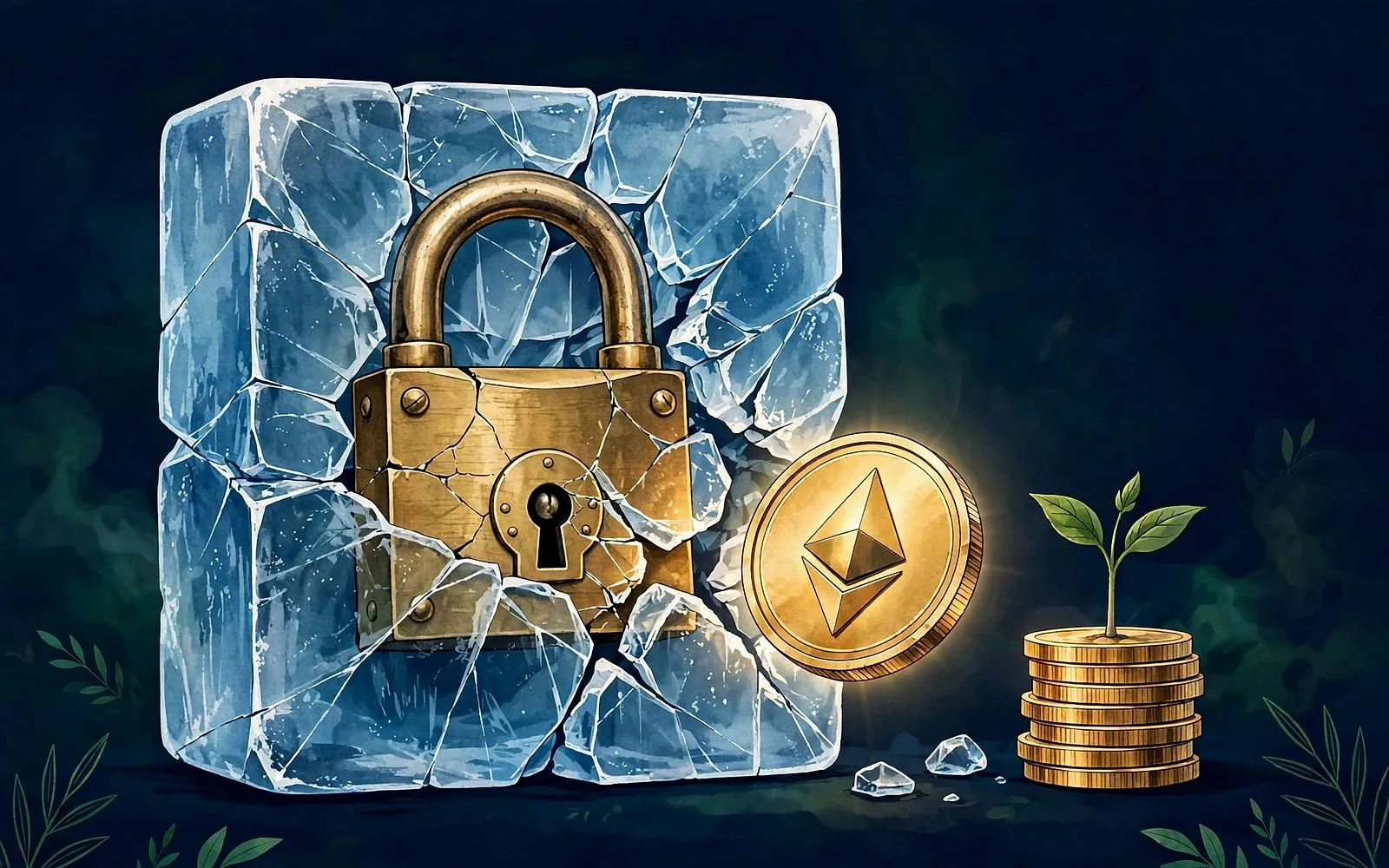
The detail that makes this incident different from a routine hack is the 13 November update. A freeze at a custodian stops transactions made through that custodian's platform. It cannot stop a transaction signed with the right keys and broadcast directly to the blockchain by someone else.
BitGo's multisignature wallets are built with a backup mechanism: if BitGo ever disappeared, the customer can still reach its funds using keys held outside BitGo. That safety net exists for a good reason. But Unocoin says that backup mechanism "seems to be exploited" — the attacker appears to have used keys or access outside BitGo's systems to sign transactions and push them on-chain directly. The freeze did exactly what it was asked to do. It was bypassed, not broken.
Unocoin froze its accounts within five minutes of detecting the intrusion. The money still moved. A freeze protects the front door — it does nothing about a spare key.
Unocoin also says it cannot yet see the full extent of what left. Its BitGo accounts remain frozen, it cannot log in to them, and because BitGo's wallet design uses change addresses — fresh addresses created to hold leftover balances — the exchange says it cannot fully trace the activity on the blockchain either. No amount, transaction count or destination has been disclosed.
What Unocoin has — and hasn't — told its users
Unocoin says more than 90% of the cryptocurrency it holds for customers sits in cold storage — wallets kept offline. That is the exchange's own claim and it has not been independently verified. It is also the figure that matters most: if it holds, the damage is limited to the small hot-wallet slice used for day-to-day transactions.
There is a worrying counter-signal. Blockchain analytics firm Arkham Intelligence attributes roughly 81,000 addresses to Unocoin, and tracker Onchain Lens reported on 12 November that those addresses collectively showed a $0 balance. That does not prove the wallets were drained — address attribution is imperfect, and cold-storage holdings would not necessarily appear in that set — but Unocoin has not confirmed or explained the figure. The exchange maintains that no user funds have been lost, while also saying it lacks full visibility. Both statements can be true at once only if the outgoing transfers came from operational funds rather than customer balances — and that is exactly what the investigation has not yet established.
This is not Unocoin's first security scare. In August 2017, users reported unauthorised bitcoin transfers and the exchange stopped pending transactions. The company has operated since 2013 and is registered with India's Financial Intelligence Unit — which is why this incident lands so hard. If a 13-year-old, regulated exchange can be locked out of its own wallets, no exchange's reputation is a substitute for knowing where your coins actually sit.
The pattern is bigger than one exchange
Unocoin is the third exchange incident in a fortnight. Binance, the world's largest exchange, was hacked on 29 October and only began restoring withdrawals in phases from 1 November. On 6 November — the same day Unocoin detected its intrusion — South Korea's GOPAX halted trading and deposits after a hacking-threat email, moving withdrawals to hand-approved emailed requests.
Regulators are reacting in real time. On 12 November, South Korea's Financial Services Commission said it will issue a "no-action letter" letting exchanges block deposits and withdrawals when a hack is merely suspected, rather than waiting until a breach is confirmed. Under current Korean law, exchanges may only block transactions once a hack is clearly established. The letter has not yet been issued and its conditions have not been spelled out, but the direction is clear: freezes are about to become faster and more common.
The FSC's own audit explains the urgency: it reviewed 555 financial firms in October and found cybersecurity deficiencies at 130 of them, and more than 37 firms were hit by cyber incidents between late September and early November, exposing around 473,000 records.
The lesson of November 2026: exchange freezes are becoming a normal part of crypto life, not a rare emergency. Treat any exchange balance as money you may not be able to reach for days or weeks — and size your holdings accordingly.
Hot vs cold storage: the distinction that decides everything
| Hot wallet | Cold storage | |
|---|---|---|
| Connected to the internet? | Yes — always online | No — kept offline |
| Used for | Day-to-day deposits and withdrawals | Long-term holdings |
| Risk | Reachable by attackers who breach the exchange | Only reachable with physical access |
| Who holds the keys | The exchange | You, if self-custodied |
What to do when your exchange freezes
If you hold crypto on any exchange — Unocoin or otherwise — use this incident as the prompt to act now, while nothing is on fire:
- Screenshot your balances and transaction history. If logins are disabled, your own records are your evidence. Do this for every exchange you use, today.
- Only trust the exchange's official channels. Scammers flood every exchange incident with fake "support" accounts and phishing links promising early withdrawals.
- Never share a seed phrase or private key. No legitimate support agent will ever ask for one. Anyone who does is a scammer.
- Check what the exchange actually proves. Look for proof-of-reserves attestations and cold-storage claims — and note whether they are audited independently or simply asserted by the exchange.
- Decide your custody split. Money you might need soon can stay on a reputable exchange. Money you are holding for years belongs in self-custody — a hardware wallet whose seed phrase only you control — or spread across more than one exchange, so no single freeze locks you out completely.
- Watch for the restart, not the rumours. Unocoin has given a 4–5 working day rebuild estimate and no restart date. Judge recovery by restored withdrawals, not by social-media claims.
Do not try to "rescue" funds during an incident. If logins are disabled, there is no legitimate shortcut back in. Any tool, link or person offering one is a scam — and the chaos of a freeze is exactly when these scams work best.
Frequently asked questions
Has Unocoin confirmed that customer funds were stolen?
No. As of 13 November, Unocoin has disclosed outgoing transactions from one BitGo Ethereum address but no amount, destination or root cause, and it says it does not yet have full visibility. Treat the loss question as unanswered until the investigation reports.
Is my crypto safe if my exchange says it is in cold storage?
Cold storage is the right design — offline wallets are far harder to steal from than online ones. But the claim is only as good as the exchange's controls and honesty. Look for independent audits and proof-of-reserves, and remember that even well-designed systems have backup mechanisms that can be exploited.
Can an exchange freeze my withdrawals even if nothing was stolen?
Yes — and increasingly by design. South Korea's regulator is moving to let exchanges freeze on suspicion alone. Freezes protect the exchange's remaining funds, but they also lock out innocent customers. That is why a second exchange, or self-custody, is worth having before you need it.
What should Unocoin users do right now?
Keep records of your balances, follow only Unocoin's official blog and verified accounts, ignore anyone offering early access, and do not deposit anything new until services are restored and withdrawals are demonstrably working.
Key takeaways
- Unocoin detected unauthorised activity on 6 November, froze accounts at BitGo and Fireblocks within minutes, and suspended all services on 9 November after further activity.
- On 12 November it found outgoing transactions from a BitGo Ethereum address; on 13 November BitGo confirmed the freeze worked — the transactions were signed and broadcast externally, apparently exploiting a multisig backup mechanism.
- No amount, destination, root cause or restart date has been disclosed; more than 90% cold storage is the exchange's own unverified claim.
- Regulators are responding fast: South Korea will let exchanges freeze withdrawals on suspicion of a hack, not just after a confirmed breach.
- If you hold crypto on an exchange, screenshot your balances, trust only official channels, never share a seed phrase, and keep long-term holdings in self-custody or spread across platforms.
Unocoin may yet restore services with customer funds intact — its rebuild is estimated at 4–5 working days, and the investigation is ongoing. But the incident has already taught the lesson that matters: a freeze is a promise about a platform, not a law of the blockchain. The only funds no one can move without your say-so are the ones whose keys only you hold. Check where yours are today, while you still can.
Sources
The MoneyHabit editorial desk researches, writes and reviews every article against our editorial policy.
The Sunday Habit
One useful money idea, every week.
A short, practical email every Sunday — no spam, no selling your address, unsubscribe anytime.
Advertisement
More in Money News & Explainers

Money News & Explainers · Guide
UK Autumn Budget 2026: 6 Money Moves Before 28 October
The Autumn Budget lands on 28 October 2026. Here's what's already law, what's rumoured — and six moves to make before the Chancellor stands up.
22 October 2026 · 7 min read

Money News & Explainers · News
UPI's First Fee Is Delayed Again: What It Means for You
India's 0.4% UPI merchant fee was due on 15 October. It still has no start date — and may slip past the 2027 elections. Who pays, and what stays free.
19 November 2026 · 10 min read

Money News & Explainers · News
Rent Outran Your Paycheck Since 1985: The Real Data
A viral chart shows rent pulling away from pay since 1985. The official data backs it up — and the gap is now a record. Here is what the numbers really say.
19 November 2026 · 10 min read