Explainer
Visa's Stablecoin Payouts: What It Means for Your Money
Visa will let businesses fund cross-border payouts with stablecoins while you still receive ordinary money. Here's how it works and what to watch.
In this article
Visa announced on 18 November 2026 that it will let businesses in Asia Pacific fund cross-border payouts with stablecoins — while the person on the receiving end still gets paid in ordinary money. It is the latest step in a quiet shift: the plumbing behind international payments is starting to run on digital dollars, even though most of us will never see a crypto wallet. If you freelance for overseas clients, receive money from family abroad, or get paid by a platform that operates across borders, this change is aimed at how your money reaches you.
The announcement came at the Singapore FinTech Festival 2026. Visa is not a crypto startup experimenting at the edges: its Visa Direct network reaches more than 18 billion payment endpoints worldwide, and it has already moved stablecoin funding from pilot to commercial production in the United States. When the world's largest card network treats stablecoins as working infrastructure, the question is how it changes the cost and speed of getting paid.
What Visa actually announced
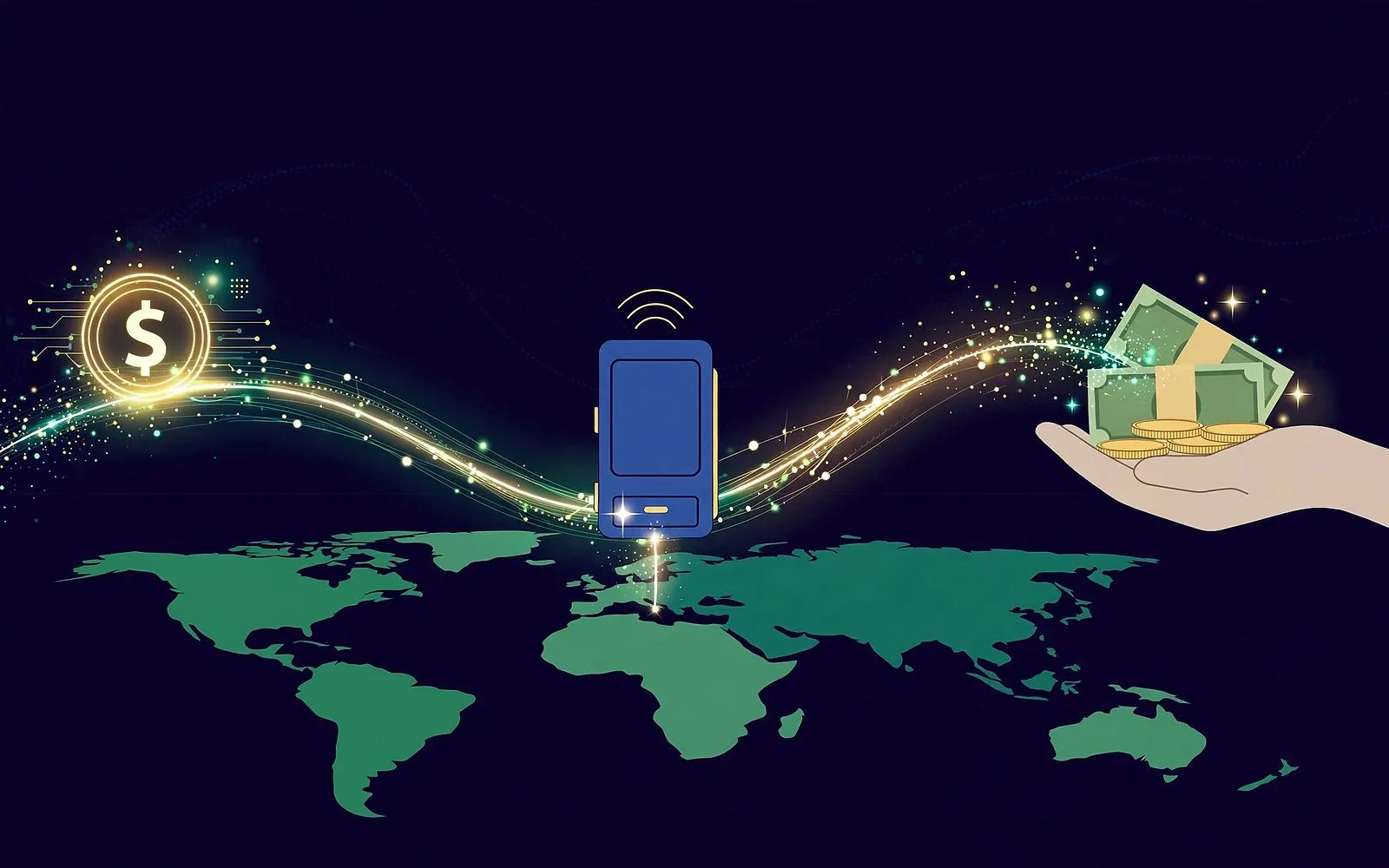
Visa will enable eligible clients in Asia Pacific to use supported stablecoins to fund cross-border payouts through Visa Direct, its real-time money movement platform. The first participant is dtcpay, a Singapore-based digital payments company. Under the pilot, dtcpay uses stablecoins to prefund payouts in fiat currency — dtcpay puts digital dollars in first, and Visa Direct sends the payout to the recipient in local currency.
Three details are worth noting. First, Visa has not said which stablecoins the pilot will support, or when it will be widely available. Second, Visa stressed that it does not provide regulated digital asset services itself; licensed partners handle that side. dtcpay holds a Major Payment Institution licence from the Monetary Authority of Singapore, covering cross-border transfers, digital payment token services and e-money issuance. Third, stablecoin infrastructure provider Triple-A will supply the processing, conversion, settlement and compliance screening behind the pilot.
This is not Visa's first move. Visa Direct began testing stablecoin funding in September 2025, and in October 2026 the service moved into commercial production in the United States with Inyo Global, using USDC for payouts in more than 180 countries. Visa's stablecoin settlement activity has already passed a $25 billion annualised run rate, according to industry reporting.
How stablecoin prefunding works
The idea sounds technical, but the mechanics are straightforward once you separate the two halves of a cross-border payment: funding it, and paying it out.
- A business needs to pay someone abroad. That could be a freelancer in Manila, a supplier in Jakarta, or a gig worker in Mumbai — owed money in the recipient's local currency.
- Funding the payout is the slow, expensive part today. Traditionally, the business — or its payment provider — must pre-deposit funds in each destination country before it can send a payout. That ties up working capital in dozens of bank accounts, and it is why payouts stall outside banking hours and over weekends.
- Stablecoins replace the pre-deposited cash. A stablecoin is a digital token designed to hold a steady value, usually pegged one-to-one to the US dollar. Instead of parking money in a local bank account days in advance, the provider uses stablecoins to fund the payout when it is needed.
- The recipient still receives ordinary money. Visa Direct converts the funded amount and delivers it in fiat currency to the recipient's bank account, card or wallet. No crypto wallet, no stablecoins to understand, no token to touch.
That last point is the one that matters most. The stablecoin lives entirely on the funding side, inside the plumbing. Your experience is a bank deposit or card payout arriving in your own currency — ideally faster, and ideally cheaper, because the provider no longer has to lock money up in advance in every corridor it serves.
“Stablecoins are becoming an increasingly important part of the infrastructure supporting global money movement. Their long-term value lies in how effectively they connect with the financial systems businesses already use.” — Vira Platonova, Global Head of Visa Direct
Why the old way is so expensive
Look at what sending money across a border costs today. The World Bank's Remittance Prices Worldwide database — the standard global benchmark — puts the average cost of sending $200 at 6.36% of the amount sent, based on the most recent data published in April 2026. That is more than double the United Nations target of under 3% by 2030.
The average hides a wide gap. Banks average 14.99% on a $200 international transfer, while money transfer operators average 4.72% and digital-only services around 3.5%. Sending money to Sub-Saharan Africa costs roughly 8% on average — the most expensive receiving region in the world. On a $200 transfer, the difference between a bank wire and a digital operator can be more than $20, before the exchange-rate margin is counted.
Part of the cost is the prefunding problem Visa is targeting. When a payment provider must hold cash in advance in every country it serves, that idle money has a cost, and the cost lands on the sender — or on the recipient, through a worse exchange rate. Stablecoins move around the clock and settle in minutes rather than days, so providers can fund payouts when they are needed instead of days ahead..
The fee you see is only half the cost. On most cross-border transfers, the exchange-rate margin — the gap between the rate you are given and the real market rate — quietly takes as much as the stated fee. When you compare payout options, ask for the total cost: fee plus margin, on the amount you will actually receive.
What changes for you
For most readers, the honest answer is: not much, yet. This is a pilot with one partner in one region, and Visa has not named the stablecoins involved or a timetable for wider rollout. But the direction of travel is clear, and it touches three groups directly.
Freelancers and gig workers. If you work for clients or platforms in other countries, your pay travels through a chain of intermediaries, each taking a cut and adding a delay. Stablecoin-funded payouts should shorten that chain and pay you faster — including outside banking hours. Compare the amount that actually lands in your account, not the fee advertised.
Families receiving money from abroad. Remittances are where a few percentage points matter most, because the amounts are small and the senders are often lower-income workers. If stablecoin funding genuinely lowers the cost of moving money, the benefit should show up as more money arriving for the same send — but only if providers pass the savings on. Watch the total cost, not the technology label.
The stablecoin payment wave, side by side
Visa's pilot is not happening in isolation. Almost every major player in payments has launched a stablecoin move — but they are not all the same thing. Some pay you in stablecoins; Visa's approach pays you in fiat and only uses stablecoins behind the scenes.
| Move | What it does | Do you touch crypto? |
|---|---|---|
| Visa + dtcpay (Nov 2026) | Stablecoins fund cross-border payouts via Visa Direct; recipients get fiat | No — fiat in, fiat out |
| Stripe stablecoin payouts | Businesses pay out in stablecoins directly | Yes — recipients receive tokens |
| RCBC freelancer payments | Filipino freelancers can be paid in stablecoins | Yes — recipients hold stablecoins |
| ZelleUSD on Solana | Zelle's stablecoin for global transfers | Yes — token-based transfers |
| OnePay checking deposits | Stablecoins converted into checking-account dollars | No — lands as bank dollars |
The risks and open questions
A pilot is a pilot. The most important thing to understand about this announcement is what it does not promise. Visa has not named the stablecoins, has not set a date for general availability, and has not said what the service will cost. The US version went from testing to production in about a year, but pilots sometimes stall. Treat this as a signal about where payments are heading, not as a service you can use tomorrow.
Regulation is the other open question. In the United States, the GENIUS Act now provides a federal framework for payment stablecoins, which is one reason the big payment companies have moved so fast this year. In other markets, including the UK, regulators are still shaping their own stablecoin rules, so the protections that cover an ordinary bank transfer do not automatically apply to every stablecoin arrangement. That is one reason Visa's model — where the recipient still gets a normal fiat payout — is the cautious path.
There is also a concentration question. When a handful of global networks control the new rails, the savings from cheaper funding do not automatically reach the person being paid. The history of cross-border payments is full of efficiency gains that stayed with the provider — so watch what actually lands in recipients' accounts as these services roll out.
Do not buy crypto because of this announcement. Visa's pilot is about how businesses fund payouts — it is not a reason to hold stablecoins or any other cryptocurrency yourself, and it says nothing about their price. If you receive a payout in fiat, you do not need to own a single token.
Frequently asked questions
Will I be paid in stablecoins now?
No — not through this pilot. The stablecoins work on the funding side, and you receive the money in your local currency through the usual channels. You do not need a crypto wallet and you will not receive tokens.
Will it make my payments cheaper?
Possibly, over time. Stablecoin funding should cut the cost of prefunding payouts, a hidden driver of high cross-border fees — but providers may not pass the savings on. The World Bank's benchmark — 6.36% on a $200 transfer — is the number to watch: if it falls as these rails scale, the savings are real.
Is my money safe if a payout is funded with stablecoins?
Your payout still arrives as a normal fiat payment through Visa Direct, so the usual protections apply. The stablecoin side is handled by licensed partners — in this pilot, dtcpay under its Singapore licence, with Triple-A providing infrastructure. Stick to established platforms and keep records of what you are owed.
How is this different from being paid in crypto?
Being paid in crypto means you receive tokens and must convert or spend them yourself, taking on price and conversion risk. Visa's model keeps the crypto on the funding side and pays you in fiat. Other services, like Stripe's stablecoin payouts or RCBC's freelancer payments, do pay recipients in stablecoins — so check which model a payout option uses before you choose it.
Key takeaways
- Visa announced on 18 November 2026 that eligible Asia Pacific clients can fund cross-border payouts with stablecoins via Visa Direct, in a pilot with Singapore's dtcpay.
- Recipients still receive ordinary money — stablecoins only fund the payout behind the scenes, so you need no crypto wallet and never touch a token.
- The US version already reached commercial production in October 2026 with Inyo Global, using USDC for payouts in more than 180 countries.
- Cross-border payments are expensive: the World Bank puts the average cost of sending $200 at 6.36%, with banks averaging nearly 15% — stablecoin funding targets the prefunding cost inside those fees.
- It is still a pilot: no stablecoins named, no rollout date, no guarantee the savings reach you — judge it by what actually lands in your account.
Visa's announcement is easy to misread as a crypto story. It is really a plumbing story — about the cost of moving money across borders, and who pockets the savings when the plumbing gets cheaper. The US rollout shows it can move from pilot to production in about a year. The next time a platform you use offers a new payout option, do not ask whether it uses stablecoins. Ask what it costs, how fast it arrives, and how much lands in your account. That is the only test that matters to your money.
Sources
The MoneyHabit editorial desk researches, writes and reviews every article against our editorial policy.
The Sunday Habit
One useful money idea, every week.
A short, practical email every Sunday — no spam, no selling your address, unsubscribe anytime.
Advertisement
More in Financial Technology

Financial Technology · Explainer
Stablecoin Rules Are Final: What It Means for Your Money
On Oct 21, 2026, the OCC finalized America's stablecoin rulebook: 1:1 reserves, two-day redemptions, and a fight over rewards. Here's what it means for you.
24 October 2026 · 6 min read

Financial Technology · News
Visa Now Settles in Western Union's USDPT Stablecoin
Visa has added Western Union's USDPT stablecoin as a settlement asset on VisaNet. Here's what changes, what doesn't, and why remittances are the real story.
13 November 2026 · 9 min read

Financial Technology · News
Stripe's Parafin Deal: What It Means for Small Firms
Stripe closed its Parafin deal on 11 November, putting the credit engine behind DoorDash, Amazon and Gusto inside Stripe. Here's what changes.
19 November 2026 · 10 min read