Explainer
Why Bond Prices Fall When Rates Rise
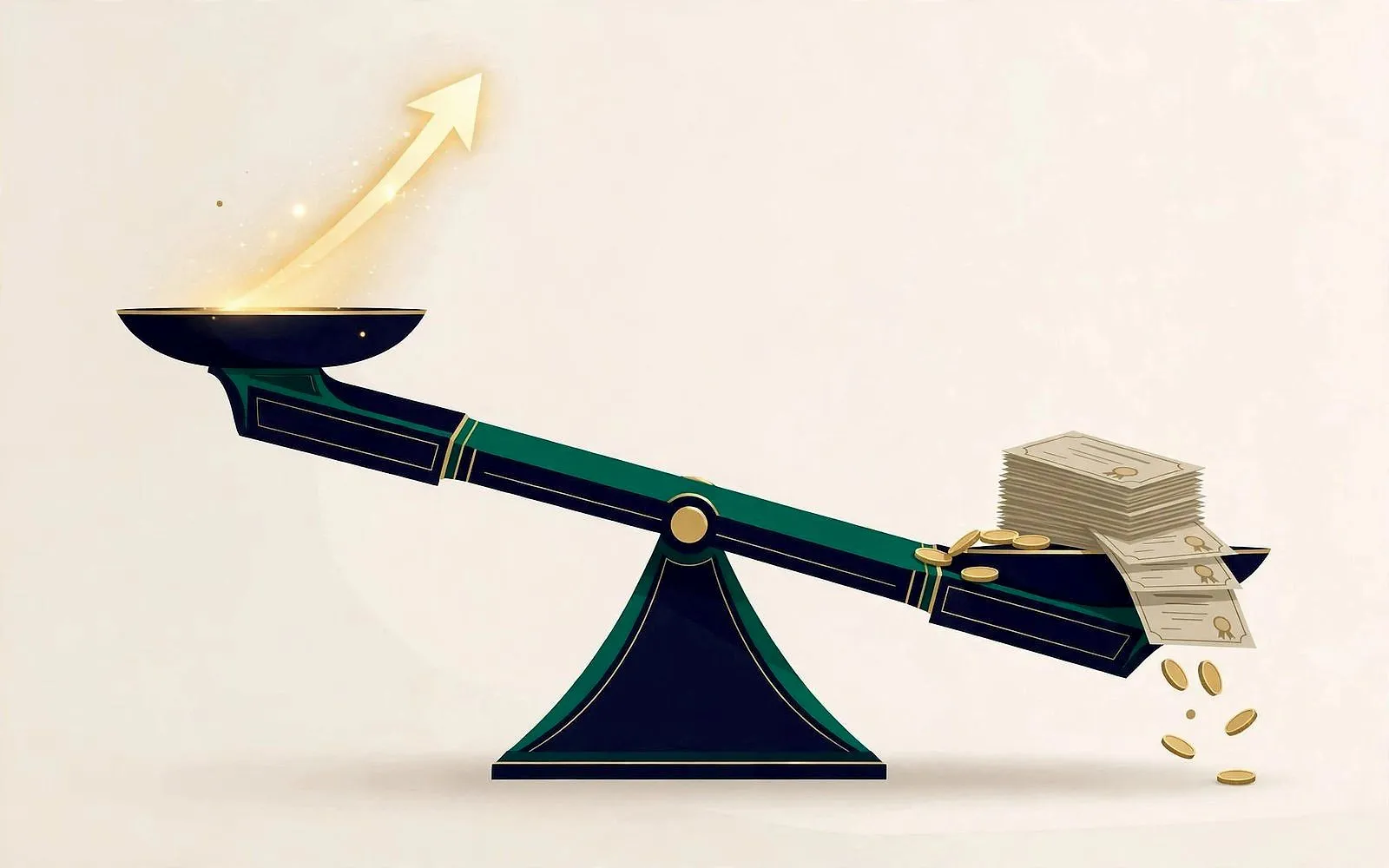
When rates rise, bond prices fall — and this week both the Fed and the Bank of England reminded investors why. Here is the seesaw, worked out with real numbers.
In this article
- Rates are rising again — and bond prices are falling. Here is why
- A bond in 60 seconds
- The seesaw: why the price has to fall
- How big is the fall? Ask the duration
- This week in the bond market
- When the seesaw hurts: 2022, and a bank that forgot
- What a falling price does not change
- Five checks before you buy a bond or a bond fund
- Frequently asked questions
- Key takeaways
- The bottom line
Rates are rising again — and bond prices are falling. Here is why
This week, two of the world's most important central banks reminded investors of the oldest rule in fixed income. On 28 October, the US Federal Reserve held its benchmark rate at 3.75% to 4.00% — but two of its twelve voters wanted another hike, and traders still price a roughly 72% chance of one at the December meeting. Then on 5 November, the Bank of England raised its Bank Rate to 4%, its first increase since August 2023. Through it all, the yield on the 10-year US Treasury has hovered near 5% — 5.05% on decision day, 4.86% by 6 November — and the 10-year gilt sat at 5.15%.
Every one of those yield moves pushed bond prices in the opposite direction. That is not a coincidence or a market mood. It is arithmetic. When interest rates rise, bond prices fall — and when rates fall, bond prices rise. If you own bonds directly, hold a bond fund in a retirement account, or are wondering why your "safe" investment lost money in 2022, this is the mechanism to understand.
A bond in 60 seconds
A bond is a loan you make to a government or a company. You lend a set amount — the face value, usually $1,000 — and in return the issuer promises to pay you a fixed rate of interest, called the coupon, every year until the bond matures, and to return your $1,000 on the maturity date.
The crucial word is fixed. A bond issued with a 3% coupon pays $30 a year on every $1,000 of face value, and it will keep paying exactly $30 a year until it matures — no matter what interest rates do in the meantime. The coupon never changes. That single fact is what makes bond prices move. Once issued, bonds trade on a secondary market, and their price is whatever a buyer will pay for those fixed future payments.
The seesaw: why the price has to fall
Imagine you own a $1,000 bond paying 3% — $30 a year. Now suppose market interest rates rise to 4%, and brand-new bonds are being issued paying $40 a year on the same $1,000. Nobody will pay you the full $1,000 for your old bond when they can get $40 a year from a new one. To sell it at all, you have to cut the price until the buyer's total return — your $30 coupons plus the gain from buying below face value — matches the 4% they could earn elsewhere.
The US Securities and Exchange Commission illustrates this with a concrete example: when rates rise by one percentage point, the price of a 10-year bond can fall from $1,000 to roughly $925. The bond still pays the same coupons and still returns $1,000 at maturity, assuming the issuer does not default. But its market price today has dropped by about 7.5% — because that is what it takes for its fixed payments to be worth 4% to a new buyer.
The coupon never changes. The price does all the adjusting. That is the entire secret of the bond market.
The same logic runs in reverse. If market rates fall to 2%, your old bond paying $30 a year suddenly looks generous, buyers compete for it, and its price rises above $1,000. Price and yield always move in opposite directions — a mathematical certainty baked into how bonds are valued, not a tendency or a market quirk.
The one-line version: a bond's price is the present value of its fixed future payments, discounted at the market rate. When the discount rate goes up, the present value goes down. Everything else in this article is a consequence of that sentence.
How big is the fall? Ask the duration
Not all bonds fall by the same amount when rates rise. A bond maturing in six months barely moves: you get your principal back almost immediately and can reinvest at the new, higher rate. A 30-year bond locks you into the old, lower payments for decades, so its price must drop much further to attract a buyer.
The measure that captures this is duration, expressed in years. As a rule of thumb, a bond or bond fund's price moves by roughly its duration multiplied by the change in rates, in the opposite direction. A fund with a duration of 7 years would be expected to fall by roughly 7% if rates rose by one percentage point — and to rise by roughly 7% if rates fell by one point.
| Bond or fund | Typical duration | Price move if rates rise 1 point | Price move if rates rise 2 points |
|---|---|---|---|
| 2-year Treasury note | ~1.9 years | About −1.9% | About −3.7% |
| 10-year Treasury note | ~8 years | About −8% | About −15% |
| 30-year Treasury bond | ~15 years | About −15% | About −27% |
| Intermediate bond fund | ~6–7 years | About −6–7% | About −12–14% |
Approximations from the duration rule of thumb; actual moves differ slightly because the price–yield relationship curves. Par yields on 30 October 2026 were 4.56% (2-year), 4.94% (10-year) and 5.31% (30-year).
Two things drive duration: time to maturity (longer means higher duration) and coupon size (a higher coupon returns more of your money earlier, which shortens duration). A low-coupon, long-dated bond is therefore the most rate-sensitive thing in fixed income — and why the "safe" long bond can be the most dangerous holding when rates climb. In real money: $10,000 in a bond fund with a duration of 6.5 years falls by roughly $650 if rates rise one percentage point, before counting the interest it pays.
This week in the bond market
- The Fed held, but hawkishly. On 28 October the Federal Reserve kept its target range at 3.75% to 4.00% by a 10–2 vote, with Governor Lisa Cook and Cleveland Fed President Beth Hammack dissenting in favour of a hike. The 10-year Treasury yield rose to 5.05% on decision day. The next meeting is 8–9 December, and markets price roughly a 72% chance of a hike there, down from 83% immediately after the October meeting.
- The Bank of England hiked. On 5 November the Bank raised Bank Rate from 3.75% to 4% by an 8–1 vote — its first increase since August 2023 — with Catherine Mann wanting a larger half-point rise. The Bank expects UK inflation, 3.5% in September, to climb to about 5% by mid-2027, driven by energy prices. The 10-year gilt closed at 5.15% that day.
- Corporate borrowers are paying up. As AI companies returned to the bond markets this week, Oracle's new bonds carried coupons above 8.5%, and insuring Meta's debt now costs about 1.2% a year — a level the Financial Times' editorial board likened to junk-rated South Africa. When even the biggest companies pay more to borrow, older bonds paying less look worse by comparison, and their prices fall.
- Your mortgage feels it. The 10-year Treasury is the benchmark for long-term borrowing costs. With it near 5%, the average 30-year fixed mortgage rate has been hovering around 7.40%. Bond yields and mortgage rates are the same seesaw, seen from the borrower's side.
When the seesaw hurts: 2022, and a bank that forgot
In 2022 the Federal Reserve raised its policy rate from near zero to 4.25%–4.50% in nine months to fight inflation. The result was the worst year for bonds in living memory: the Bloomberg US Aggregate Bond Index lost about 13% — its worst calendar year since the index began in 1976, and almost five times worse than its previous worst year, 1994's −2.9%. Long-term Treasury funds fell roughly 29%. It was the first year on record in which both US stocks and investment-grade bonds fell more than 10% at the same time. A classic 60% shares / 40% bonds portfolio lost about 17%.
Millions of savers learned the lesson the hard way: bonds are not automatically safe. They are safe from default risk when the issuer is a sound government — but they are fully exposed to interest-rate risk.
The same maths sank a bank. Silicon Valley Bank had loaded up on long-dated, low-yield bonds when rates were near zero. When the Fed hiked through 2022, the market value of those bonds collapsed. By the end of 2022 the bank was sitting on roughly $15.2 billion of unrealised losses on its held-to-maturity bonds — close to its entire $16 billion of equity — hidden by accounting rules, because held-to-maturity bonds are carried at cost. But when depositors started withdrawing, the bank had to sell. On 8 March 2023 it announced a $1.8 billion loss on a $21 billion bond sale; depositors pulled about $42 billion in a single day; regulators closed the bank on 10 March. A bond that never missed a coupon still sank a $209 billion bank — because the bank had to sell it before maturity.
The SVB lesson for savers: a paper loss on a bond only becomes a real loss if you have to sell before maturity. But "having to sell" is not always a choice — a bank run, a house deposit, a redundancy or a retirement date can force the sale. Duration risk is real risk, even for bonds that never default.
What a falling price does not change
If you own an individual bond and hold it to maturity, a fall in its market price does not change what you receive — provided the issuer does not default. You still collect every coupon, and you still get your full face value back on the maturity date. The price on your statement is what someone else would pay you today, not what the bond will pay you over its life.
That is the crucial difference between owning a bond and owning a bond fund. A fund never matures: it constantly buys new bonds and sells old ones, so its price permanently reflects current rates. An individual bond has a finish line, and if you can wait for it, the seesaw flattens out.
There is also a silver lining: higher rates mean higher income from new bonds. A saver buying bonds today locks in yields near 5% on 10-year Treasuries, and US I Bonds are paying a 5.51% composite rate for November 2026 to April 2027. The same rate rise that cut the value of old bonds raised the income available from new ones. The seesaw also works in reverse: if rates fall, existing bonds paying today's higher coupons become more valuable and their prices rise — which is why bonds have historically rallied in recessions. The catch is reinvestment risk: when your bond matures in a falling-rate world, you must reinvest at the new, lower rate.
Five checks before you buy a bond or a bond fund
1. Check the duration, not just the yield. A fund's factsheet lists its duration. Multiply it by any rate rise you can imagine — that is roughly how far the price could fall. A duration of 3 is a different risk from a duration of 12.
2. Match the maturity to when you need the money. Money needed in two years should not sit in a 20-year bond. If you cannot hold to maturity, you are exposed to the market price.
3. Know what "yield" means. The coupon is what the bond pays; the yield to maturity is what you actually earn if you buy at today's price and hold to the end. A bond trading below face value yields more than its coupon, and vice versa.
4. Separate rate risk from credit risk. Government bonds carry interest-rate risk but very low default risk. Corporate bonds add the risk that the company cannot pay — which is why Oracle had to offer coupons above 8.5% this week. A higher yield is compensation for a real risk, not a free lunch.
5. Remember the income. A bond fund's total return is price change plus the interest it pays. In a rising-rate year the price falls, but the interest keeps arriving — and it is reinvested at the new, higher rates. Judge the fund over a full rate cycle, not a single bad year.
Frequently asked questions
Why do bond prices fall when interest rates rise?
Because a bond's coupon payments are fixed. When new bonds pay more, nobody will pay full price for an old bond paying less. The old bond's price must fall until its total return — coupons plus the gain from buying below face value — matches what new bonds offer.
Does a falling bond price mean I have lost money?
Only if you sell. Hold an individual bond to maturity and, assuming the issuer does not default, you still receive every coupon and the full face value. A bond fund has no maturity date, so the fall shows up in your account value until rates fall again or higher coupons rebuild it.
What is duration, in plain English?
Duration is a measure, in years, of how sensitive a bond's price is to rate changes. As a rule of thumb, the price moves by roughly the duration multiplied by the change in rates, in the opposite direction. A bond with a duration of 7 years falls roughly 7% if rates rise one percentage point.
Why did bonds lose money in 2022 if they are supposed to be safe?
Because "safe" usually means safe from default, not safe from rate moves. In 2022 the Fed raised rates from near zero to over 4% in nine months. The Bloomberg Aggregate Bond Index lost about 13%, its worst year since 1976, and long-term Treasury funds lost roughly 29%.
Should I buy bonds now that yields are near 5%?
Yields near 5% on 10-year Treasuries are the highest income new bond buyers have had in years, and that income is locked in if you hold to maturity. But if rates rise further, the market price of what you buy today will fall — so the decision depends on your time horizon and whether you can hold to maturity. This article is educational, not personalised advice.
Key takeaways
- Bond prices and interest rates move in opposite directions — always. It is arithmetic, not opinion: fixed coupons can only be repriced through the market price.
- Duration tells you how far the price will move: roughly the duration in years, multiplied by the rate change, in the opposite direction.
- This week proved it live: the Fed held at 3.75%–4.00% with two dissenters wanting a hike, the Bank of England raised Bank Rate to 4%, and the 10-year Treasury and gilt yields sat near 5% and 5.15%.
- In 2022 the seesaw cost bondholders 13% on the broad index and about 29% on long-term Treasuries — and it sank Silicon Valley Bank, which was sitting on $15 billion of unrealised bond losses.
- Holding an individual bond to maturity protects you from the price fall — but only if you can wait, and only if the issuer pays. A bond fund has no maturity date, so its price never "comes back" on its own.
- Higher rates hurt old bonds and help new buyers: today's 5% yields are the best income new bondholders have had in years.
The bottom line
The seesaw is the first thing to learn about bonds and the last thing to forget. Rates up, prices down; rates down, prices up — with duration deciding how violently the board tips. This week, with the Fed holding at 3.75%–4.00% and openly split over a December hike, and the Bank of England raising to 4% as it warns inflation could reach 5% by mid-2027, the board is tipping again. If you own bonds or a bond fund, the next step is simple: find your duration, check when you need the money, and decide whether you are a holder who can wait for maturity — or a seller who cannot afford the ride.
UK note: UK government bonds are called gilts, and the same seesaw applies — the Bank of England raised Bank Rate to 4% on 5 November 2026 (8–1 vote), the 10-year gilt closed at 5.15% that day, and the Bank's next decision is 17 December. Tracker mortgages move with Bank Rate itself; fixed mortgages follow gilt yields.
Sources
- Federal Reserve October 2026 decision — Political.org
- US Treasury yields, October 2026 — Freenance
- What Happens to Bonds When Interest Rates Go Up — LegalClarity (citing SEC)
- Why Bond Prices Fall When Rates Rise, With Treasury Math — Sonic Wallet
- What Happened to Stocks and Bonds in 2022 — Singh PWM
- Silicon Valley Bank Collapse — IWP Finance
- Bank of England hikes, yet gilts remain Europe's costliest debt — Talay Insight
- AI borrowing costs, Oracle and Meta bonds — KK Reckons, 4 Nov 2026
The MoneyHabit editorial desk researches, writes and reviews every article against our editorial policy.
The Sunday Habit
One useful money idea, every week.
A short, practical email every Sunday — no spam, no selling your address, unsubscribe anytime.
Advertisement
More in Money News & Explainers

Money News & Explainers · News
Pakistan National Savings Rates Rise: What Savers Get Now
National Savings has revised its profit rates for November 2026. We break down every scheme, what tax takes, and whether your money still beats 9.6% inflation.
19 November 2026 · 10 min read
Money News & Explainers · News
UK House Prices Fall Most in Three Years: What to Do
UK house prices fell 1.2% in the year to October — the steepest drop since 2023. Here is what it means if you are buying, selling or remortgaging.
14 November 2026 · 10 min read
Money News & Explainers · News
Mortgage Rates Fall to 7.18%: What It Means for You
US mortgage rates fell for a third straight week: Freddie Mac's average 30-year fixed rate is 7.18%, while Zillow's daily average dipped to 6.99%.
11 November 2026 · 13 min read