Explainer
The $900 Billion Riddle: Why Most People Pick Wrong
A viral riddle offers $900 billion today or $1.2 million an hour. The maths has a clear winner — and it explains how lottery jackpots work.
In this article
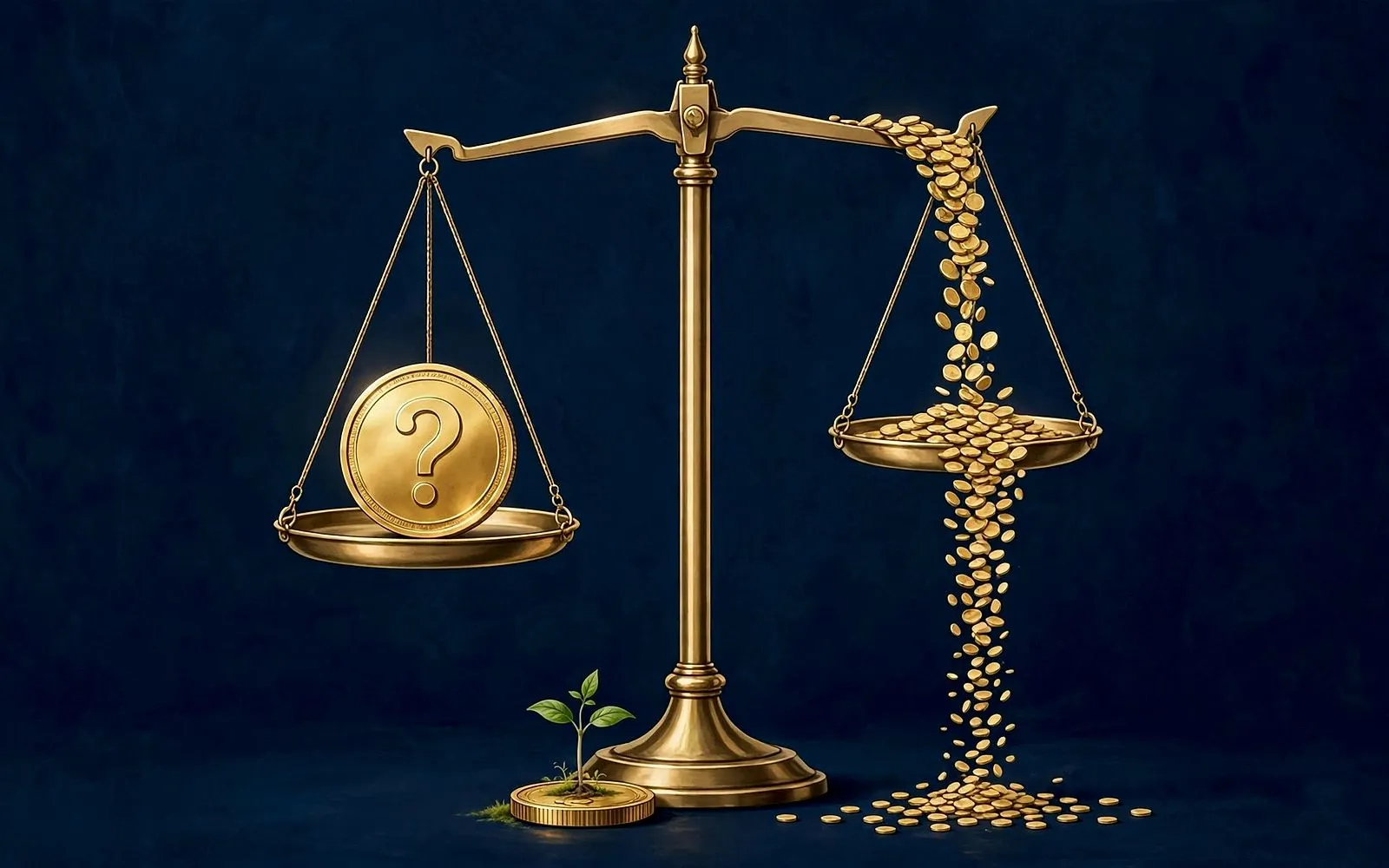
A riddle is doing the rounds on Instagram and TikTok this week, and it has split the comments into two camps. You can only keep one of these four options: $900 billion today, $25 million a day, $1.2 million an hour, or $10 billion a year. Most people pick a drip, because a steady stream feels safer than one pile. The maths says they are wrong, and by a very long way.
The latest version, posted on 12 November by creator Paul Olima, has drawn more than 16,000 likes and nearly 900 comments, with viewers doing back-of-the-envelope sums in the replies. An earlier Snapchat version in late October drew the same split. The riddle tests one of the most useful ideas in personal finance: the time value of money — money today is worth more than the same amount tomorrow, because today's money can start working immediately.
The four options, worked out
Start with the simplest comparison: how long does each drip take to add up to $900 billion?
| Option | Per year | Years to reach $900bn |
|---|---|---|
| $900 billion today | — | 0 |
| $1.2 million an hour | $10.5 billion | ~86 years |
| $10 billion a year | $10 billion | 90 years |
| $25 million a day | $9.1 billion | ~99 years |
The figures are my own calculations. The hourly option pays $28.8 million a day, or $10.5 billion a year — the best of the three drips. But $900 billion divided by $10.5 billion a year is about 86 years, and the $25 million a day option takes nearly a century.
Put it in human terms: if you are 20 today and pick the hourly drip, you need to live to about 106 just to break even. Pick the daily option and you need to reach 119.
Why the hourly option feels right
So why do so many commenters pick $1.2 million an hour? Two instincts are doing the work. First, the drip feels endless: "per hour" sounds like money that never stops, and our brains are bad at multiplying a small hourly number across 86 years of hours. Second, loss aversion — a lump sum can be lost or blown in one bad decision, while a drip feels like it can never all disappear at once.
Money today is worth more than the same money tomorrow, because today's money can start working immediately — and 86 years of waiting is a very long time to be paid.
None of those instincts is foolish. The fear of blowing a lump sum is a real risk, and we will come back to it. But as pure maths, the instincts point the wrong way: the drip options only win if you live far longer than almost anyone does.
The investment twist
Take the $900 billion today and invest it, and the gap stops being close. At a 4% annual return it earns $36 billion a year — more than three times what the best drip pays — with the principal intact. Even at a 1% return it earns $9 billion a year, roughly matching the $25 million a day option.
These are illustrations, not a plan: nobody can invest $900 billion at a guaranteed rate. But the direction is unambiguous — a lump sum that earns anything at all pulls further ahead of a fixed drip every year.
This is the same choice lottery winners face for real. A Powerball jackpot winner chooses between the advertised jackpot paid as an annuity — 30 payments over 29 years, each one 5% larger than the last — or a single lump-sum cash payment. The advertised jackpot is the annuity total, not cash on hand: the lump sum is typically only 45% to 50% of the headline number. When two tickets shared a $1.787 billion jackpot, each holder could choose between an $893.5 million annuity or a $410.3 million lump sum — the cash option was about 46% of the advertised prize.
Inflation quietly eats the drip
There is a third force pushing the same way: inflation. A $10 billion payment sounds enormous forever, but at 2% annual inflation, a $10 billion payment 90 years from now buys roughly what $1.6 billion buys today. An invested lump sum can at least keep pace; a fixed drip is guaranteed to shrink every year.
Watch out for the "never runs out" trap. A drip only feels infinite because the numbers are big. Divide any drip by the lump sum and you get a countdown: 86 years, 90 years, 99 years. Always do that division before choosing a slow payout over cash today.
When the slow drip actually wins
The lump sum wins the maths, but the drip wins in three real situations. First, discipline: if you would spend a lump sum fast, an annuity enforces pacing — the same reason some lottery winners take the annuity. Second, taxes: US lottery winnings are ordinary income, with 24% withheld up front and a top federal rate of 37% in 2026 — a lump sum lands in the top bracket in one year, while an annuity spreads it over 30. Third, longevity: collect the hourly drip for more than about 86 years and it overtakes the lump sum — a bet almost nobody can win.
In the UK the choice does not exist in the same form: National Lottery prizes are paid as a tax-free lump sum, with no annuity option.
Frequently asked questions
Which option in the riddle is mathematically best?
$900 billion today. The best drip, $1.2 million an hour, takes about 86 years to reach the same total. Unless you expect to live past 106, the lump sum wins.
How long until $1.2 million an hour catches up with $900 billion?
About 86 years. It pays roughly $10.5 billion a year. $25 million a day takes about 99 years, and $10 billion a year takes 90 years.
Is the lottery lump sum or annuity better?
It depends on the person. The lump sum is typically 45% to 50% of the advertised jackpot, but it wins on paper if you can earn more than the roughly 4% to 5% return built into the annuity. The annuity wins if you need protection from overspending or want to spread the tax bill over 30 years.
Key takeaways
- $900 billion today beats every drip: the best drip takes about 86 years to catch up.
- The hourly option feels endless because our brains are bad at multiplying small numbers across decades.
- A lump sum earning even 1% a year roughly matches the daily drip — at 4% it earns $36 billion a year.
- Inflation shrinks every fixed drip; a $10 billion payment in 90 years buys about what $1.6 billion buys today.
- The one real case for the drip is discipline: if you would spend a lump sum fast, a slow payout protects you from yourself.
The riddle is a parlour game, but the lesson is real: whenever you are offered money over time instead of money today — a lottery prize, a pension lump sum or a settlement — do the division first. Work out how many years the drip takes to match the lump sum, and what the lump sum could earn in the meantime. Most of the time, the money today wins.
Sources
- Instagram — Paul Olima, $900bn riddle reel (12 Nov 2026)
- Snapchat — YaBoiMakel, $900bn vs $10bn per year riddle
- TodayPowerball — Lump Sum vs. Annuity: How Powerball Jackpots Are Paid
- LegalClarity — Powerball Lump Sum or Annuity: Which Is Better?
- JackpotTeller — Cash Option Powerball: $1B After-Tax Breakdown
- TryVolume — Money TikTok trends this week (November 2026)
The MoneyHabit editorial desk researches, writes and reviews every article against our editorial policy.
The Sunday Habit
One useful money idea, every week.
A short, practical email every Sunday — no spam, no selling your address, unsubscribe anytime.
Advertisement
More in Financial Literacy
Financial Literacy · Guide
HSA and FSA at the Same Time? The Rule Most People Miss
A viral Reddit post exposed a costly trap: maxing an HSA while a spouse holds an FSA makes the contributions ineligible, with a 6% tax every year it sits there.
20 November 2026 · 11 min read

Financial Literacy · Guide
Wrong Money in Your Account? Why You Can’t Keep It
A lawyer just returned ₹34 crore sent to him by mistake. Here’s what the law says in the US, UK and India — and what to do if it happens to you.
19 November 2026 · 11 min read
Financial Literacy · Explainer
Buy, Borrow, Die: The Rich-People Strategy, Graded
A viral clip says the rich never pay tax: buy assets, borrow against them, die, and the bill vanishes. The mechanics are real — the 'never pay' part isn't.
19 November 2026 · 12 min read