News
Binance Hack: Only $32M of $6.4B Recovered So Far
Three weeks after the $6.43B Binance hack, only $32M has been recovered while $2.82B sits frozen. Frozen is not recovered — what it means for your money.
In this article
- The scoreboard, three weeks on
- What was stolen, and where it sits now
- How the theft happened
- Why frozen money is so hard to get back
- The laundering machine has not stopped
- What Binance customers actually got
- The Bybit precedent: recovery is slow everywhere
- What this means for your money
- Frequently asked questions
- Key takeaways
The scoreboard, three weeks on
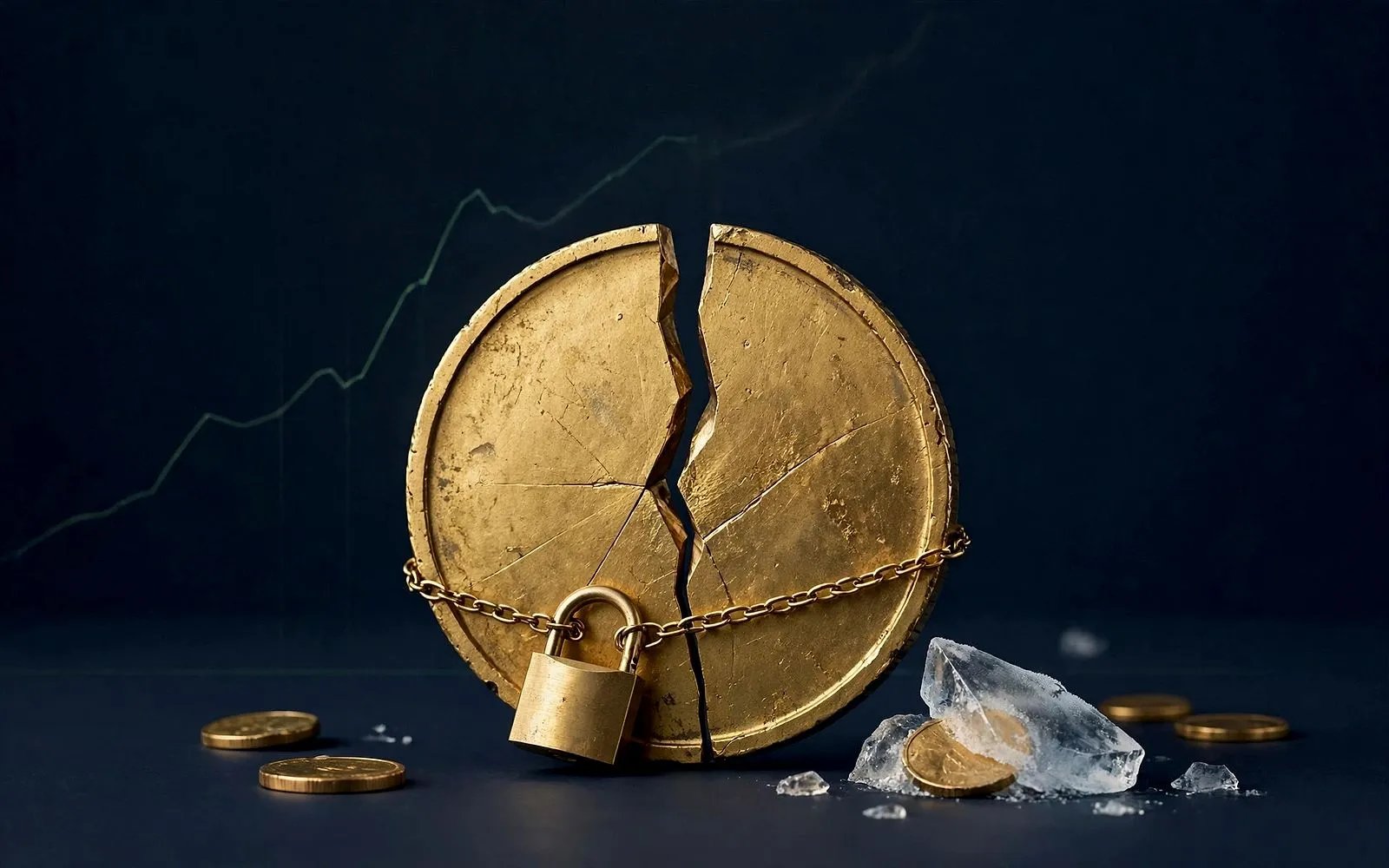
Three weeks after the largest crypto theft in history, the recovery scoreboard reads like a bad joke: of roughly $6.4 billion stolen from Binance on 29 October 2026, only $32 million has actually been recovered. That is about 0.5% of the haul.
Yet the headlines keep sounding triumphant: $2.82 billion frozen, a $6.5 billion worldwide freezing order from a court in Abu Dhabi, and US Department of Justice authorisation to seize more than $1.2 billion. Those numbers are real, but they describe a very different thing from recovery — and the gap between them is the story that matters if you keep money on any exchange.
Freezing money stops a thief from spending it. Recovering money puts it back where it belongs. The first step has worked surprisingly well. The second is moving at a crawl.
What was stolen, and where it sits now
Attackers drained an estimated $6.43 billion in digital assets from Binance's hot wallets — the internet-connected wallets exchanges use to process day-to-day withdrawals — between 20:05 and 23:56 UTC on 29 October, according to blockchain analytics firm Elliptic. The theft spread across 11 blockchains and took, by most accounts, 20 to 30 minutes of active withdrawals. The FBI attributed the attack to TraderTraitor, a hacking group linked to North Korea.
Here is where that money stands, as reported on 20–21 November:
| Bucket | Amount | What it means |
|---|---|---|
| Total stolen | ~$6.43 billion | Across 11 blockchains; stablecoins were 54% ($3.46 billion) |
| Frozen or seized | ~$2.82 billion | Mostly stablecoins locked by issuers or held under court orders |
| Still under attacker control | ~$2.35–2.67 billion | Estimates differ by source; largely ETH and BTC sitting in wallets |
| Actually recovered | $32 million | About 0.5% of the theft — the only money back in Binance's hands |
| Paid to customers by Binance | Over $6.34 billion | Covered from company reserves, completed by 12 November |
Two trackers differ slightly on what the attackers still hold — SomaXBT, cited by Wu Blockchain on 20 November, put it at $2.67 billion; Elliptic's 20 November update put about $2.35 billion as still sitting in wallets tied to the hack — a difference of counting methods, not of the picture. Roughly $2.4–2.7 billion remains in the attackers' hands, roughly $2.8 billion is frozen, and $32 million is back.
Frozen is not recovered. A frozen balance is a legal claim on money that still sits somewhere else; recovered money is money Binance can actually use. Three weeks in, the ratio is roughly 88 frozen dollars for every 1 recovered dollar.
How the theft happened
Binance has described a multi-stage operation rather than a single breach: an engineer installed a tampered AI coding tool in June 2026, and in September attackers posing as recruiters persuaded another engineer to download a malicious job assignment. From there they used an internal AI tool to reach other engineers' computers and, ultimately, Binance's wallet-signing service — the system that authorises withdrawals.
Why could so much be frozen? Stablecoins made up $3.46 billion, or 54%, of what was taken, and USDT and USDC are issued by companies — Tether and Circle — that can lock specific balances on-chain. That gave investigators a lever they have never had with bitcoin or ether, which no company controls.
The issuers moved fast. Tether froze the stolen Ethereum-based USDT 37 minutes after it reached the attackers' main wallet, and Circle froze all $823 million of stolen USDC before any of it could be swapped. But speed was not enough: the attackers converted roughly $786 million in stablecoins before the freezes landed, including swapping 434 million USDT for ETH and 234 million USDT for TRX. They also deposited $59.9 million in stolen USDT as collateral on the lending platform Aave and borrowed 19,762 ETH against it — the collateral could be frozen, but the borrowed ETH was a legitimate loan and could not be.
Why frozen money is so hard to get back
If $2.82 billion is frozen, why is only $32 million recovered? Because a freeze is a pause, not a refund — turning frozen crypto into returned crypto requires court orders, and courts move on court calendars, not blockchain timelines.
Three legal tracks are running. The US Department of Justice said on 12 November that it has court authorisation to seize or restrain more than $1.2 billion of the stolen funds. On 18 November, Binance said the Abu Dhabi Global Market Courts granted it a $6.5 billion worldwide freezing order — an injunction, sometimes called a Mareva order after a 1975 English case, that stops a defendant from moving or hiding assets while proceedings play out. Additional orders authorise issuers and exchanges to return assets they have already frozen.
But there is a hard technical limit on what any court order can reach. A freezing order binds exchanges, issuers and other intermediaries that act on it. It reaches stablecoins because a company can freeze them. It does not reach bitcoin or ether, because nobody can freeze those. The 18,270 BTC stolen directly from Binance — worth roughly $1 billion at current prices — still sits untouched in the 19 addresses established on the night of the theft. No judge can lock it.
The line this case draws: whether stolen or held funds can be frozen depends on how a token is built, not on the size of a court order. Your USDT or USDC can be frozen by its issuer at any time — a protection when you are the victim, and a risk when a freeze hits the wrong wallet. Bitcoin and ether cannot be frozen by anyone, which is a feature until they are stolen.
The laundering machine has not stopped
While the lawyers work, the attackers have kept moving the money they still control. Elliptic's 20 November update traced the laundering through more than 27,000 wallets on at least 16 blockchains, involving about 55 services and roughly 90,000 transactions — cross-chain bridges, decentralised exchanges, lending vaults, liquid-staking services and even homemade meme-token liquidity pools.
Since 17 November, the attackers have emptied five of the nine largest ETH addresses, moving approximately 488,000 ETH worth about $860 million. About 39,000 ETH, worth $70 million, has been exchanged through THORChain for roughly 1,100 BTC, and much of the resulting bitcoin entered coinjoins — transactions combining many users' bitcoin, making them harder to trace — within two hours. At least 2,310 BTC worth $149 million has entered coinjoins since 1 November, about 90% of it between 17 and 20 November.
What Binance customers actually got
Binance did not wait for the recovery process. It pledged to cover all affected customer balances from company reserves — its treasury, its Secure Asset Fund for Users (SAFU) and insurance funds — setting aside more than $6.34 billion. That coverage was completed by 12 November, about two weeks after the attack, and withdrawals, frozen within hours of the attack, partially resumed on 1 November.
Customers still headed for the exits. After Binance resumed withdrawals, it saw net customer outflows of about $4.7 billion. That is the market's verdict on an exchange that has just lost the largest sum in crypto history, even one that made customers whole from its own pocket.
The Bybit precedent: recovery is slow everywhere
The previous record holder was Bybit, hacked on 21 February 2025 for about $1.46 billion in ETH and liquid-staking tokens — then the largest crypto theft ever, according to Elliptic's co-founder. The FBI attributed it to the same North Korean network, the Lazarus Group, five days later.
Eighteen months on, Bybit's recovery tells the same story in miniature. Bybit's CEO reported in August 2026 that about $48.4 million had been recovered and $30.5 million frozen — roughly 5% of the theft combined. Elliptic has compared the two cases directly: after the Bybit hack, stolen ETH was largely converted into bitcoin before cash-out took months. The Binance case is following the same script, with one difference in Binance's favour — the large stablecoin share that could be frozen within hours. The lesson is not that recovery is impossible. It is that recovery is measured in years and single-digit percentages, while the theft itself takes minutes.
What this means for your money
An exchange covering a loss is not the same as your money being safe. Binance made customers whole, and that is genuinely unusual — most hacked exchanges have not. But the coverage came from Binance's own reserves, not from recovered funds, and it depended on Binance having $6.34 billion to spare. A smaller exchange facing the same theft would not.
Stablecoins are freezable, and that cuts both ways. The same issuer power that froze $2.3 billion of stolen USDT and USDC can freeze any USDT or USDC balance. If you hold stablecoins as your "safe" crypto, understand that they carry a centralised off-switch — a genuine protection against theft and a genuine dependency on two companies' compliance teams.
Self-custody trades one risk for another. Bitcoin and ether in a wallet you control cannot be frozen by a court or an issuer — but they also cannot be recovered by anyone if your keys are stolen or lost. There is no SAFU for a hardware wallet in a drawer. The right answer depends on how much you hold and how carefully you can protect it, not on a slogan.
Do not keep everything in one place. Spread balances across exchanges, keep long-term holdings in cold storage, and treat any hot wallet — yours or an exchange's — as a spending account, not a vault.
Do not "buy the dip" on someone else's hack. After big exchange hacks, social media fills with tips to buy the affected exchange's token or the stolen coins at a discount. Stolen funds are tracked by every major analytics firm, and buying tainted coins can see your own account frozen. There is no bargain in a wallet address on a law-enforcement list.
Frequently asked questions
Is my money safe on Binance now?
Binance says it covered all affected customer balances by 12 November, and withdrawals have resumed. But "covered" means Binance paid from its own reserves, not that the stolen money came back — and $4.7 billion of customer money has left since withdrawals reopened. Keep only what you need for active trading.
Will Binance get the frozen $2.82 billion back?
Probably some of it, eventually. The DOJ has authorisation over more than $1.2 billion, and the Abu Dhabi freezing order plus follow-on orders are designed to let issuers and exchanges hand frozen assets back. But proceedings across multiple jurisdictions take months or years, and some balances may be contested. The Bybit precedent — about 5% recovered or frozen after 18 months — suggests patience.
Why can't bitcoin and ether be frozen like stablecoins?
USDT and USDC are issued by companies that keep a blacklist function in the token's code; they can lock specific addresses. Bitcoin and ether have no issuer and no freeze function — no company, court or government can stop an address from spending them. That is why the 18,270 stolen BTC still sits untouched in its original addresses while the stablecoins were locked within the hour.
Has any of the stolen money actually been cashed out?
Elliptic estimates that a negligible amount has been cashed out so far: turning stolen crypto into spendable cash requires an exchange or broker willing to take it, and those are the places now watching hardest.
What should I do if I hold crypto on an exchange?
Three practical steps. First, enable every security feature the exchange offers — hardware security keys, withdrawal address whitelisting and withdrawal delays. Second, move anything you do not need for active trading into a wallet you control, ideally a hardware wallet, and store the recovery phrase offline. Third, check whether your exchange publishes proof of reserves and holds customer funds 1:1.
Key takeaways
- Three weeks after the $6.43 billion Binance hack, only $32 million — about 0.5% — has actually been recovered.
- About $2.82 billion is frozen, mostly stablecoins locked by Tether and Circle within hours — but frozen is not recovered, and court proceedings will take months or years.
- Roughly $2.4–2.7 billion is still under attacker control, and since 17 November the attackers have moved about $860 million in ETH and mixed $149 million of bitcoin through coinjoins.
- Binance covered customers in full from its own reserves ($6.34 billion by 12 November), yet $4.7 billion of customer money has left the exchange since withdrawals reopened.
- The Bybit precedent — about 5% recovered or frozen after 18 months — shows recovery from a mega-hack is slow everywhere. Protect your money before a hack, not after one.
The Binance recovery scoreboard will keep moving, slowly, in courtrooms. The number to watch is not the frozen total but the recovered one — and the number that matters for your own money is neither. It is how much you hold in any single place that could lose it in half an hour. Check where your crypto sits tonight and move what you do not need for trading into a wallet you control.
Sources
- TradingView / CryptoBriefing — Binance hack: $2.82 billion frozen, only $32 million recovered
- The Cryptonomist — Binance $6.4B crypto laundering traced through 27,000 wallets
- Tech Times — Binance says court granted worldwide freezing order after hack
- The Hindu — How did Binance recover quickly from the biggest crypto hack in history
- TradingView / BloomingBit — Binance $6.4 billion hack recovery reaches just $32 million
- CoinDesk — North Korean hackers were behind crypto's largest theft of all time (Bybit)
- Bybit — Security incident timeline of events and FAQs
The MoneyHabit editorial desk researches, writes and reviews every article against our editorial policy.
The Sunday Habit
One useful money idea, every week.
A short, practical email every Sunday — no spam, no selling your address, unsubscribe anytime.
Advertisement
More in Money News & Explainers
Money News & Explainers · News
Binance Hack Recovery: Withdrawals Are Back — Mostly
Binance has reopened withdrawals on 87 networks after the $6.3bn hack — but some assets are still frozen. Here's where the recovery stands and what to do now.
16 November 2026 · 10 min read
Money News & Explainers · News
Mercado Bitcoin's $48.6M Hack: What Happened Next
Brazil's largest crypto exchange lost $48.6M on 2 November. Cash is moving again — but crypto is still frozen. The full timeline, and what it means for you.
18 November 2026 · 10 min read
Money News & Explainers · News
After the $6.3B Hack, Is Your Crypto Safe?
Binance lost $6.3bn from its hot wallets. Exchanges are now publishing cold-storage figures — here is how to read them and check your own exchange.
14 November 2026 · 7 min read