News
Binance Is Closing EU Accounts on 31 Dec: Move Your Money
Binance will close accounts in France, Spain, Italy and Poland on 31 December — and charge a fee on leftover balances from 29 November. What to do now.
In this article
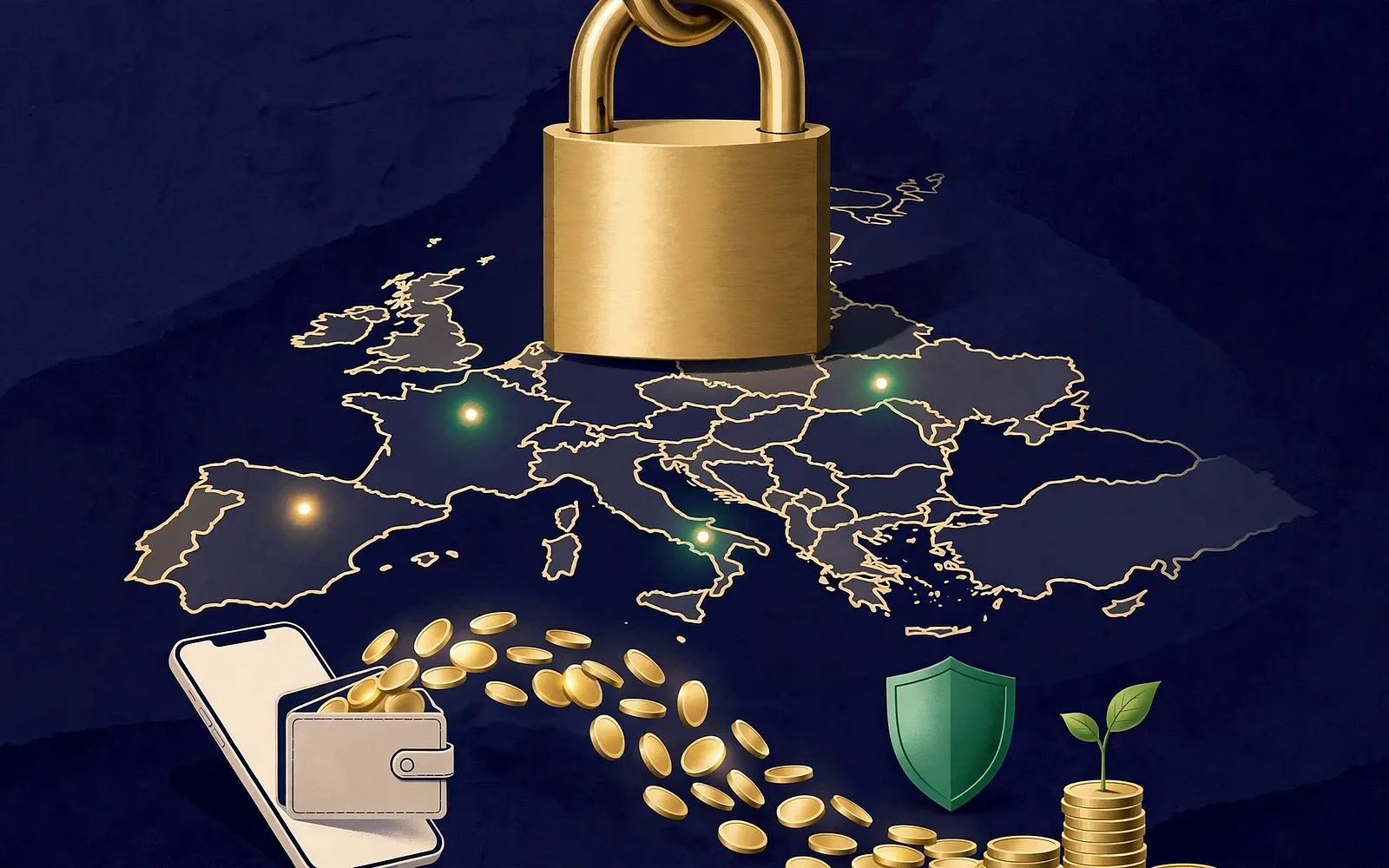
If you hold crypto on Binance and live in France, Spain, Italy or Poland, the clock is now ticking in weeks, not months. Binance will close affected accounts on 31 December 2026, and from 29 November it will charge a monthly fee on anything left behind. Deposits are already blocked. Withdrawals still work — for now.
A Binance spokesperson confirmed the closure date to CoinDesk, calling it “a carefully managed process” and insisting customer assets remain safe and accessible, with “no sudden freeze”. But the fee details are what make this urgent: leave a small balance sitting there and it can be eaten entirely. This is the direct consequence of Binance still having no licence under the EU’s MiCA crypto rules.
The deadlines that matter
Three dates decide what this costs you. Miss the first and you start paying; miss the last and your account is gone. Binance first contacted users in the four countries back in June, urging them to withdraw — the notices now going out are the final step of that wind-down.
| Date | What happens |
|---|---|
| 29 November 2026 | Monthly fee starts on leftover balances: 0.025% of the balance or 10 USDC, whichever is higher. The first charge lands within three days. |
| After 24 December 2026 | A second monthly charge is taken — so balances left through December are charged twice. |
| 31 December 2026 | Affected accounts close. Balances still held after this date would be treated as inactive, with assets possibly converted or transferred under the wind-down arrangements. |
The fee is the higher of 0.025% of your remaining balance per month or 10 USDC (a dollar-pegged stablecoin), taken from USDC holdings first, then from other assets. The percentages look tiny. They are not, because of the 10 USDC minimum.
The fee maths: small balances get wiped out
| Balance left on Binance | 0.025% of balance | Monthly fee charged |
|---|---|---|
| $100 | $0.03 | 10 USDC — a tenth of the balance |
| $1,000 | $0.25 | 10 USDC — 1% of the balance |
| $10,000 | $2.50 | 10 USDC — the minimum still bites |
| $40,000 | $10.00 | 10 USDC — the two figures meet |
| $100,000 | $25.00 | 25 USDC — the percentage takes over |
All figures above are our own calculations from the reported 0.025% / 10 USDC fee terms. The sting is at the bottom of the table: if your balance is smaller than the fee, the emails say the whole balance is taken. A $9 dust balance does not survive a 10 USDC charge — and because the fee is charged twice before closure, a $15 balance would be gone after the first charge.
Do not leave dust behind. Small leftover balances — a few dollars of an altcoin, a stablecoin remainder — are exactly what this fee structure eats first. Withdraw everything, or convert it and withdraw it, before 29 November. Anyone who withdraws everything before that date pays nothing.
Why this is happening: MiCA, in plain English
MiCA — the EU’s Markets in Crypto-Assets Regulation — is a single rulebook for crypto firms across the bloc. Since the transition period for existing firms ended on 1 July 2026, an exchange needs authorisation as a crypto-asset service provider (CASP) in one EU member state, recorded in the register kept by ESMA, the EU securities regulator. One licence then works across all 30 EEA states. Without it, a firm cannot legally serve EU customers.
Binance pursued its licence through Greece. On 24 June 2026 it withdrew that application — days after Reuters reported Greece’s regulator was poised to reject it — and said it would seek approval in another member state, which it has not named. As of the ESMA register checks in early November, no Binance entity appears on it, and its French registration, held since May 2022, lapsed automatically on 2 July 2026.
France, Spain, Italy and Poland are the countries where Binance ran locally registered businesses before the transition ended — which is why those four are affected first. There is no sign so far of closures in Germany or other EU countries. But Binance has no MiCA authorisation anywhere in the bloc, so users outside the four countries should still check their own account status rather than assume they are unaffected.
The test takes two minutes: if the legal entity holding your account is not on ESMA’s public register of authorised providers, the only question is whether you move on your schedule — or theirs.
Moving your crypto: a four-step plan
Do it this week, while withdrawals are confirmed working and before the fee clock starts.
- Check which entity holds your account. Log in and confirm whether your account is with the French, Spanish, Italian or Polish entity. If you are in one of those four countries, you are affected. Elsewhere in the EU, check the ESMA register for the entity holding your account — a missing entry is a warning, not a detail.
- Decide where it goes. Two honest options: a licensed EU exchange, or self-custody in your own wallet. A licensed exchange keeps trading simple; self-custody removes exchange risk entirely but puts seed phrases and backups squarely on you.
- Move it in the right order. Convert dust and tiny balances into one asset first, then withdraw. Check the withdrawal network and address twice — crypto sent to the wrong network is usually gone. Start with a small test withdrawal if you are moving a large amount somewhere new.
- Close the loop. Once the balance is zero, confirm there are no open orders, staked positions or Earn products still holding funds. Then download your transaction history and tax records before the account closes — after 31 December, getting them may be much harder.
Keep your records. In most EU countries, crypto trades and withdrawals can be taxable events, and your Binance transaction history is the evidence. Export it now, while the account is still open.
Where to go instead: licensed alternatives
Several large exchanges already hold MiCA authorisations and can legally serve customers across the EEA. This is not a recommendation — fees, coin ranges and interfaces differ, so compare them before moving — but the licence status is checkable fact.
| Exchange | MiCA licence | Licensed since |
|---|---|---|
| Coinbase | Luxembourg (CSSF) | 20 June 2025 |
| Kraken | Ireland (Central Bank of Ireland) | 25 June 2025 |
| Bitpanda | Austria (FMA) | 9 April 2025 |
| Bitvavo | Netherlands (AFM) | 26 June 2025 |
Before opening an account anywhere new, verify the entity yourself on ESMA’s interim MiCA register: search for the company name and confirm it covers custody and exchange. A brand name on a website is not a licence; the register entry is.
Watch out for the scams this will trigger
Every forced migration is a gift to scammers. Expect phishing emails, texts and social-media messages claiming to be Binance support, offering to “help you migrate” or warning your funds will be lost today.
Binance will never ask for your password, your two-factor codes or your seed phrase. Nobody legitimate needs them to help you withdraw. Do not click links in emails about the closure — go to the exchange directly, or use the app you already have installed. And never send crypto to an address someone gives you in a message, however official it looks.
Frequently asked questions
Does this affect Binance users in Germany or the UK?
Not under this announcement. The closures cover France, Spain, Italy and Poland, with no sign so far of closures in Germany or elsewhere. The UK is outside the EU, so MiCA does not apply there — UK accounts fall under the UK’s own FCA regime. But if you are anywhere in the EU, check which entity holds your account: Binance has no MiCA authorisation anywhere in the bloc.
Can I still trade or deposit?
No — deposits are already blocked for affected accounts, and Binance has been progressively restricting services for these users since the MiCA transition ended on 1 July. Withdrawals of crypto and fiat remain open, which is the part that matters now.
What if I only have a few dollars left?
Withdraw it, or convert it and withdraw it, before 29 November. The 10 USDC minimum fee means a balance under 10 USDC can be wiped out by a single charge — and the fee is charged twice before the account closes.
Will Binance get a MiCA licence later and reopen?
Possibly, but there is no public timetable. Binance said in June it would seek authorisation in another member state, without naming it. Do not plan around a licence that does not exist yet.
Key takeaways
- Binance closes accounts in France, Spain, Italy and Poland on 31 December 2026 — deposits are already blocked, withdrawals still work.
- From 29 November, leftover balances are charged 0.025% a month or 10 USDC, whichever is higher — twice before closure. Small balances can be wiped out entirely.
- The cause is MiCA: Binance withdrew its Greek licence application in June and appears on no ESMA register of authorised providers.
- Move everything before 29 November, export your transaction history first, and verify any new exchange on ESMA’s register before trusting it with your funds.
The deadline is real, the fee is real, and the fix takes an afternoon. Withdraw first, ask questions later — and if you know someone in France, Spain, Italy or Poland who still has crypto on Binance, tell them today. They have until 29 November to move it for free, and until 31 December to move it at all.
Sources
- CoinDesk: Binance users told to pull crypto before fees kick in
- Bitcoin Magazine: Binance to close accounts in four EU countries Dec. 31
- Coinasity: Binance to close EU accounts Dec. 31, fees from Nov. 29
- FeeOtter: MiCA-licensed crypto exchanges 2026
- CoinStats: Binance alternatives — 4 MiCA-licensed exchanges compared
- CoinLab: MiCA regulation explained
The MoneyHabit editorial desk researches, writes and reviews every article against our editorial policy.
The Sunday Habit
One useful money idea, every week.
A short, practical email every Sunday — no spam, no selling your address, unsubscribe anytime.
Advertisement
More in Financial Technology
Financial Technology · Explainer
Visa's Stablecoin Payouts: What It Means for Your Money
Visa will let businesses fund cross-border payouts with stablecoins while you still receive ordinary money. Here's how it works and what to watch.
18 November 2026 · 10 min read

Financial Technology · Explainer
Tokenized Deposits, Explained: Your Bank's Next Move
Banks can now move deposits around the clock on blockchains. Here is what tokenized deposits are, how they differ from stablecoins, and what changes for you.
17 November 2026 · 10 min read

Financial Technology · Explainer
Your Bank Now Sells Bitcoin: Discount Bank's Crypto Move
From 26 November, Israel Discount Bank lets customers buy Bitcoin and Ethereum in its app — at a 2% fee, in a closed wallet, with tax handled. Here is the deal.
15 November 2026 · 10 min read