Explainer
The $694M Car Loan Settlement: Who Gets Debt Forgiven
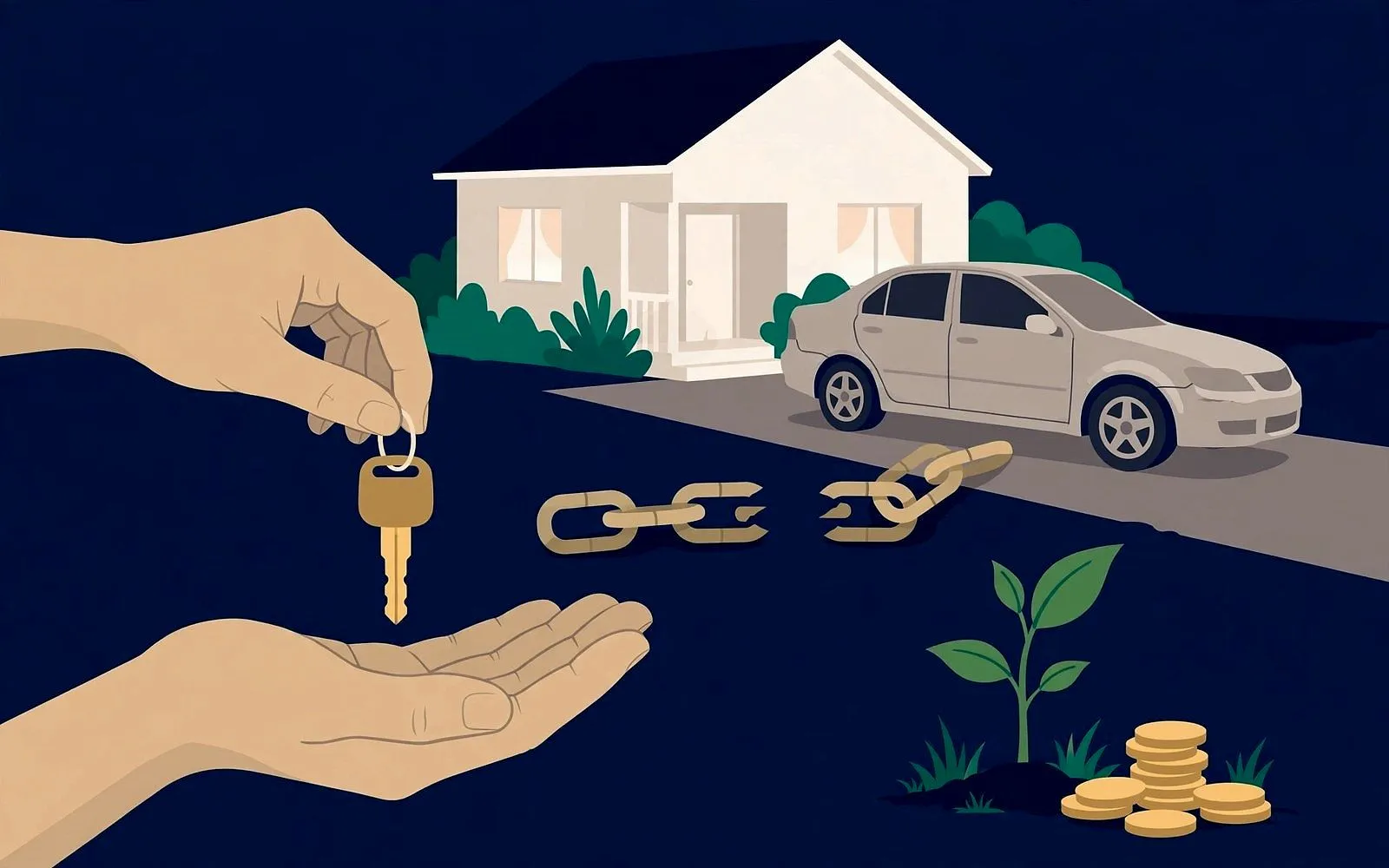
A $694 million settlement with Credit Acceptance took effect on 2 November 2026. Here is who gets their car debt forgiven and how to check if you qualify.
In this article
If you financed a used car through Credit Acceptance Corporation between late 2015 and late 2025, a $694 million settlement that took effect on 2 November 2026 may have just wiped out your car debt — or put a refund cheque in your post. More than 55,000 borrowers are covered, and you do not need to file a claim or pay anyone anything to get it. But there is a catch: you cannot check whether you qualify from your credit score alone, and scammers are already circling. Here is what the settlement actually does, who it covers, and what to do next.
What the settlement is
On 17 September 2026, a bipartisan coalition of 41 state attorneys general announced a settlement with Credit Acceptance Corporation (CAC), the Michigan-based subprime auto lender. The deal resolves a lawsuit first filed by New York and the Consumer Financial Protection Bureau (CFPB) in January 2023, plus a multistate investigation that began in 2020. The CFPB walked away from the case in April 2025; the states kept litigating and won the settlement themselves.
Credit Acceptance denies every allegation, and the settlement was reached without any admission of wrongdoing. The company told investors the payout will not require new charges beyond money it had already set aside. The headline numbers break down like this:
| Part of the deal | Amount | Who it helps |
|---|---|---|
| Debt relief — cars already repossessed | $388 million | Borrowers whose cars were repossessed and sold within 18 months; the leftover deficiency balance is waived |
| Debt relief — cars never repossessed | $246 million | Borrowers who still have their cars; the full remaining balance is waived and the lien is released |
| Cash restitution fund | $60 million | Borrowers who lost cars early but fall outside the debt-relief pool |
| Penalties paid to the states | $15.5 million | The attorneys general who brought the case |
| Total | $709.5 million | New York rounds it to “$700 million”; Minnesota's release puts the total at $694 million in consumer relief plus penalties |
The settlement's effective date is 2 November 2026. Debt waivers were due on or before that date, and the remaining monetary terms generally must be completed within 90 days after it. One honest caveat: the document filed in the Southern District of New York is labelled “proposed”, so a judge still has to sign the consent order. The state releases describe the settlement as agreed and the effective date has passed — but final court approval is the last step.
How the loans were “set up to fail”
The states' allegation was blunt. Minnesota Attorney General Keith Ellison said Credit Acceptance “misled consumers to enter into expensive loans that the company knew were ‘Set Up to Fail,’ based on its own internal, company analysis” — lending to people who could not afford the payments, collecting what it could, then repossessing the car and selling it to the next borrower in “an endless, fraudulent cycle”.
Three facts from the case explain why regulators called the model predatory rather than merely expensive:
- The rates were extreme. The average loan carried an APR above 38%, and some topped 100%, according to the New York Attorney General's release. For context, Experian's Q2 2026 data puts the average subprime used-car APR at 19.10% — the loans in this case were roughly double even that.
- Nearly half of borrowers lost their cars. Almost half of borrowers had their vehicles repossessed during the loan, the states alleged. A car loan that ends in repossession for one borrower in two is not a lending business in the normal sense; it is a repossession business with a lending front door.
- Add-ons were packed in. Dealers pushed vehicle service contracts and GAP insurance, sometimes telling buyers the products were required, and sometimes not mentioning them at all. The products were financed into the loan, so borrowers paid interest on them for years.
The company's own model predicted how much it would collect from a borrower before deciding whether to lend — and the states allege it made loans it predicted borrowers could not even repay in full, principal included, because repossession made the loan profitable anyway. A normal lender loses money when a borrower defaults. The allegation here is that Credit Acceptance's model made money either way: payments while the borrower could pay, then the car back to sell again when they could not.
Do you qualify? The four tests
Debt relief covers accounts that meet all four of these conditions, according to the consent order's definitions:
| Test | What it means | Can you check it yourself? |
|---|---|---|
| 1. Credit Acceptance Score below 56 | The company's proprietary internal score at the time the loan was made — not your FICO score | No — the score is secret, so you cannot definitively self-qualify |
| 2. Payment-to-income ratio (PTNI) of 13% or more | Your monthly car payment divided by your monthly income when the loan was made | Yes — see the maths below |
| 3. Loan originated 1 Nov 2015 – 30 Nov 2025 | The loan was made in that ten-year window | Yes — check your loan documents |
| 4. Account still open as of 1 Dec 2025 | The account had not already been closed or charged off before that date | Yes — your statements or credit report will show this |
The PTNI test is the one you can check yourself. Take the income you listed on the application and multiply it by 0.13. If you earned $2,800 a month, any payment of $364 or more crosses the line. Conventional lending wisdom keeps car payments near 10% of income or less; every account in this pool sat well past that from day one.
Do not stop paying on an assumption. The internal score is secret, so you cannot know for certain that you qualify. A missed payment on a loan that turns out not to be covered is still a missed payment — it will be reported and it will hurt your credit. Keep paying until you receive written notice that your account is closed.
What you actually get
Eligible borrowers fall into two groups, and what you get depends on which one you are in:
- Your car was repossessed and sold within 18 months of the loan. The leftover deficiency balance — what the lender claims you still owe after auctioning the car — is waived. This is the bigger bucket: an estimated $388 million. A deficiency balance is the debt that haunts people long after the car is gone, so wiping it out is the most valuable part of the deal for this group.
- Your car was never repossessed. Your full remaining balance is waived — an estimated $246 million across this group — and Credit Acceptance must release its lien and mail you the title if it has it. The car becomes yours, paid off.
Separately, the $60 million restitution fund goes to borrowers who lost cars early but are not in the debt-relief pool. A settlement administrator chosen by the states decides who qualifies and how much each person gets. In states where figures have been disclosed, individual payments work out to roughly $1,400 per borrower. If a cheque shows up, cash it — uncashed cheques can be voided, and leftover money goes back to the states.
What happens next — and what to watch for
How you will be told. The lender has to notify each covered borrower by letter, email or text that the account is closed and nothing more is owed. You do not need to apply, register or pay anything. Keep your contact details current with the lender, and treat anyone asking for a fee to “claim” your forgiveness as a scammer — that is exactly the fraud this moment invites. Debt waivers were due by 2 November 2026; restitution payments will be distributed after that, once the administrator has worked through eligibility.
Your credit report. For covered accounts, the lender must stop reporting to the credit bureaus and ask Equifax, Experian and TransUnion to delete the tradelines. That is more than marking the account “settled”, which still hurts your score. Deletion removes the account's history entirely. Pull your free reports a few months after the effective date and dispute anything that is still there.
A possible tax wrinkle. The IRS generally treats cancelled debt as taxable income, though there are exceptions. The order requires Credit Acceptance to describe the relief as a compromise of a debt in bona fide dispute, and that wording could matter at tax time. If a Form 1099-C arrives, show it to a tax preparer rather than guessing. Do not assume the forgiven balance is tax-free, and do not assume it is fully taxable either.
The new rules for future borrowers
The forward-looking terms may matter more to the used-car market than the payout. For loans made after 1 December 2025, the consent order requires Credit Acceptance to:
- Waive 95% of deficiency balances for certain lowest-credit borrowers whose cars are repossessed and sold within 12 or 18 months. The lender also cannot sue those borrowers or sell the debt to collectors. This protection lasts five years.
- Cap the selling price at 109% of the highest retail book value (from guides like Kelley Blue Book or NADA) for borrowers with credit scores under 600. Buyers must see the trim level and book value before signing, and the lender must block dealers from raising the price after a financing application is attached to a car.
- Limit used-car loan terms to the longer of 75 months or the industry average plus 12 months.
- Verify income instead of relying on whatever number ends up on the application.
- Require a signed disclosure for add-ons showing the monthly and total payment with and without them — and follow up within 10 days to remind buyers the products are optional and cancelable.
- Keep its ban on starter-interrupt devices and continue prohibiting dealers from using GPS tracking on its contracts.
The price cap is the sleeper provision. In buy-here-pay-here lots, a common trick is inflating the sticker price because the buyer is financing, then hiding the markup in a long, high-rate loan. Tying the price to book value attacks that directly.
The maths of a subprime car loan
The settlement is about one lender, but the pricing gap it exposed is the whole subprime market. Experian's Q2 2026 State of the Automotive Finance Market report shows how wide the gap is:
| Credit tier (VantageScore 4.0) | Avg new-car APR | Avg used-car APR |
|---|---|---|
| Super prime (781+) | 4.41% | 6.29% |
| Prime (661–780) | 6.15% | 8.81% |
| Near prime (601–660) | 9.71% | 13.93% |
| Subprime (501–600) | 13.52% | 19.10% |
| Deep subprime (300–500) | 16.11% | 21.62% |
Across all borrowers, the average new-car loan in Q2 2026 was $43,610 at 6.35% APR with a $765 monthly payment; the average used-car loan was $27,852 at 11.19% with a $542 payment. The average subprime new-car loan was $41,019 over 74.9 months at $805 a month.
What does the rate gap cost on the same car? Take a $25,000 used car over 60 months. At the prime used-car average of 8.81%, the payment is about $517 a month and total interest is about $5,999. At the subprime used-car average of 19.10%, the payment is about $650 a month and total interest is about $13,993 — roughly $8,000 more for the identical car (own calculations, standard amortisation). Now run the numbers the Credit Acceptance borrowers faced: a $20,000 loan at 38% APR over 60 months costs about $749 a month, with total interest of about $24,919 — more than the amount borrowed. At that rate the interest is the purchase, not the car.
The 13% rule, the 10% rule, and the 72-month trap. If the payment is more than 13% of your monthly income, you are in the danger zone this settlement defines. If it is more than 10%, you are above the level conventional guidance treats as safe. And if the term is 72 months or longer on a used car, the car will likely be worth less than you owe for most of the loan — negative equity that traps you in the car or in the debt.
If you are car shopping with damaged credit
The settlement changes one lender's rules, not the whole market. If your credit is damaged and you need a car, use the settlement's own tests as your checklist:
- Do the 13% maths before the finance manager does. Multiply your monthly take-home pay by 0.10. If the payment the dealer offers is above that, walk away or buy a cheaper car.
- Bring a book-value printout. Check the car's Kelley Blue Book or NADA retail value before you go in, and refuse any price far above it. The settlement's 109% cap exists because inflated prices were the first trick.
- Ask for the price with and without every add-on. Service contracts, GAP insurance, paint protection, theft deterrent — get each one priced separately, in writing, with the monthly and total cost. Then decide whether you actually want it.
- Get pre-approved elsewhere first. A credit union or bank pre-approval gives you a rate to compare against the dealer's offer. Even a near-prime rate beats a subprime dealer rate by thousands.
- Check the term, not just the payment. A dealer can make any payment “affordable” by stretching the term to 72 or 84 months. Shorter terms cost more per month and far less overall.
- Never sign a blank or incomplete application. The settlement requires income verification going forward at Credit Acceptance — because inflated income figures were part of how unaffordable loans got approved.
- A $694 million settlement with Credit Acceptance took effect on 2 November 2026: more than $630 million in debt relief for 55,000+ borrowers, a $60 million restitution fund, and $15.5 million in penalties.
- You qualify only if all four tests are met: internal score below 56, payment-to-income ratio of 13% or more, loan made between November 2015 and November 2025, and the account still open on 1 December 2025.
- If your car was never repossessed, your remaining balance is waived and you get the title. If it was repossessed within 18 months, the leftover deficiency balance is waived.
- Do not stop paying until you receive written notice, and never pay anyone a fee to “claim” your relief. Covered accounts must be deleted from your credit reports — check them in early 2027.
- The new rules for future Credit Acceptance loans — a 109% price cap, income verification, add-on disclosures and a 95% deficiency waiver — are a checklist worth using with any dealer.
- The rate gap is the real cost: the same $25,000 used car costs about $8,000 more in interest at the subprime average (19.10%) than at the prime average (8.81%).
The FCA's scheme covers motor finance agreements taken out between 6 April 2007 and 1 November 2024 where commission was payable to the dealer or broker. Under the final policy, the FCA expects around 14 million agreements to be in scope, with average redress of about £829 per agreement and total redress of roughly £7.5 billion at 75% take-up (about £9.1 billion including firms' implementation costs). But payments are currently on hold: four lenders have challenged the scheme, and the Upper Tribunal is due to hear the case in February 2027. If you took out UK car finance between 2007 and 2024, you do not need to do anything yet — but do not pay anyone who offers to “claim” it for you.
Frequently asked questions
Do I need to file a claim to get the debt relief?
No. Eligible borrowers are already identified, and the lender must notify you directly by letter, email or text. Do not pay anyone who offers to file a claim on your behalf — that is a scam.
How do I know if my loan was through Credit Acceptance?
Check your loan documents, your bank statements for the payment recipient, or your credit report, which lists the lender by name. Credit Acceptance finances through independent dealers, so the dealership's name on the paperwork is not the lender — look for the finance company.
Will the forgiven debt count as taxable income?
Possibly. The IRS generally treats cancelled debt as taxable income, with exceptions — including insolvency and debts discharged in bankruptcy. The settlement requires the relief to be described as a compromise of a debt in bona fide dispute, which could matter. If you receive a Form 1099-C, take it to a tax preparer.
What if my car was repossessed years ago and I still owe a deficiency balance?
If your loan meets the four eligibility tests and the car was repossessed and sold within 18 months of the loan, the deficiency balance should be waived. Watch for the lender's notice, and check your credit report in early 2027 — the tradeline should be deleted, not just marked settled.
Does the settlement help me if I am buying a car now?
Only if you borrow through Credit Acceptance after 1 December 2025, when the new rules apply: the 109% price cap for scores under 600, income verification, add-on disclosures and the 95% deficiency waiver for the riskiest loans. The settlement does not change other lenders' practices — use the checklist above with any dealer.
Key takeaways
The settlement is good news for tens of thousands of borrowers who were sold loans the lender's own models predicted would fail. It is not a bailout for the subprime car market, and it does not fix the pricing gap that made those loans possible. If you had a Credit Acceptance loan in the window, watch your mail, keep paying until you are told otherwise, and check your credit report in early 2027. If you are shopping for a car with damaged credit today, the best protection is still the simplest: know the book value, do the 13% maths, and never let the monthly payment be the only number you look at.
Sources
- Minnesota Attorney General — Credit Acceptance settlement (17 Sep 2026)
- The Auto Wire — Credit Acceptance Settlement: Who Gets Car Debt Forgiven
- Michigan Attorney General — $694 Million Multistate Settlement
- Alpha Briefing — Set Up to Fail: The $694 Million Reckoning for America's Subprime Car Loans
- Experian — Average Car Loan Interest Rates by Credit Score (Q2 2026)
- Carwow — FCA's car finance compensation scheme explained
- Lawfold — Credit Acceptance Lawsuit (updated October 2026)
The MoneyHabit editorial desk researches, writes and reviews every article against our editorial policy.
The Sunday Habit
One useful money idea, every week.
A short, practical email every Sunday — no spam, no selling your address, unsubscribe anytime.
Advertisement
More in Debt & Credit Education

Debt & Credit Education · Guide
5 Student Loan Scams to Avoid in 2026
Student loan scams stole tens of millions in 2026. Here are the five scams NerdWallet flagged — and the free, official ways to get real help.
18 November 2026 · 10 min read

Debt & Credit Education · Guide
Personal Loan Consolidation: How It Works (2026)
A personal loan can turn several high-interest card balances into one fixed payment — but only if the maths works. Here is how to check, step by step.
17 November 2026 · 10 min read

Debt & Credit Education · Guide
Micro-Payments: The Daily Debt Trick Going Viral
Creators are paying off debt a few dollars at a time and posting every payment. Here's how micro-payments work and when the maths helps.
17 November 2026 · 10 min read