Guide
Drive the Same Car 10 Years: The Debt-Free Maths
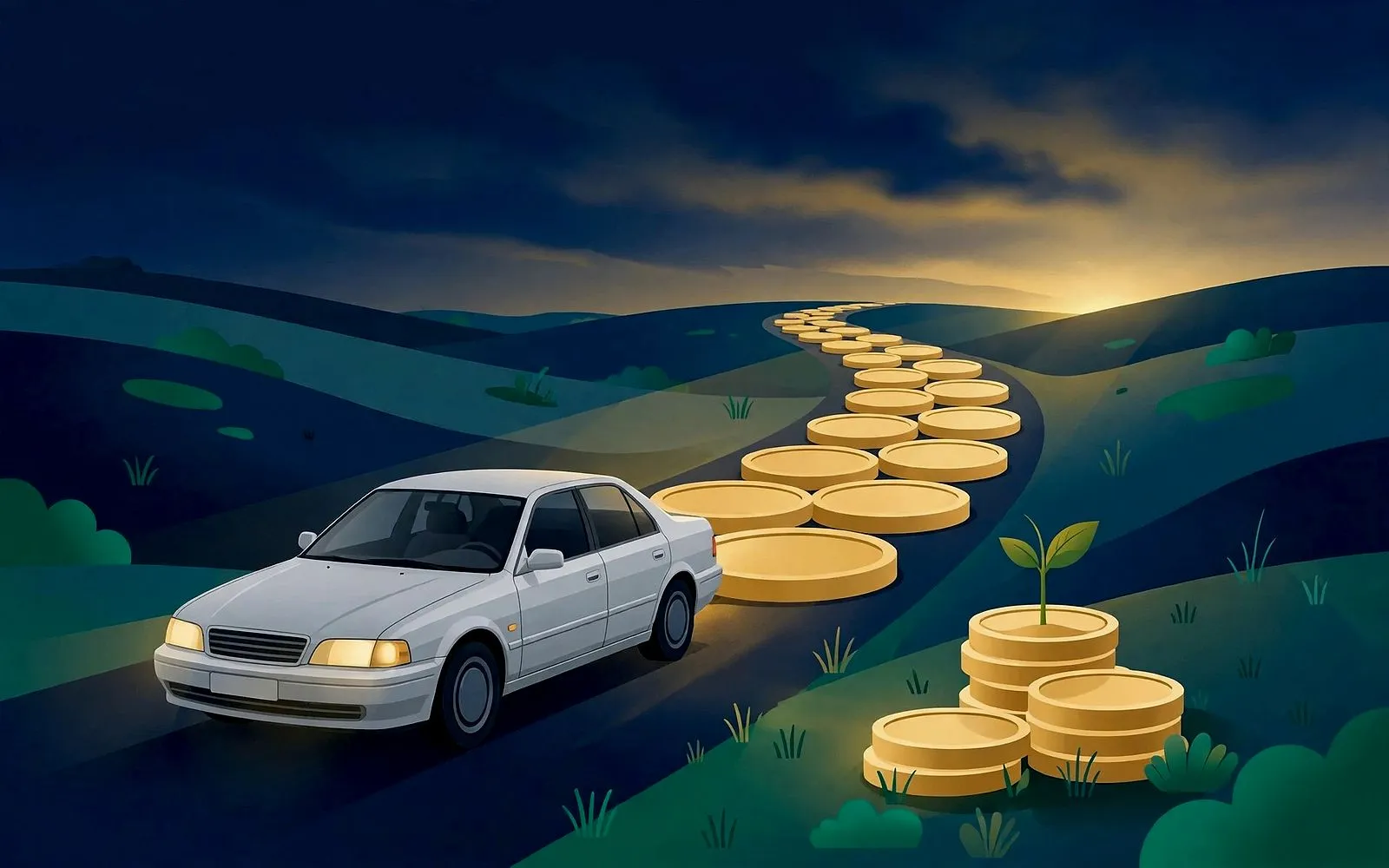
Drive the same car for 10 years and be debt-free in 4? With the average new-car payment at a record $787 a month, the maths is worth checking.
In this article
- The post that started it
- What a new car actually costs in 2026
- The maths of keeping it: the payment-free years
- The trap that makes trading up so expensive
- What repairs really cost as a car ages
- When keeping it is the wrong call
- The ten-year plan: five moves
- The UK version
- Frequently asked questions
- Key takeaways
Would you drive the same car for the next ten years if it meant being completely debt-free in four? That is the question in a Facebook post that has drawn nearly 800 comments this week — and it landed at the exact moment the average new-car payment hit a record high. The deal sounds almost too neat. But with the average financed new car now costing $787 a month, the maths behind it deserves a proper check, not a shrug.
The short answer: the trade is real, and it is bigger than most people think. The longer answer: it only works if you actually redirect the money, and only if your car is worth keeping. Here is the full calculation.
The post that started it
On 7 November, creator Josh Rincon posted a simple hypothetical to Facebook: drive the same car for ten years, no upgrades, no new car payment, and be completely debt-free in four. The post picked up around 1,900 likes and nearly 800 comments — a high comment-to-like ratio, which is usually the sign of a genuine argument rather than a passing meme. Some commenters said ten years in the same car was an easy yes. Others said life is too short, or that repair bills would eat the savings anyway.
Both sides have a point. The question is which side the numbers support — and the numbers have moved sharply against the upgrade side in the last few years.
What a new car actually costs in 2026
Edmunds' third-quarter 2026 financing data, released on 1 October, set five records at once. The average buyer of a financed new vehicle is now paying:
| Measure | Q3 2026 | A year earlier |
|---|---|---|
| Average monthly payment | $787 | $756 |
| Average amount financed | $44,664 | $42,744 |
| Average APR | 7.0% | 7.0% |
| Average loan term | 70.5 months | — |
| Total interest over the loan | $9,938 | $9,442 |
| Share of loans at 84 months or longer | 25.5% | 21.8% |
| Share of buyers paying $1,000+ a month | 21.2% | 19.1% |
That $787 a month is $9,444 a year — and it is a payment on a loan that runs nearly six years. Kelley Blue Book put the average new-vehicle transaction price at $50,562 in September 2026. A separate J.D. Power and GlobalData forecast put the average October payment even higher, at $823 a month, an October record. Used cars are no bargain either: the average used-car payment was $582 a month in the third quarter, financed at 10.6% APR.
So the typical new-car buyer now hands over about $54,600 in total for a car they financed for $44,664 — $9,938 of it pure interest. That is the starting point for the ten-year question.
The average new-car payment is $787 a month. Kept for ten years, one car costs about $54,600 in loan payments. Two back-to-back new cars cost roughly $94,400 in payments over the same decade.
The maths of keeping it: the payment-free years
Here is the comparison that matters. Take the average Edmunds loan — $787 a month for 70.5 months, $54,602 paid in total including interest. The loan is finished just before year six. If you keep the car to year ten, you get roughly four years with no car payment at all.
Those payment-free years are where the money is. Each one saves $9,444 in payments. Repairs do climb as the car ages — more on that below — but even budgeting a generous $1,500 a year for repairs in the payment-free years, each year still leaves about $7,900 in your pocket. Four payment-free years: roughly $31,700 kept.
| Ten years, two ways | Keep one car 10 years | Trade for new at year 6 |
|---|---|---|
| Loan payments | $54,602 (one loan) | ~$94,440 (about 10 years of payments) |
| Repairs, years 6–10 | ~$6,000 | ~$2,000 (new car, mostly warranty) |
| Interest paid | $9,938 | ~$19,900 (two loans) |
| Ten-year total, approx. | ~$60,600 | ~$96,400 |
Own calculation, simplified: uses the Edmunds Q3 2026 average loan twice over, and $1,500 a year for repairs in the payment-free years. It ignores trade-in value on the first car — which, as the next section shows, is often far smaller than owners expect, and negative for nearly three in ten traders.
The gap is roughly $36,000 over a decade. That is the real prize in the viral post's bargain — not the car itself, but a decade of not paying interest twice.
The "debt-free in four" test. The viral post's specific claim is four years, not ten. Redirect the full $787 a month for 48 months and you have $37,776 to throw at other debts. That is more than five times the average negative-equity balance on an underwater trade-in ($7,107). The claim checks out — but only if the $787 actually goes to debt. If it leaks into lifestyle spending, the trade buys you nothing.
The trap that makes trading up so expensive
Most people who trade in every four or five years assume their old car covers a healthy chunk of the next one. In 2026, that assumption is wrong for a large minority of buyers.
Edmunds' October 2026 analysis found that 29.1% of trade-ins with an outstanding loan were underwater in the third quarter — the buyer owed more than the car was worth — by an average of $7,107, the highest third-quarter figure in at least a decade. In 2016–2019 the average deficit was $5,000 to $5,500. Buyers who rolled that shortfall into their next loan financed an average of $57,235 at 8.1% APR, with a $952 monthly payment, and are on track to pay about $16,610 in interest over the life of the loan. More than nine in ten of those loans ran 72 months or longer.
This is the upgrade treadmill: a long loan means you are still paying for the old car when you want the new one, so the old car's debt gets folded into the new car's loan, which is longer and more expensive, which makes the next trade-in even more likely to be underwater. Keeping a car for ten years breaks the cycle at its root — you only ever pay for one car at a time, and you finish paying for it years before you replace it.
Watch the rollover. If you are trading in a car you still owe money on, ask the dealer to show the payoff figure and the trade-in value as two separate numbers. The gap between them is debt you are carrying into the next loan — and at 8% APR over six-plus years, a $7,000 gap costs roughly $2,000 more in interest alone.
What repairs really cost as a car ages
The honest objection to keeping a car for ten years is the repair bill. It does rise — but it rises far more slowly than a car payment. AAA puts the blended national average for maintenance, repair and tyres at roughly $1,424 a year across all vehicle ages, and Consumer Reports' 2025 owner survey found cars in years six to ten averaged $1,262 a year. The pattern by age looks like this:
| Vehicle age | Typical annual repair & maintenance | What drives it |
|---|---|---|
| Years 1–3 | $400–$600 | Routine service; most repairs under factory warranty |
| Years 4–6 | $600–$960 | Warranty expired; still mostly scheduled service |
| Years 7–12 | $1,200–$1,920 | Suspension, electrical and cooling-system repairs begin |
| Years 13+ | $2,400+ | Major components reach the end of typical service life |
Even at the top of that range — $2,400 a year on a high-mileage car past year thirteen — that is about a quarter of what twelve months of the average new-car payment costs ($9,444). The repair bill only beats the payment when it becomes catastrophic: a transmission or engine failure on a car worth less than the repair. That is why the decision rule below matters more than any average.
It is also why the trend is already moving this way. S&P Global Mobility puts the average age of light vehicles on American roads at a record 12.8 years — passenger cars average 14.5 years — and a Money survey of 1,000 US drivers in September 2026 found 42.8% expect to keep their current vehicle longer than they originally intended. The ten-year car is not an eccentric choice any more. It is the average car.
When keeping it is the wrong call
The ten-year plan is not for every car. Walk away — or at least think hard — when any of these apply:
- The 50% rule is broken. If a single repair costs more than half of what the car is worth, the maths flips. A $3,000 transmission job on a car worth $4,000 is usually a no; the same job on a car worth $12,000 is usually a yes.
- Safety has moved on. A ten-year-old car lacks the driver-assist technology that is standard today — automatic emergency braking, blind-spot monitoring, better crash structures. If you drive a lot, carry children, or your car predates those systems, that is a genuine cost, not just a preference.
- It is unreliable for your life. A car that strands you is not cheap, however low the payment. Missed work, towing, and rental cars add up fast — and stress is a cost too.
- Rust or structural damage. Mechanical parts can be replaced; a rusted frame or flood damage cannot be fixed economically. That is a replacement signal, full stop.
- It no longer fits. A two-seater bought before children, or a car that cannot tow what your work now needs, is the wrong tool. Keeping the wrong car for ten years saves nothing.
The ten-year plan: five moves
If your car is sound, here is how to make the decade work:
- Pay the loan off, then keep paying — to yourself. When the loan ends, set up an automatic transfer of the old payment (or at least $150–$200 of it) into a separate "next car" savings account. In four payment-free years at $787 a month, that is $37,776 — enough to buy the next car for cash, or to put a very large deposit down.
- Budget repairs like a bill. Put $100–$150 a month into a repair fund from year five onwards. A $1,800 repair hurts far less when the money is already sitting there, and you will never be tempted to roll it into a new loan.
- Follow the maintenance schedule, not your memory. The cheapest repair is the one that never happens. Oil, coolant, transmission fluid and timing components on schedule are what get cars to 200,000 miles.
- Re-check your insurance as the car ages. Once a car's value falls below roughly $3,000–$4,000, collision cover often costs more than it can ever pay out. Dropping it — while keeping liability — can save hundreds a year. Check the numbers for your own car rather than guessing.
- Set your walk-away number in advance. Decide now: "I will spend up to $X on any single repair, and if the car needs more, I replace it." Deciding in advance stops a $4,000 repair on a $3,000 car made in the heat of the moment at the garage.
The UK version
Britain is on the same road, a little behind. The average car on UK roads is now 9.7 years old — a record, according to SMMT data — and 45.7% of cars are over ten years old, up from an average age of 6.7 years in 2005. The same logic applies, with two local twists.
First, most UK new cars are bought on PCP, where the monthly payment is lower but you never own the car unless you pay the final balloon payment — so the "payment-free years" only arrive if you buy the car outright at the end or buy used for cash. Second, the MOT is your friend here: it forces an annual, independent health check, which makes the ten-year plan easier to manage honestly. Budget £100–£150 a month into a repair pot from year five, and treat a failed MOT with a repair bill above half the car's value the same way as the 50% rule above.
Frequently asked questions
Is ten years really realistic for a modern car?
Yes — the average car on American roads is already 12.8 years old, and passenger cars average 14.5 years. Modern cars routinely reach 200,000 miles with scheduled maintenance. The question is less whether the car can last ten years than whether its owner will maintain it.
What if my car needs a $3,000 repair in year eight?
Compare it with the alternative, not with zero. A $3,000 repair is about four months of the average new-car payment. If the car is otherwise sound and worth more than $6,000, the repair is usually the cheaper choice — especially if your repair fund already holds the money.
Does keeping an old car cost more in fuel?
Sometimes, but rarely enough to change the answer. A new car might save $30–$60 a month in fuel; the payment is $787. Fuel efficiency alone almost never justifies a new car — run the numbers for your own mileage before assuming it does.
Should I buy a used car instead of keeping mine?
If your current car is unreliable or unsafe, a used car is often the best middle ground: the average used payment is $582 a month, and a three-year-old car has already taken its steepest depreciation hit. But swapping a sound car for a used one just for variety restarts the payment clock for no reason.
What about electric cars — do the same rules apply?
Broadly, yes, and the repair side is kinder: EVs have fewer moving parts and lower maintenance costs. The watch-out is battery health on older EVs — check the battery's state of health before buying used, and budget for the possibility that a very old EV's range has fallen.
Key takeaways
- The average new-car payment hit a record $787 a month in Q3 2026 — $9,444 a year, with $9,938 of interest over the average loan.
- Keeping one car for ten years means roughly four payment-free years, worth about $31,700 after repair costs — and roughly $36,000 less than two back-to-back new cars over the same decade.
- Redirecting the $787 payment for four years puts $37,776 towards other debts — the viral post's "debt-free in four" claim checks out, if the money actually goes to debt.
- Nearly three in ten trade-ins are underwater, by an average of $7,107 — trading up often means rolling old debt into a bigger, longer loan.
- Repairs rise with age but stay far below a payment: even $2,400 a year on a very old car is about a quarter of the average annual payment.
- Use the 50% rule: walk away when a single repair costs more than half the car's value.
The viral post asked for a yes-or-no answer to a ten-year commitment. The honest answer is conditional — but for a sound car and a driver willing to redirect the payment instead of spending it, yes is the right answer, and the maths is not close. The most expensive car you will ever own is the one you keep replacing.
Sources
- Edmunds — America's Negative Equity Problem Is Fueling a New Cycle of Record Auto Loan Debt (Q3 2026)
- Carveyance — Why Car Payments Hit $823 When Prices Stopped Rising (Edmunds Q3 2026 data)
- CarCostBreakdown — Average Car Payment 2026
- Money — Americans Are Keeping Their Cars Longer Than Ever
- HowAffordable — Keeping a Paid-Off Car vs. Buying New Under Warranty
- SwitchWize — The State of American Auto Debt (2026 Report)
- The Daily Automotive — How Long Can Cars Last? (S&P Global Mobility data)
- Regit — Record traffic, ageing cars: the new reality for UK drivers (SMMT data)
- Josh Rincon — 'Would you drive the SAME car for the next 10 YEARS?' (Facebook, 7 Nov 2026)
The MoneyHabit editorial desk researches, writes and reviews every article against our editorial policy.
The Sunday Habit
One useful money idea, every week.
A short, practical email every Sunday — no spam, no selling your address, unsubscribe anytime.
Advertisement
More in Smart Spending

Smart Spending · Guide
Car vs Transit vs Bike: The Real Cost of Commuting
The average new car costs $12,863 a year — but two-thirds of that is fixed. Here's the full maths for driving, transit, cycling and e-bikes.
20 November 2026 · 10 min read
Smart Spending · Guide
How to Haggle at a Car Dealership: The Numbers That Matter
The average new-car payment just hit a record $787 a month. Here is how to haggle the price down — the numbers, the scripts, and the traps to avoid.
14 November 2026 · 9 min read

Smart Spending · Guide
Car Insurance Renewal: The 21-Day Rule That Cuts Your Quote
Renewing your car insurance on the wrong day can cost £300+. The data says 22–26 days before renewal is cheapest — here is the full renewal playbook.
9 November 2026 · 13 min read