Guide
Fake Bank Texts Are the New Scam: How to Stay Safe
Scammers moved from email to text — 12% of scam victims in 2026 were first contacted by SMS. Here's how fake bank messages work and how to spot them.
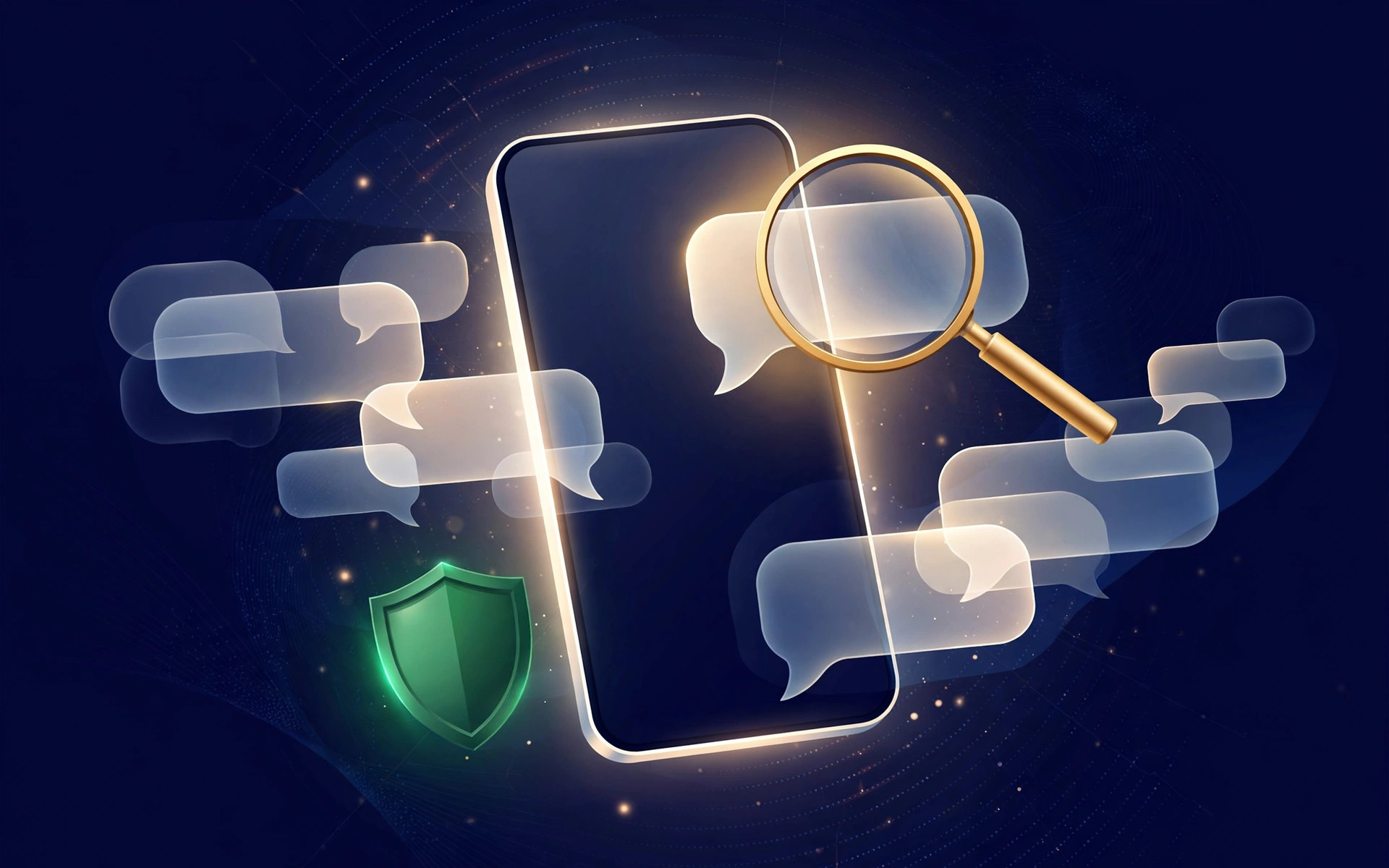
The scam moved from your inbox to your phone's text messages — and it did it fast. PYMNTS Intelligence research from October 2026 found that first contact by text rose 35% in a year to 12% of scam victims, while email fell 30% to 13%. The next fake "fraud alert" you receive is more likely to arrive as an SMS than an email.
That matters because a scam that starts on your phone can finish there too. BioCatch's 2026 Global Scams report found 90% of banking scam sessions now happen entirely on mobile, up five points in a year. The scammer calls or texts, talks you through your own banking app, and the money leaves before the bank's systems see anything suspicious.
Why scammers switched to text
Email gave scammers two problems: spam filters got good, and people learned to distrust links in emails. A text arrives differently — it buzzes in your pocket with the same urgency as a message from a friend. And speed wins: PYMNTS found 43% of victims authorized a payment within one hour of first contact. The scam increasingly begins outside your bank's systems, in channels the bank can't see.
The scariest scams don't hack your account — they persuade you to move the money yourself.
That's the core of the new fraud economy. A PYMNTS Intelligence report from October 2026 found scams now account for 22.4% of fraud dollars, up from 12% in 2025. When you authorize the payment yourself, every identity check passes: the right device, the right fingerprint, the right approval. The failure isn't authentication — it's judgment under pressure.
What a fake bank text looks like
Forget the old typo-ridden spam. BioCatch's fraud intelligence team warned in October 2026 that AI has lowered the barrier to entry, letting scammers create convincing attacks "at a scale we've never seen before." Today's fakes:
- The fraud alert: "ALERT: $847.22 at APPLE STORE was flagged on your card ending 4821. Reply YES if this was you, NO to freeze." Replying starts a "verification" chat with a fake agent.
- The locked account: "Unusual activity locked your account. Verify within 24 hours: [link]" — urgency plus a link is the classic combination.
- The helpful "employee": a call or text from someone claiming to be bank staff, sometimes quoting real account details. South Korea's financial regulators warned on October 6, 2026 that scammers impersonate bank employees and dangle low-interest loans or compensation for supposed data breaches.
- The meeting invite: Belize's central bank warned on October 14, 2026 that scammers were using Google Meet calls to impersonate its representatives and demand banking credentials.
Legitimate fraud alerts are short, never include login links, and never ask you to move money to a "safe account." If a text does any of those things, treat it as fake until you verify through your bank's official app or the number on your card.
Seven red flags in any bank-related text
- Urgency and threats. "Within 24 hours," "account will be closed." Real banks inform; scammers panic you.
- A link you didn't ask for. The display text may say your bank's name; the real destination is a lookalike login page built to steal credentials.
- Requests for credentials or codes. PINs, passwords, one-time passcodes — banks never ask for these by text.
- Instructions to move money. "Transfer to a secure account," "send a test payment." There is no safe account a stranger directs you to.
- A callback number that differs from your bank's. Compare against the number on your card or in the official app.
- It arrived out of the blue. No pending transaction, no recent contact with the bank? An unexpected "fraud alert" is almost certainly fake.
- Odd sender details. Scammers spoof names and short codes, but a random mobile number is a giveaway.
Real message vs fake: a side-by-side
| What banks do | What scammers do |
|---|---|
| Send short alerts: "A $24.50 charge was made. Not you? Call the number on your card." | Send detailed alerts with dollar amounts, links, and instructions to reply or click. |
| Never include login links in texts | Almost always include a link to a fake login page |
| Never ask for your PIN, password, or one-time code | Ask you to "verify" by reading back a code or entering credentials |
| Never tell you to transfer money to protect it | Invent "safe accounts" and "test payments" |
| Reach you at a number you can verify on your card or in the app | Pressure you to act now, before you can verify anything |
The most expensive mistake: replying or clicking to "verify." A reply tells the scammer your number is live — you graduate from a mass-text list to a personal target, and the fake login link captures your credentials the moment you type. The safest response to an unexpected bank text is no response at all, then a check inside your bank's official app.
What banks actually do — and the US/UK difference
Banks do send legitimate text alerts, which is exactly why fakes work. The difference is what the message asks of you: a real alert points you back to a channel you control — your banking app, or the number on your card. Protections also differ by country. In the UK, banks must reimburse customers tricked into authorized push payment scams (subject to conditions and caps) — though, as BioCatch's Jonathan Frost notes, reimbursement "does nothing to stop the fraud itself." In the US there is no equivalent blanket rule: if you authorized the transfer, reversing it is far from guaranteed. Either way, reporting quickly gives you the best possible chance.
If you already clicked or replied: do this now
- Lock it down. Open your bank's official app (not the link) and change your password and security settings immediately.
- Call your bank on the number on your card — never a number from the text. Ask them to freeze or monitor the account.
- If you shared card details, ask for the card to be blocked and reissued.
- Report it. In the US: ReportFraud.ftc.gov; in the UK: Action Fraud plus your bank. Reports feed the pattern-tracking that protects others.
- Watch the account daily for a few weeks — scammers sometimes wait before using stolen credentials.
Frequently asked questions
Can a bank text me a link at all?
Occasionally — but never one that leads to a login screen or asks for credentials. Doubt a link? Ignore it and open the bank's app yourself; a real alert will be there too.
My text came from my bank's usual number. Is it safe?
Not necessarily. Scammers spoof sender names and short codes. Verify independently through your app or the number on your card.
What if the caller knew my account details?
Stolen data is cheap — breaches and phishing mean scammers often arrive with real details about you. That proves nothing about who they work for.
Will my bank refund me if I was tricked?
It depends on your country and the bank's policies. UK authorized push payment scam victims have reimbursement rights; in the US, authorized transfers are much harder to recover. Report immediately either way.
Key takeaways
- Bank scams moved from email to text: first contact by SMS rose 35% in a year to 12% of victims (PYMNTS Intelligence, October 2026).
- Ninety percent of banking scam sessions now play out entirely on mobile (BioCatch 2026).
- Never click links or reply to unexpected bank texts — verify through your bank's official app or the number on your card.
- Banks never ask for PINs, passwords, or one-time codes by text, and never ask you to move money to a "safe account."
- If you engaged with a scam text, change credentials and call your bank within minutes — then report it.
Text-message bank scams work because they borrow your bank's voice at the exact moment you're least suspicious. The defense is simple and free: make your banking app the only channel you trust, and treat every unexpected text as a performance until your app says otherwise. Set that rule once, tell your family about it tonight, and the next "fraud alert" that buzzes in your pocket becomes background noise instead of a bill.
Sources
- PYMNTS — Scams Move From the Inbox to the Text Screen (Oct 8, 2026)
- CXM — 90% of Banking Scams Have Gone Entirely Mobile (Oct 2, 2026)
- PYMNTS — Scams Capture 22.4% of Fraud Dollars as Banks Adjust Defenses (Oct 16, 2026)
- Aju Press — Financial Authorities Issue Consumer Alert Amid Rising Bank Hacking Incidents (Oct 6, 2026)
- Breaking Belize News — Central Bank warns of phone call scam! (Oct 16, 2026)
More in Financial Technology
Financial Technology · Guide
Viral budgeting apps want your bank login — stay safe
Finance creators are going viral showing budgeting apps wired to real bank accounts. How to check an app is safe before handing over access.
18 October 2026 · 7 min read
Financial Technology · Explainer
High-Yield Savings Accounts Explained: Stop Earning 0.01%
High-yield savings accounts pay up to 5.00% APY — over 13x the 0.37% national average. How they work, what to check, and how to open one in 10 minutes.
17 October 2026 · 7 min read

Financial Technology · Explainer
Open banking, explained without the jargon
What it means when an app asks to connect to your bank, and what to check first.
29 September 2026 · 6 min read