Guide
5 Purchases That Keep You Broke — The Viral List, Costed
A viral reel lists five purchases that keep you broke. We priced each one — car, delivery, BNPL, phone and subscriptions — and the total is sobering.
In this article
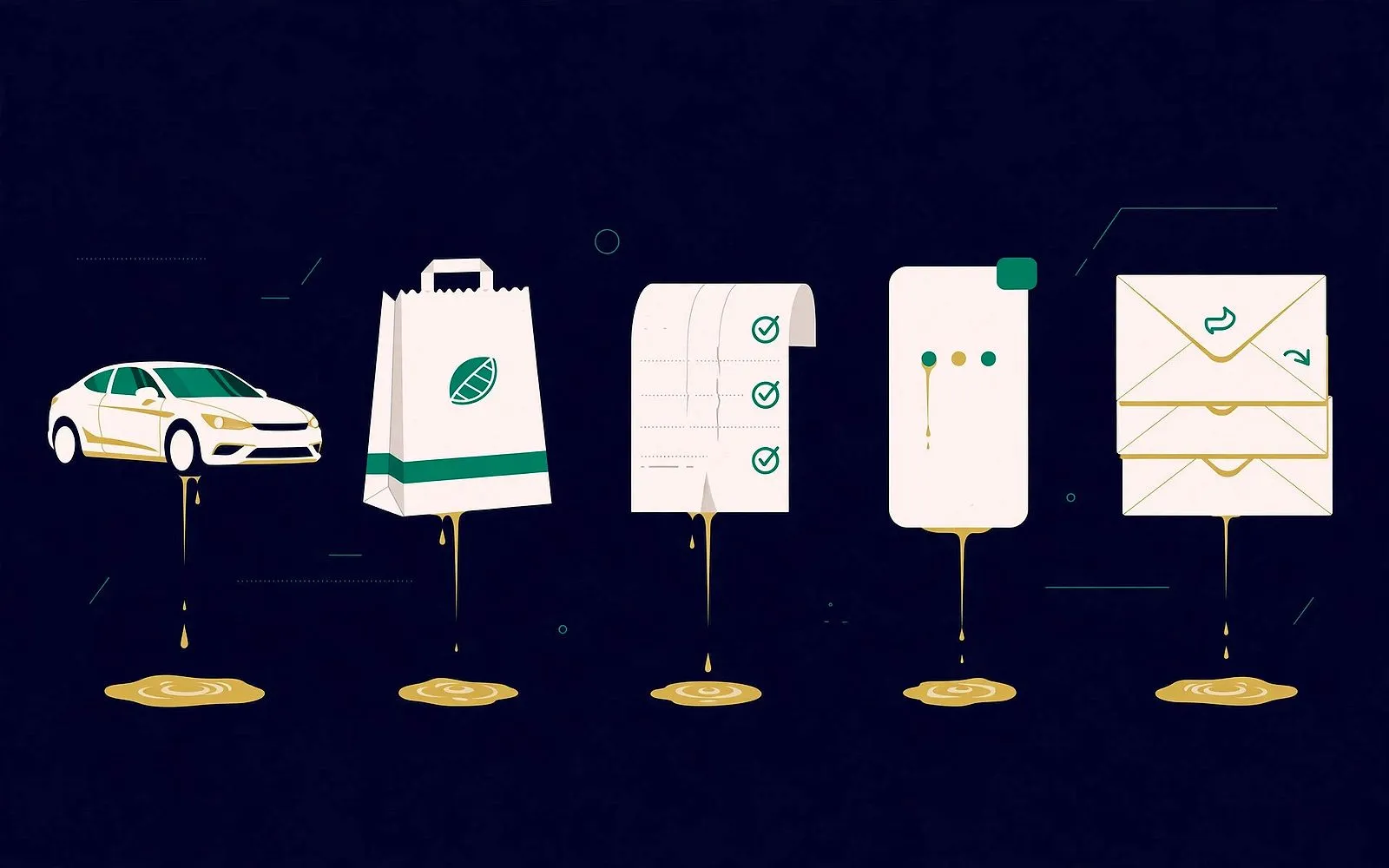
This week, a simple list went viral across Instagram and TikTok: “5 Purchases That Keep You Broke.” One version, posted by creator Parth Malkan on 3 November, names a brand-new car financed for six-plus years, food delivery every week, buy now, pay later for things you cannot afford today, a new phone every year, and subscriptions you forgot you were paying for. Days earlier, finance creator Ankur Warikoo’s “most useless expensive purchases” reel made the same point with his own confessions, and Virlo’s 4 November trend roundup flagged “5 Purchases That Keep You Broke” as one of the week’s top-performing personal-finance hooks. The list works because it is specific — and because every item on it can be priced. So we priced them.
1. A brand-new car financed for six years or more
The new car is the most expensive item on the list, and the numbers are stark. Kelley Blue Book put the average new-vehicle transaction price at $50,089 in August 2026. Edmunds’ third-quarter 2026 data shows the average buyer financed $44,664 at 7.0% APR, paying $787 a month — and a record 25.5% of new-car loans now run 84 months or longer, with 21.2% of buyers paying $1,000 or more a month.
Stretching the loan is what turns a bad deal into a trap. A 2026 iSeeCars analysis of more than 1.3 million sales found a new car loses roughly 20% of its value in the first year and 40–45% within three years. The loan shrinks far more slowly: on the average 84-month loan, the borrower still owes about $28,151 after three years, and Edmunds found 29.6% of trade-ins in the second quarter of 2026 carried negative equity, owing on average $6,884 more than the car was worth. AAA’s 2026 Your Driving Costs study puts the full cost of owning a new car at $12,863 a year, $4,422 of it depreciation — a cost that never arrives as a bill.
The fix is the old 20/4/10 rule: 20% down, a loan of no more than four years, and total car costs under 10% of your gross income. A two- or three-year-old car skips the steepest depreciation entirely, typically costing about 40% less than the same car new.
2. Food delivery every week
The reel claims delivery fees and tips can double the price of a meal. That is an exaggeration for a large order, but roughly right for a small one. Delivery apps typically add 25–45% in service fees, taxes and tip on top of the menu price, plus a flat delivery fee — and app menus are often marked up above in-store prices too. A $12 lunch lands at roughly $19.40 delivered, against $3–$4 for a home-cooked dinner, using the US Department of Agriculture’s food-at-home plans as the benchmark. In the UK, platform fees run to around 20–35% of a typical order.
The damage is in the repetition. One delivery a week instead of cooking costs a solo diner roughly $780 a year extra; for a couple it is closer to $1,350, and for a family around $2,600. None of that buys better food — it buys not cooking. Cap deliveries at a number, not a feeling: one a week, budgeted in advance, turns a leak into a choice.
3. Buy now, pay later for things you cannot afford today
Buy now, pay later looks free, which is exactly why it is dangerous. LendingTree’s 2026 survey found 47% of BNPL users had paid late on a loan in the past year — up from 41% in 2025 and 34% in 2024. Nearly two-thirds, 63%, had more than one BNPL loan running at the same time, and 29% were now financing groceries with it. The Consumer Financial Protection Bureau’s December 2025 report put the average late fee at $9.99 and the average BNPL transaction at just $135: small loans, stacked up, tripped over.
BNPL stopped being invisible in 2025. FICO began incorporating buy now, pay later payment data into its scores, so a missed instalment can now follow you beyond the app that issued it. Treat every split payment as debt, because that is what it is.
The fix: if you cannot afford it today, the honest answer is usually to wait. If you do use BNPL, keep one loan at a time, set the instalments to autopay, and never use it for groceries or other consumables — financing something you will have eaten before you have finished paying for it is the definition of the trap.
4. A new phone every year
A flagship phone now costs around $1,099, and the yearly upgrade cycle is the quietest leak on this list because each purchase feels small. Work it out over three years, with stated assumptions: buying a $1,099 phone every year and trading the old one in for roughly $450 each time costs about $649 a year net, or $1,947 over three years. Buying once, keeping it for three years and trading it in for roughly $150 at the end costs $949 over three years, or about $316 a year. The difference is roughly $1,000 over three years — about $330 a year — for a phone that does the same things. Replace your phone when the battery or the camera genuinely fails you, not when the new model launches.
5. Subscriptions you forgot you were paying for
This is the easiest item on the list to fix, and the most embarrassing to discover. C+R Research asked 1,000 US adults to estimate their monthly subscription spending, then had them add it up line by line. The guess averaged $86 a month. The real total was $219 — a 2.5-times gap worth $1,596 a year. Forty-two percent admitted they were still paying for a service they no longer used, and 74% said recurring charges are easy to forget. CNET’s 2026 survey puts the average waste on unused subscriptions at $252 a year, and Self Financial found 70% of people have forgotten to cancel a free trial before it converted to a paid plan.
The 10-minute subscription audit: open your bank and card statements, search for every recurring charge, and cancel anything you have not used in the last 30 days. Do it tonight. The average household finds at least one.
The total damage, added up
Not everyone does all five. But the three smallest items alone — weekly delivery, the yearly phone and unused subscriptions — add up to roughly $1,360 a year for a typical household, using the figures above. Add a car loan stretched to seven years and a stack of BNPL instalments, and the list stops being a joke about willpower and starts being a second rent payment.
| Purchase | The trap | What it costs a year (approx.) |
|---|---|---|
| New car, 84-month loan | Depreciation outruns the loan; negative equity | $12,863 all-in ownership (AAA 2026) |
| Weekly food delivery | Fees add 25–45% plus delivery charge | ~$780 extra vs cooking (solo) |
| Buy now, pay later | Stacked small loans; 47% pay late | $9.99 average late fee, plus overspending |
| New phone every year | $1,099 a year vs ~$316 kept three years | ~$330 extra a year (worked example) |
| Forgotten subscriptions | $86 guessed vs $219 actual a month | $252 wasted on unused subs (CNET 2026) |
None of the five purchases feels like a mistake in the moment. That is the whole trick: each one is small, monthly, or framed as a reward. The cost only becomes visible when you add the year up.
Frequently asked questions
Is the viral list actually right?
Mostly. The car, BNPL and subscription claims check out against published data. The delivery claim — that fees double the meal — is overstated for large orders, where fees add 25–45%, but roughly accurate for small ones once menu markups are included.
Should I never order delivery or buy a new car?
No. The point of the list is not abstinence, it is awareness. A new car bought with a 20% deposit and a four-year loan is a different purchase from the same car on an 84-month loan. A weekly delivery you have budgeted for is a choice; a daily one you have not counted is a leak.
Does buy now, pay later hurt my credit score?
It can now. FICO began incorporating BNPL payment data into its scores in 2025, and late payments can be reported. Previously, most BNPL borrowing was invisible to the credit bureaus — that protection is gone.
What is the single highest-value fix?
The subscription audit. It takes ten minutes, costs nothing, and recovers an average of $252 a year in unused subscriptions. After that, shorten any car loan you can — it is the biggest number on this list by a wide margin.
Key takeaways
- A new car loses about 20% of its value in year one, while a record 25.5% of buyers now finance for 84 months or more — a combination that leaves nearly 30% of trade-ins underwater.
- Weekly delivery costs a solo diner roughly $780 a year more than cooking, with fees adding 25–45% on top of the menu price.
- 47% of buy now, pay later users paid late in the past year, and 63% juggle more than one BNPL loan at once.
- A yearly $1,099 phone costs about $330 a year more than keeping one for three years, even after trade-ins.
- People guess they spend $86 a month on subscriptions. The real figure is $219 — and $252 a year goes to subscriptions nobody uses.
One note for UK readers: the figures above are mostly American, but the traps are identical — UK delivery platforms add roughly 20–35% in fees, and PCP car finance works the same way as a long US auto loan, with the monthly payment as the hook. Your next step takes ten minutes: run the subscription audit tonight, then check the term on your car loan. Those two moves alone recover hundreds a year before you change anything else about how you spend.
Sources
- Virlo — Personal Finance Trends (Nov 4, 2026)
- Parth Malkan — '5 Purchases That Keep You Broke' (Instagram, Nov 3, 2026)
- Edmunds Q3 2026 financing data via CarThrive
- AAA / Edmunds / KBB 2026 car ownership costs
- LendingTree 2026 Buy Now, Pay Later Report
- SwitchWize — BNPL late payments 2026 data
- Delivery vs cooking cost (USDA benchmarks)
- Savzz — UK takeaway platform fees
- Walnut — Subscription spending statistics 2026 (C+R Research, CNET)
The MoneyHabit editorial desk researches, writes and reviews every article against our editorial policy.
The Sunday Habit
One useful money idea, every week.
A short, practical email every Sunday — no spam, no selling your address, unsubscribe anytime.
Advertisement
More in Smart Spending

Smart Spending · Guide
The Viral AI Trick That Cuts Your Grocery Bill
Creators are getting AI chatbots to slash their grocery bills with a simple prompt trick. Here's how the viral meal-planning method works.
3 November 2026 · 6 min read

Smart Spending · Guide
How to Haggle at a Car Dealership: The Numbers That Matter
The average new-car payment just hit a record $787 a month. Here is how to haggle the price down — the numbers, the scripts, and the traps to avoid.
14 November 2026 · 9 min read
Smart Spending · Guide
Second-Hand Cars: The Checks That Save You Thousands
A used car is the biggest purchase most people make after a house. These checks, in order, catch the expensive problems before you pay.
12 November 2026 · 14 min read