Explainer
Inflation Hit 3.7% While Wages Grew 3%: What It Costs You
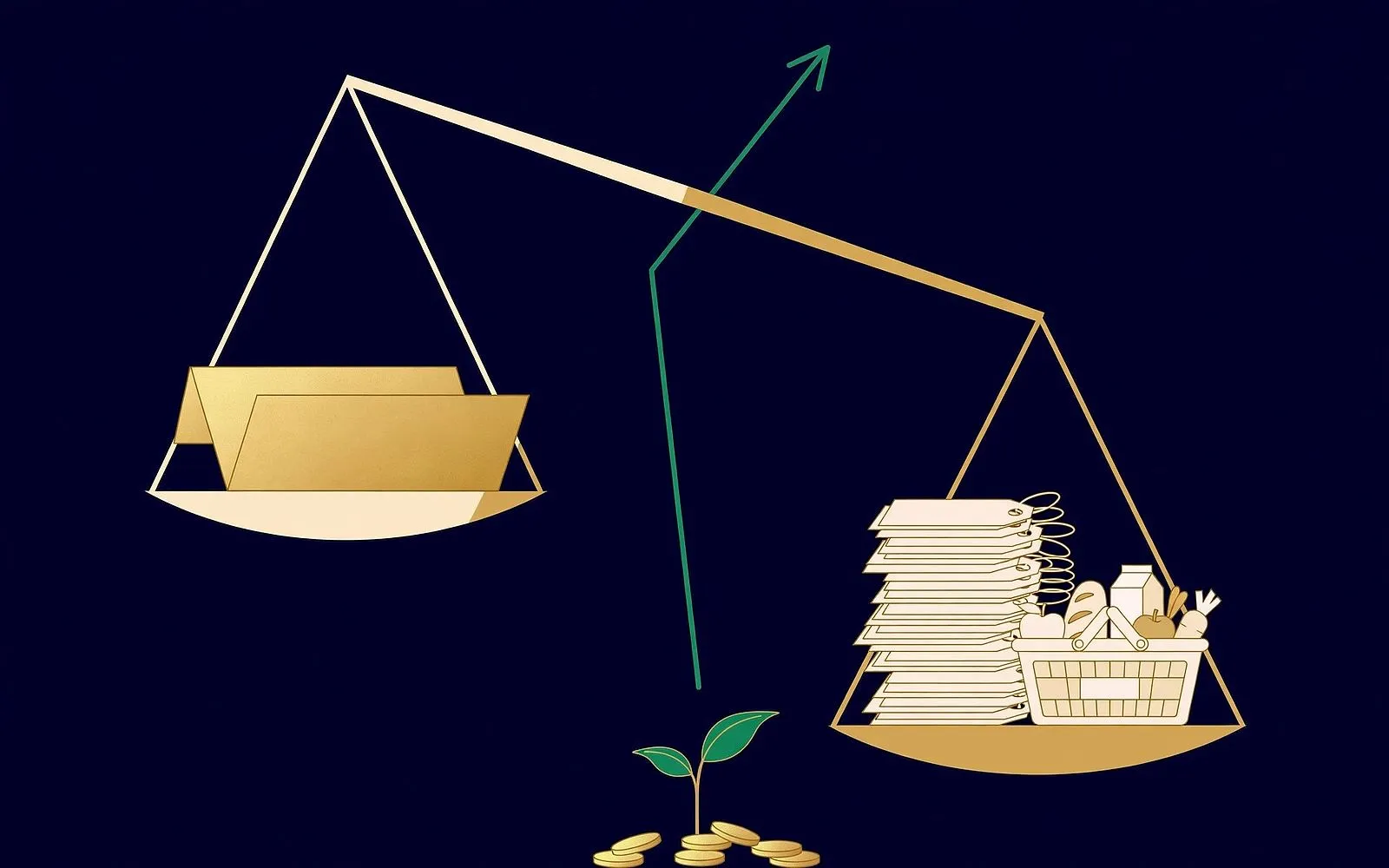
Prices rose 3.7% in a year while wages grew 3.0% — so the average pay rise now buys less. Here is what the gap costs you, and five moves to close it.

In this article
- The September numbers, in plain English
- Gas did the damage. Core is what the Fed watches.
- What the gap costs you: a worked example
- Mortgages: 7.40% and the $376-a-month difference
- Five moves to close the gap
- 1. Check your real raise
- 2. Move idle cash out of 0.38%
- 3. Attack the energy line, not the grocery line
- 4. If you carry variable-rate debt, plan for December
- 5. Watch two dates
- A note for UK readers
- Frequently asked questions
- Key takeaways
Your pay went up this year. So did prices — faster. The Bureau of Labor Statistics reported in October that consumer prices rose 3.7% over the year through September 2026, while average hourly earnings grew just 3.0%. That gap means the typical pay rise now buys less than it did a year ago: real wages fell by about 0.7%. This is the number behind the frustration at the checkout, the petrol pump and the mortgage quote — and it is worth understanding, because the same report is shaping what the Federal Reserve does next and what your savings and debts will cost.
The September numbers, in plain English
The September Consumer Price Index (CPI) report, released on 14 October, was hotter than economists expected. Here is what it showed:
| Measure | September 2026 | Previous |
|---|---|---|
| Headline CPI (year over year) | 3.7% | 3.4% (August) |
| Headline CPI (month over month) | 0.6% | 0.4% (August) |
| Core CPI, excluding food and energy (year over year) | 2.6% | 2.4% (August) |
| Gasoline (month over month) | 9.1% | — |
| Gasoline (year over year) | 34.2% | — |
| Food (year over year) | 2.5% | — |
| Shelter (month over month) | 0.4% | 0.3% (August) |
| Average hourly earnings (year over year) | 3.0% | — |
Two things stand out. First, the monthly jump of 0.6% was the largest in five months. Second, the rise was not just a petrol story: core inflation, which strips out food and energy, also accelerated, from 2.4% to 2.6% year over year. Economists had forecast 3.6% headline and 2.5% core — the report beat both.
Gas did the damage. Core is what the Fed watches.
Petrol accounted for more than half of September's monthly price rise, in the Bureau of Labor Statistics' own words. The energy index rose 5.2% in the month and is up 20.4% over the past year, driven by the conflict in the Middle East pushing oil prices higher. Airline fares, heavily fuel-driven, are up 22.4% from a year ago.
That sounds like a one-off supply shock — and if it were only energy, the Federal Reserve could afford to wait it out. The problem is what happened underneath. Core inflation rose 0.3% in the month against a 0.2% forecast, shelter rose 0.4% for a second consecutive month, and used cars rose 0.7%. Capital Economics called the core gain "broad-based" rather than the product of one or two temporary quirks. When higher costs spread from energy into services, shelter and everyday prices, the worry becomes that they also spread into what people expect prices to be next year — and expectations are what the Fed fights hardest.
The gap between 3.7% prices and 3.0% wages is small on paper and large in a household budget: it is the difference between a pay rise that feels like progress and one that quietly goes backwards.
The bond market reacted immediately. The 10-year Treasury yield rose to around 5.28%–5.30%, back near its 24-year high, and traders roughly doubled the odds of a Federal Reserve rate rise at the October meeting, from about 22% to roughly 43% on CME FedWatch. In the event, the Fed held its benchmark at 3.75%–4.00% on 28 October, but the December meeting on 8–9 December is now firmly in play.
What the gap costs you: a worked example
Percentages hide the money. Take an illustrative household earning $60,000 a year, with a 3% pay rise — $1,800 more a year, or $150 a month before tax.
- The same basket of goods that cost $60,000 a year ago now costs about $62,220 at 3.7% inflation. The pay rise covers $1,800 of that $2,220 increase, leaving a $420 shortfall — roughly $35 a month of lost purchasing power.
- Petrol is the sharpest edge. With gasoline up 34.2% year over year, a household spending $200 a month on fuel is now spending roughly $268 for the same driving.
- Food is the relief valve. The food index was flat in September and groceries actually fell 0.1% in the month; food is up 2.5% over the year, well below the headline rate. Cooking at home is one of the few places inflation is genuinely easing.
- Housing is the slow squeeze. Shelter is the largest single piece of the index, and two firm months in a row — 0.3% then 0.4% — take away the comfort that rent and housing costs were cooling.
This is an illustration, not a prediction for any one household: your personal inflation rate depends on what you actually buy. But the direction is the point — when prices rise faster than pay, the standard of living falls even while the salary number goes up.
Mortgages: 7.40% and the $376-a-month difference
The same report pushed mortgage rates higher. Freddie Mac's weekly survey put the average 30-year fixed mortgage at 7.40% in mid-October — its seventh straight weekly increase and the highest since November 2023, up from 6.30% a year earlier. The 15-year fixed averaged 6.71%.
On a $400,000 loan, 7.40% works out at roughly $2,770 a month in principal and interest — about $376 more than the February low, when rates briefly dipped below 6%. Each additional quarter-point on the rate adds roughly $68–$69 a month to that payment. That is why the structure of the loan matters more right now, not less: paying points to buy the rate down only pays off if you keep the loan for five-plus years, while taking the standard rate with a lender credit keeps more cash in hand if you expect to refinance later.
Do not let a hot inflation report rush you into a bad mortgage decision. A rate lock is a real decision with real costs — and the October jobs report lands on 6 November, with the Fed meeting on 8–9 December. If you are close to closing, talk through lock timing and float-down options with your lender rather than guessing from headlines.
Five moves to close the gap
1. Check your real raise
Subtract 3.7% from your latest pay rise. If the result is negative, your pay fell in real terms — and that is the number to take into your next salary conversation, not the headline percentage. Ask about the timing of the next review, not just the size of the last one.
2. Move idle cash out of 0.38%
The FDIC national average for savings accounts is 0.38% APY. The best high-yield savings accounts are paying 4.30%–5.00% APY as of early November 2026 — Axos ONE up to 5.00% for six months, Pibank 4.40% with no minimum, CIT Bank up to 4.35%. On $10,000, the difference between 0.38% and 4.40% is about $402 a year. Rates are variable and promotional offers expire, so check the terms on the bank's own page before opening an account — but leaving emergency cash earning almost nothing while inflation runs at 3.7% is a guaranteed real loss.
The one-minute test: open your savings account and check the rate. If it starts with a zero, your money is losing purchasing power every month. Moving it to a high-yield account is the single easiest response to a 3.7% inflation print.
3. Attack the energy line, not the grocery line
Food inflation is already cooling — groceries fell 0.1% in September. Energy is where the damage is: gasoline up 34.2% year over year, airfares up 22.4%. That means the highest-return savings right now are in driving less, combining trips, and re-checking whether the flights you book are worth the fare — not in cutting the grocery budget further.
4. If you carry variable-rate debt, plan for December
Credit cards and home equity lines of credit move with the Fed. If the December meeting brings another rise, variable rates adjust within a billing cycle or two. Paying down variable-rate balances now, before the meeting, is worth more than it was a month ago. Fixed-rate debt — a fixed mortgage, a fixed personal loan — is unaffected by the next decision.
5. Watch two dates
The October jobs report arrives on 6 November and the Fed decides on 8–9 December. If hiring stays soft, the Fed may hold despite the hot CPI; if wages accelerate, another rise becomes more likely. Either way, the September CPI made one thing clear: inflation is not yet beaten, and the next two months of data decide whether borrowing gets more expensive again.
A note for UK readers
The same squeeze is playing out in Britain. UK inflation was 3.5% in September, and the Bank of England raised Bank Rate to 4% on 5 November — its first rise since August 2023 — citing the same energy-price pressures. UK savers should check the same thing: top easy-access accounts were paying around 5% AER in late October, while the average account pays far less, and the gap between the two is now worth hundreds of pounds a year on a typical balance.
Frequently asked questions
Is 3.7% inflation high?
Yes, by recent standards. It is up from 3.4% in August and well above the Federal Reserve's 2% target. It is also a 13-month high, and the monthly increase of 0.6% was the largest in five months.
Why did inflation rise if the Fed raised rates in September?
The Fed raised its benchmark to 3.75%–4.00% on 16 September, its first increase since 2023. But the Fed does not set petrol prices, and the September jump was driven by energy — gasoline up 9.1% in the month. Rate rises work with a lag, and they cannot fix a supply shock. What they can do is stop the shock spreading into core prices, which is why the core reading mattered more to markets than the headline.
Does 3.7% inflation mean my savings are losing money?
Only if your savings rate is below 3.7%. At the FDIC national average of 0.38%, yes — your cash loses about 3.3% of purchasing power a year. At a top high-yield account paying 4.30%–5.00%, your cash is roughly keeping pace or slightly ahead.
Should I wait to buy a house until rates fall?
There is no reliable way to time it. Rates were below 6% in February and are at 7.40% now — waiting cost roughly $376 a month on a $400,000 loan. The better question is whether you can afford the payment at today's rate and plan to stay long enough that refinancing later is a bonus, not a rescue plan.
Key takeaways
- September CPI rose 3.7% year over year, up from 3.4% in August, while average wages grew 3.0% — real pay fell about 0.7%.
- Petrol did the headline damage (up 9.1% in the month, 34.2% over the year), but core inflation also accelerated to 2.6%, which is what moved markets and the Fed debate.
- The average 30-year mortgage hit 7.40%, adding roughly $376 a month to a $400,000 loan versus February's low.
- The easiest response is moving idle cash from the 0.38% national average into a high-yield account paying 4.30%–5.00% APY.
- Watch the 6 November jobs report and the Fed's 8–9 December meeting — they decide whether borrowing gets more expensive again.
Inflation at 3.7% is not a crisis, but it is a pay cut in disguise for anyone whose wages grew more slowly. The numbers in this report are a snapshot, not a verdict — the next two months of data will say whether this was an energy spike or the start of something stickier. What you can do today does not depend on that answer: check your real raise, move idle cash to a rate that beats inflation, and make your variable-rate debt smaller before December. Start with the savings account — it takes ten minutes and it pays every month.
Sources
- The Mortgage Lens — September CPI flash (BLS data)
- RISMedia — Energy to Blame as Inflation Rises
- WSJ Buyside — Best High-Yield Savings Accounts of November 2026
- Bankrate — Best High-Yield Savings Accounts of November 2026
- Motley Fool — Best High-Yield Savings Rates Today, Nov. 5, 2026
- Experian — The Latest Personal Finance News for November 2026
- Unbiased Headlines — Inflation Hits 3.7%, Outpacing 3% Wage Growth
The MoneyHabit editorial desk researches, writes and reviews every article against our editorial policy.
The Sunday Habit
One useful money idea, every week.
A short, practical email every Sunday — no spam, no selling your address, unsubscribe anytime.
Advertisement
More in Financial Literacy

Financial Literacy · News
401(k) Loans Jumped 80%: What Raiding Retirement Costs
Hardship withdrawals more than doubled and 401(k) loans jumped 80% in a year. Here is what raiding your retirement really costs — and what to try first.
13 November 2026 · 8 min read
Financial Literacy · Guide
Inflation vs Your Pay Rise: Are You Actually Earning More?
Your pay went up 3% — but prices rose 3.7%. Here is how to work out whether your raise is a raise at all, and what to do if it is not.
9 November 2026 · 11 min read

Financial Literacy · Explainer
APR vs APY: The Difference That Costs You Money
A 4% APY and a 4% APR are not the same number. Here is what each one really means for your savings, loans, and credit cards - with the math.
21 October 2026 · 7 min read