Guide
Only Paying the Minimum? The Real Cost in Numbers
Two surveys this month show half of cardholders stuck on minimum payments. We ran the numbers on what minimum-only payments really cost.
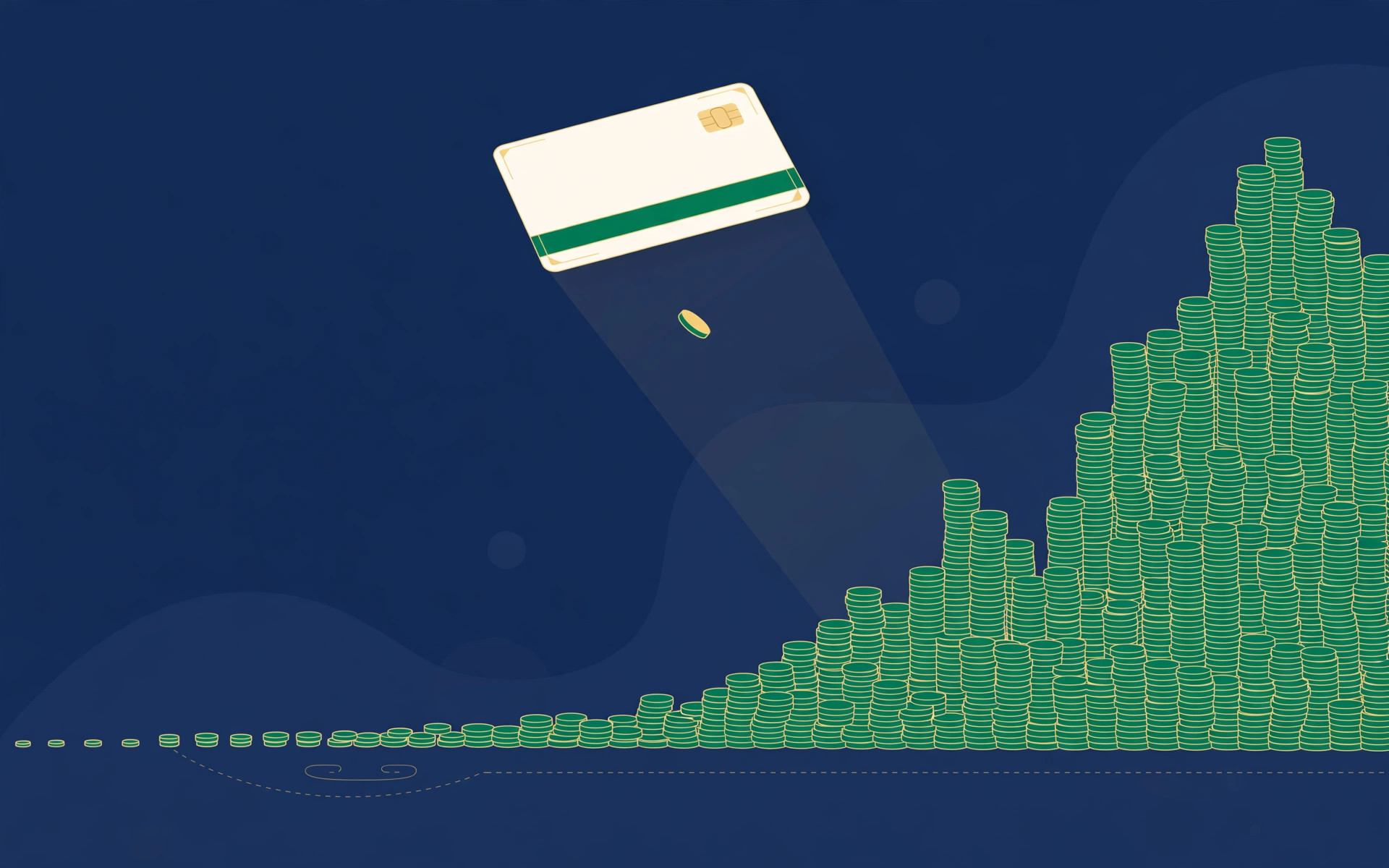
Two new surveys landed within days of each other this month, and they tell the same uncomfortable story. CardRatings.com's October 2026 survey of more than 2,800 active cardholders found that 20.3% of Americans are typically unable to pay more than the minimum on their credit cards. Days later, a September study from Freedom Debt Relief revealed that 59% of Gen Z cardholders rely on making only the minimum payment — the highest share of any generation.
Paying the minimum feels responsible. It keeps your account current and the phone quiet. But the minimum is the most expensive payment plan most people never signed up for. Here is what minimum-only payments actually cost, in real numbers.
Why the minimum is the most expensive option
Most issuers set the minimum at a small slice of your balance — usually 1–4% — or a flat floor like $25–$35, whichever is higher. At a typical 2% minimum, the payment barely covers the month's interest, leaving almost nothing to shrink the debt.
Cambridge Credit Counseling published a worked example in October 2026 that makes this concrete. Buy a $1,000 TV at 18% APR with a 2% minimum: the first month's payment is $20, but the interest charge is $15 — only $5 goes toward the debt. Paying just the minimum and making no new purchases, that TV takes about 151 months — over 12 years — to pay off, with $1,396 in interest on top of the $1,000 price.
The $1,000 TV costs $2,396. The debt becomes a 12-year obligation.
The same example shows the other side: paying a fixed $100 a month instead clears the balance in 11 months, with just $91.62 in interest. Same debt, same APR — the only difference is whether you let the minimum set your pace.
Your balance can keep growing while you pay on time every month. Fees, penalty rates and new charges can outpace a minimum payment — CardRatings warns the problem can become "harder to manage, particularly if you continue adding new charges."
The numbers: what minimum payments really cost
A September 2026 Newrez survey, conducted by Morning Consult among 2,203 US adults, ran the numbers on the average credit card balance — $6,519 at 19.57% APR:
| Strategy | Monthly payment | Time to clear | Total interest |
|---|---|---|---|
| Minimum payments only | Starts ~$174, shrinking over time | 25+ years | $10,000+ |
| Fixed payment, same card | $218 | 42 months | ~$2,494 |
| Personal loan (12.41% APR) | $218 | 36 months | ~$1,322 |
Read that first row again: over a quarter of a century, with interest exceeding the original debt. And the background is getting harsher — the Federal Reserve's Survey of Consumer Finances, released in October 2026, found the average US household card balance at $3,100, up 5% since 2022, with nearly 20% of families behind on payments, up from about 12% in 2022.
Who is stuck on the minimum — and why
Payment trouble isn't confined to low earners. CardRatings found it at every income level: 5.7% of people earning $200,000 or more said they missed a credit card payment in the past year. It is most common among younger cardholders — only 28% of baby boomers paid just the minimum, versus 59% of Gen Z and 50% of cardholders overall.
The reasons are less about recklessness than you'd think. The most-cited obstacle was money itself: 37% said they simply didn't earn enough to pay more than the minimum. And there's an information gap: only 20% of Gen Z knew the exact interest rate on their card debt — the lowest share of any generation.
One in five cardholders says the minimum is the most they can pay. Four in five of the youngest don't know the rate they're paying.
One late payment that is at least 30 days past due can stay on your credit report for seven years. If cash is tight, paying the minimum on time always beats missing — protect the streak, then work on paying more.
Your statement already contains the math
Under the CARD Act, US issuers must show a minimum-payment warning on every statement: how long it would take to repay your current balance making only the minimum, and the total you'd pay — alongside the payment needed to clear it in three years and its cost. UK statements carry a similar minimum-payment illustration.
Action for this week: open your latest statement, find the minimum-payment warning, and read the two numbers — the years, and the total. Then look at the three-year payoff figure. That gap is the price of the minimum.
Breaking out: three moves that beat the minimum
1. Pay extra toward the highest rate first
Even a partial payment above the minimum reduces the balance interest is charged on, lowering every future interest charge. With several cards, direct any extra money at the highest-interest balance while keeping the others current — the same logic behind the avalanche method.
2. Consider a 0% balance transfer — with the fee in the math
A 0% introductory transfer moves debt to a card where every payment hits principal. The two catches: the transfer fee (typically 3–5%) and the promotional window. Divide the transferred balance by the promo months — if you can't clear it before the window ends, the remainder jumps to the regular rate. We covered how to evaluate these deals in our balance transfer guide.
3. Call the issuer — or a nonprofit counselor
If you genuinely can't pay more than the minimum, the card company is one of the best calls you can make: issuers may offer hardship assistance, reduced payments or other repayment options. Nonprofit credit counseling agencies, such as Cambridge Credit Counseling, offer free counseling and can negotiate lower rates through a debt management plan.
Don't solve a minimum-payment problem with more expensive credit. Cash advances, payday loans and high-fee consolidation products usually make the math worse. If an offer sounds like a rescue, read the APR line before anything else.
Frequently asked questions
Will paying only the minimum hurt my credit score?
Paying the minimum on time protects your payment history, but a balance that never shrinks keeps your credit utilization high — a major score factor. One missed payment is worse: 30 days late or more can damage your score for up to seven years.
How long would my own balance take at minimum payments?
Check your statement's minimum-payment warning — it's personalized to your balance and rate. As a rough guide from the Cambridge examples: at a 2% minimum and 18% APR, expect well over a decade for a four-figure balance.
What if I genuinely can't pay more than the minimum right now?
That's common — one in five cardholders is in the same position — and a reason to act, not wait. Call your issuer about hardship options, speak to a nonprofit credit counselor (free), and stop adding new charges to the card if you can.
Key takeaways
- 59% of Gen Z and 50% of all cardholders make only the minimum payment (Freedom Debt Relief, Sept 2026); 20.3% say they can't pay more (CardRatings, Oct 2026).
- A $1,000 balance at 18% APR with a 2% minimum takes ~151 months and costs $1,396 in interest; $100 a month clears it in 11 months for $91.62 in interest (Cambridge Credit Counseling).
- On the average $6,519 balance, minimum payments stretch past 25 years with $10,000+ in interest — versus 42 months with a fixed $218 payment (Newrez / Morning Consult).
- Your statement already shows both the minimum-payment timeline and the three-year payoff alternative — read them this month.
- If you can't pay more than the minimum, call your issuer about hardship options or a nonprofit credit counselor — free help exists before missed payments do damage.
The minimum payment isn't a plan — it's the price you pay for not having one. Pick one number from this article — your statement's three-year payoff figure is a good one — and make that your payment. Everything above the minimum is the fastest guaranteed return your money can earn: the interest you never pay.
Sources
- CardRatings - 1 in 6 Credit Card Customers Struggle With Payments (Oct 2026)
- Cambridge Credit Counseling - Minimum Credit Card Payments: The Real Cost (Oct 2026)
- IndexBox / Freedom Debt Relief - Gen Z Credit Card Debt study (Sept 2026)
- Payments Dive - Credit card debt ticks up, Fed Survey of Consumer Finances (Oct 2026)
- Morningstar/Business Wire - Newrez survey: Credit Card Debt Weighs on Homeowners (Sept 2026)
More in Debt & Credit Education
Debt & Credit Education · Guide
Stop Relying on Credit to Get Through the Month
NerdWallet's October index: 38% of Americans expect to lean on credit this month. If your card has become your backup plan, here's a realistic way out.
21 October 2026 · 6 min read

Debt & Credit Education · Guide
Balance Transfer Cards: Use 0% Deals Before They Shrink
0% balance transfer deals are about to get worse, warns Martin Lewis. Here is how the cards work, the real cost of the fee, and how to use them to crush debt.
20 October 2026 · 8 min read
Debt & Credit Education · Guide
Buy Now, Pay Later: How It Works and Its Traps
BNPL feels like free money — four easy payments, zero interest. But 47% of users paid late last year. Here is how it really works and when it traps you.
19 October 2026 · 6 min read