Guide
How to Rebuild Your Credit After a Missed Payment
One missed payment can cost 60–110 points and stay on your file for years. Here's the step-by-step plan to rebuild your credit — and keep it rebuilt.

In this article
One missed payment can feel like a disaster: your score drops, the mark sits on your credit file for years, and every future application seems to ask about it. But a single missed payment is one of the most recoverable credit problems there is. The mark may stay on your file for years — seven in the US, six in the UK — but its damage fades much faster, and the steps below can get most of the lost ground back within 12 to 24 months.
What a missed payment actually does to your credit
Timing matters more than most people realise. Lenders generally do not report a payment until it is at least 30 days past due, so paying inside that window usually keeps the miss off your file entirely — though you may still owe a late fee. US federal student loans are an exception: they are typically not reported until 90 days late.
Once a late payment is reported, two clocks start. The first is the reporting clock: under the US Fair Credit Reporting Act, a late payment can stay on your credit report for seven years from the original delinquency date. In the UK, missed payments and defaults stay on your file for six years from the date recorded. Paying the debt does not erase the mark early, though in the UK a paid default is shown as "satisfied".
The second clock is the scoring clock, and it runs much faster: payment history is the single biggest factor in your credit score — 35% of a FICO score and 41% of a VantageScore. FICO's own research shows a single 30-day late payment can knock 60 to 110 points off a score in the high 700s, while a fair score in the mid-600s typically loses less — roughly 17 to 37 points.
A missed payment is not a life sentence. The mark may sit on your file for years, but most of the scoring damage fades within 12 to 24 months of consistent on-time payments.
How bad the damage is depends on how late you were:
| How late | Typical score impact | What it signals |
|---|---|---|
| 30 days late | 40–110 points, depending on your starting score | First report to the bureaus; recoverable |
| 60 days late | Roughly 20–30% worse than a 30-day late | Most mortgage lenders want 12 months clean after this |
| 90+ days late | 80–110+ points; similar to a collection account | Some lenders treat it like a default |
| 120+ days / charge-off | Severe, long-lasting damage | Lender writes the debt off; collection may follow |
Step 1: Stop the damage today
Pay something now. Even a partial payment is better than nothing: it reduces the interest accruing, shows intent, and — if you are still inside the 30-day window — can keep the miss off your credit report entirely. Paying at least the minimum brings the account current; paying in full stops the damage altogether.
Call the lender and ask for a late-fee waiver. Most major issuers will waive a first late fee for a customer with a clean history on that account. If cash flow is the real problem, ask about a hardship programme — reduced minimums, deferred payments, or frozen interest. These are rarely advertised, so you have to call and ask.
Set up autopay for at least the minimum on every account. A second missed payment is far more damaging than the first, and the lender is less likely to waive fees a second time. Autopay for the minimum is your safety net; you can always pay more manually.
Still inside the 30-day window? Act today — a payment made before day 30 usually never reaches your credit file, so the whole rebuild can be skipped entirely.
Step 2: Read your credit file — all of it
Before you fix anything, find out what lenders see. In the US, get your full reports from Experian, Equifax and TransUnion free every week at AnnualCreditReport.com — the only federally authorised source. In the UK, each agency must provide your statutory credit report free, and services such as ClearScore and Credit Karma show the same data.
Check all three files, because they do not always match: not every lender reports to every bureau, and dates can differ. Look for the missed payment itself, the date it was first recorded, and whether the balance and status are correct — plus anything you do not recognise, such as an account you never opened.
If a late payment is genuinely inaccurate, dispute it. In the US, file with the bureau that reported the error — three disputes if the same mistake appears on all three reports. In the UK, ask the lender to correct it or raise a dispute with the credit reference agency, adding a Notice of Correction — a short statement explaining your side — while it is investigated. If the late payment is accurate, disputing it will not work.
Step 3: Ask for a goodwill removal
A goodwill letter asks your creditor to remove a legitimate late payment from your credit report as a courtesy. It is not a dispute — you are admitting the payment was late and asking the creditor to consider removing it anyway, based on your history with them.
Goodwill letters work best in narrow circumstances: a one-time miss, an otherwise clean history, a long relationship with the lender, and a believable explanation — an autopay mix-up, a family emergency, a move that disrupted your mail. They rarely work for multiple late payments or charge-offs, and the creditor is never obliged to agree.
Keep the letter short: your account number, the exact date of the late payment, a brief explanation of why it happened, what has changed since, and a polite request to remove the mark. Address it to the issuer's executive customer service team. If the answer is no, accept it and move on — the rebuild below works whether or not the mark is removed.
Do not pay a "credit repair" company to write goodwill letters or dispute accurate marks for you. No company can legally remove accurate information from your credit report, and the fees — often hundreds a month — buy you nothing you cannot do yourself for free.
Step 4: Add new positive history
While the old mark ages, you can dilute its impact by adding fresh, positive information. Scoring models weigh recent behaviour more heavily than old behaviour, so a growing run of on-time payments pushes the old miss into the background.
A secured credit card is the most reliable tool. You put down a refundable deposit — typically around $200 in the US or £200 in the UK — and that deposit becomes your credit limit. It is a real card that reports to the bureaus: use it for one small regular purchase, pay the statement in full each month, and after 6 to 12 months of perfect payments the issuer will often "graduate" you to an unsecured card and refund the deposit.
A credit-builder loan works the same way in reverse. The lender holds the borrowed amount in a locked savings account while you make monthly payments; you receive the money only when the loan is paid off, and every on-time payment is reported — adding an instalment account to your file, which helps your credit mix.
Becoming an authorised user can help — carefully. If a trusted family member adds you to a card with a long history of on-time payments and low balances, that positive history appears on your file too. But it cuts both ways: if they miss a payment or run up a high balance, your score takes the hit as well, so only do this with someone whose habits you trust completely.
Keep your utilisation low. Utilisation — the share of your available credit you are using — is the second-biggest scoring factor. The common rule is to stay under 30%, but while rebuilding, aim for under 10%. On a $1,000 limit, a $900 balance is 90% utilisation and drags your score down; paying it to $100 is 10% and helps it recover. On a $300-limit secured card, spend no more than $30 a month before paying it off. These are our own worked examples, not lender figures.
What recovery actually looks like
Here is a realistic timeline for a single 30-day late payment on an otherwise clean file, assuming every payment from now on is on time:
| When | What to expect |
|---|---|
| First 3 months | The score is at its lowest; focus on bringing every account current and setting up autopay |
| 6 months | Early improvement as on-time payments accumulate |
| 12 months | Most of the initial drop has faded |
| 24 months | Impact roughly half the initial hit by year three |
| 6–7 years | The mark drops off your file entirely — 6 years in the UK, 7 in the US |
Mistakes that slow your rebuild
Closing your oldest card. Closing an account shortens your average account age and removes available credit, pushing utilisation up. Keep old cards open with a small recurring charge on autopay, even if you barely use them.
Applying for lots of credit at once. Each application triggers a hard search, and several in a short period look like desperation to lenders. Space applications out and only apply for a real reason.
Frequently asked questions
Can a missed payment be removed from my credit report?
If it is inaccurate, yes — dispute it and it must be corrected or removed. If it is accurate, it stays until the reporting period ends (seven years in the US, six in the UK), unless the lender agrees to a goodwill removal — a courtesy, not a right.
How much will one missed payment lower my score?
It depends on where you started. FICO research shows a single 30-day late payment can cost 60 to 110 points off a score in the high 700s; fair scores in the mid-600s typically lose less, around 17 to 37 points.
Does paying the late amount remove the mark?
No. Paying brings the account current and stops the damage getting worse, and in the UK a paid default is shown as "satisfied". But the marker itself stays on your file for the full reporting period.
How long until my credit recovers after a missed payment?
For a single 30-day late on an otherwise clean file, most of the score drop recovers within 12 to 24 months of on-time payments, low utilisation and no new negative marks. The mark itself disappears after six years in the UK or seven in the US.
Key takeaways
- A payment is usually only reported once it is 30 days late — pay inside that window and the miss may never reach your file.
- A late payment stays on your report for seven years in the US and six in the UK, but most score damage fades within 12 to 24 months of on-time payments.
- Stop the slide first: pay something now, ask for a late-fee waiver or hardship plan, and set autopay for the minimum.
- Check all three credit files, dispute anything inaccurate, and try a goodwill letter for a one-time miss.
- Rebuild with a secured card or credit-builder loan, keep utilisation under 10%, and keep your oldest card open.
A missed payment is a setback, not a verdict. Lenders judge you on what you have done since — and every on-time payment from today is evidence in your favour. Next step: check your credit file this week, bring any past-due account current, and set up autopay for the minimum on every account. If money worries are making payments hard, free and confidential help is available — MoneyHelper, StepChange and National Debtline in the UK, and non-profit credit counsellors through the NFCC in the US.
Sources
- The Credit People — How Long Do Late Payments Stay on Credit Report
- The Lenders Network — Can Late Payments Be Removed from Your Credit Report?
- Credit Strong — How Long Do Late Payments Stay on Your Credit Report?
- SuperMoney — Missed a Credit Card Payment? Here's What Happens and What to Do
- America Credit Care — How Long Do Negative Items Stay on Your Credit Report?
- Investidor — How to Rebuild Credit After Defaulting on a Credit Card
- 118118 Money — How Long Do Missed Payments Stay on Your Credit File?
- Haabaa — How Long Do Missed Payments Stay on Your Credit Report? (UK)
The MoneyHabit editorial desk researches, writes and reviews every article against our editorial policy.
The Sunday Habit
One useful money idea, every week.
A short, practical email every Sunday — no spam, no selling your address, unsubscribe anytime.
Advertisement
More in Debt & Credit Education

Debt & Credit Education · Guide
How to Build Credit From Zero
No credit file doesn't mean bad credit — it means no record at all. Here's how to build one from scratch, step by step, in the US and the UK.
19 November 2026 · 10 min read
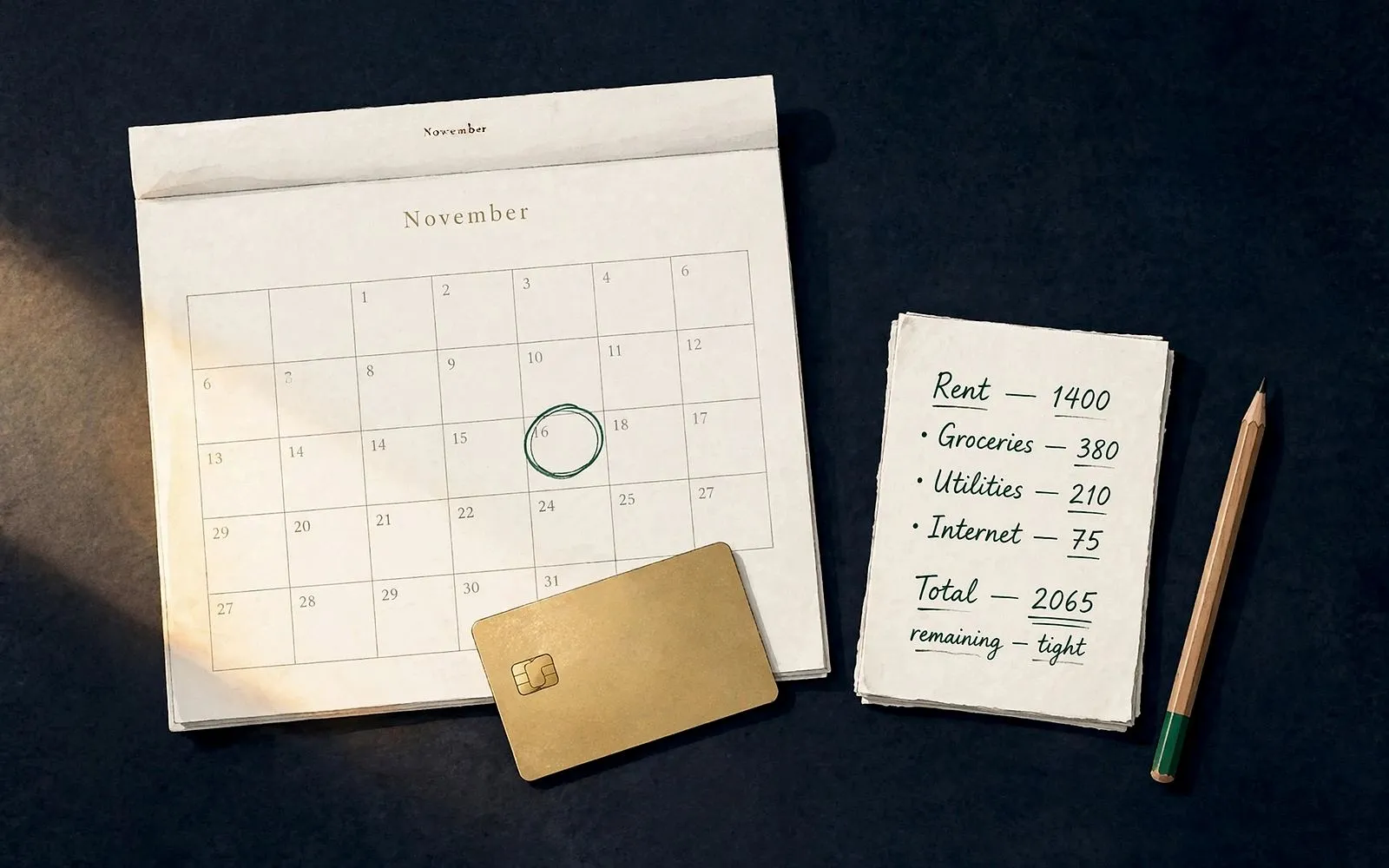
Debt & Credit Education · Guide
41% of Americans Now Need Credit to Get By
NerdWallet's November survey finds 41% of Americans will rely on credit this month — up from 35% in September. Here's what it costs and what to do about it.
19 November 2026 · 10 min read
Debt & Credit Education · Guide
How Credit-Card Interest Is Really Calculated
Your card's interest charge comes from a simple formula: average daily balance x daily rate x days. Here is the maths - and why paying early changes everything.
15 November 2026 · 10 min read