Guide
Black Friday 'Deals' That Aren't: Spot a Fake Discount
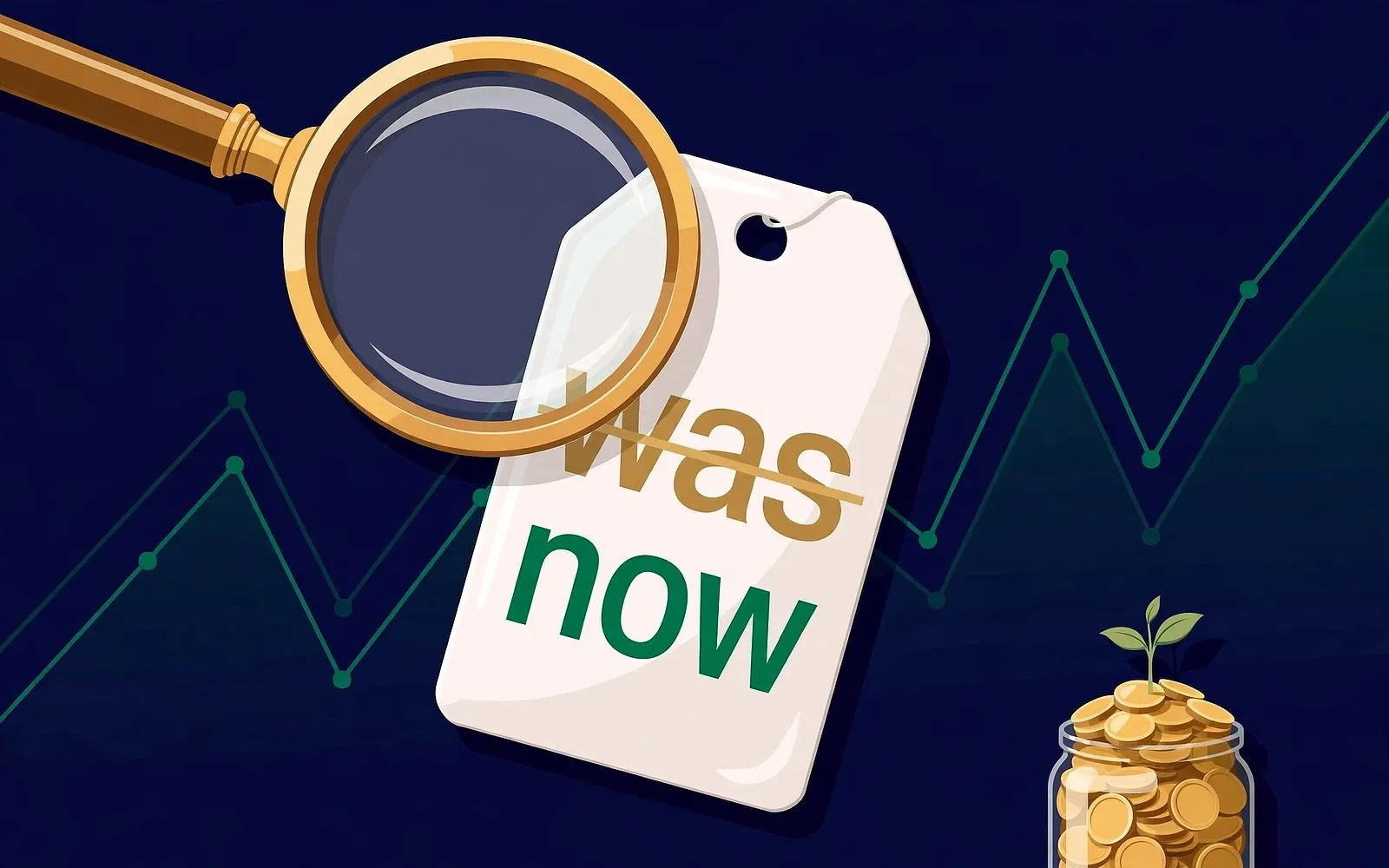
That '53% off' sticker may be hiding a price rise. Here's how to check any Black Friday deal's real price history in five minutes — before you pay.
In this article
- The vacuum that exposed the trick
- How often is a Black Friday "deal" actually a deal?
- The four tricks behind fake discounts
- 1. The "was" price nobody paid
- 2. The price bump before the sale
- 3. The "up to" headline
- 4. The fake deadline and the sale-only model
- What the rules actually say
- The five-minute check that catches a fake discount
- When a Black Friday deal is real
- Bought it already? What you can do
- Frequently asked questions
- Key takeaways
A Shark vacuum cleaner was listed on Amazon UK at £199, marked down 53% from £419.99. It looked like the deal of the season. Then MoneySavingExpert checked the price history: the same vacuum had sold for between £199 and £399 over the previous year — and for around £161 earlier in the year. The "bargain" price was higher than the price shoppers had already been able to pay months before. Amazon, MSE said, had likely raised the price just before the sale to make the discount look bigger.
That one vacuum is the whole Black Friday problem in miniature. Black Friday 2026 falls on 27 November, and Adobe expects Americans to spend a record $12.9 billion online that day alone. Much of that spending will be driven by crossed-out prices and percentage discounts. Some are genuine. A large share are not — and the difference is checkable in about five minutes, before you pay.
The vacuum that exposed the trick
In a video posted on 19 November 2026, MoneySavingExpert's team clicked Amazon's own price-history button on a Shark Stratos cordless stick vacuum. The graph showed a year of prices bouncing between £199 and £399, with the vacuum cheaper — around £161 — earlier in the year than during Black Friday Week. The 53% saving was calculated against a £419.99 recommended retail price, a number the vacuum had rarely, if ever, actually sold at. A real saving was available on a different Shark model through MSE's own negotiated code — £189 against £449.99 — yet even there, MSE noted the cheapest price ever recorded was £159. The sticker and the saving were two different things.
Black Friday's most misleading number is rarely the price you pay. It is the price crossed out next to it.
This is not a story about one retailer. Commenters on MSE's post reported the same pattern with coffee machines, toys and other goods, and said most big retailers do something similar. The pattern is the point — and it is measurable.
How often is a Black Friday "deal" actually a deal?
Three independent sets of price tracking, all published in the last year, point the same way: a large share of Black Friday prices are not the lowest price of the year.
| Study | What it tracked | What it found |
|---|---|---|
| Which?, UK (Nov 2025) | 175 products at 8 retailers, tracked daily for a year around Black Friday 2024 | Every product was cheaper or the same price at some point in the six months either side of Black Friday; 83% were the same price or cheaper outside the four-week sale window |
| Visualping, US (2025) | More than 1,500 products, tracked daily from early October to Cyber Monday 2025 | A third had been cheaper earlier that autumn; those "deals" averaged 37% above the product's lowest observed price |
| Dudproof, US (Nov 2026) | 28 Amazon gift products, one-year Keepa histories read on 10 Nov 2026 | 14 of the 28 had been cheaper in September or October; five had moved back up in the three weeks before Black Friday |
The Which? figures deserve a closer look, because they are the most thorough. Against the full year, 42% of the 175 products were cheaper at least once outside the sale window, and 35% were cheaper after the sale period ended. None of the 175 products was at its lowest price of the year on Black Friday itself.
That does not mean Black Friday is a con. MoneySavingExpert's comparison of 50 popular items found 40 were cheaper or the same price on Black Friday 2025 than in the pre-Christmas sales, averaging a 34% discount against 28% before Christmas. Gaming products and household electricals were particularly strong on the day. The honest summary: Black Friday is often the best time to buy — but the sticker price is not evidence of that. The price history is.
The four tricks behind fake discounts
Most inflated discounts use one of four techniques. Once you can name them, they are easy to spot.
1. The "was" price nobody paid
The crossed-out figure is often a recommended retail price (RRP), a launch price, or a price charged briefly in one channel — not the price the shop usually charged. An RRP is a manufacturer's suggestion, not a record of what shoppers paid. In the EU, the Court of Justice ruled in September 2024 (case C-330/23, referred by a court in Düsseldorf) that Aldi Süd's flyer percentages must be measured against the lowest price of the previous 30 days, not the price charged immediately before the offer.
2. The price bump before the sale
The price quietly rises in the weeks before Black Friday, then "falls" to roughly where it was — or higher. This is what the Shark graph showed, and what Dudproof found in five of its 28 products in November 2026. A price that was £199 in September, £399 in early November and £199 again on Black Friday has not been discounted. It has been on a round trip.
3. The "up to" headline
"Up to 70% off" can be true while almost nothing in the sale is 70% off. UK Trading Standards guidance says such a claim should only be made when the maximum reduction applies to a significant proportion of the range. In practice, the deepest cuts often apply to a handful of lines — older stock or unpopular sizes and colours — while the items most people want carry a small reduction or none at all.
4. The fake deadline and the sale-only model
Countdown timers and "ends tonight" banners create urgency, and the sale often quietly extends. Separately, some Black Friday products are variants made for the event — similar model numbers, slightly different specifications — which makes checking their price history much harder. If you cannot find the exact model number's price history, treat the discount with suspicion.
The one test that catches most of this: never judge a deal by the crossed-out price. Judge it by the lowest price the item has actually sold for in the last three to six months. If the sale price is not at or below that, it is not a deal — whatever the sticker says.
What the rules actually say
Shoppers often quote a "28-day rule" as though a higher price shown for 28 days automatically makes a discount legal. That rule does not exist in UK law, and the details differ sharply by country.
| Where | The rule for the "was" price | Who enforces it |
|---|---|---|
| United Kingdom | No fixed period. Under the Digital Markets, Competition and Consumers Act 2024 (in force April 2025), a price claim must not mislead. Trading Standards guidance weighs how long the higher price was charged, how recently, and how much was sold at it. | CMA — fines up to 10% of global turnover — and local Trading Standards |
| European Union | Any announced reduction must show the lowest price charged in the 30 days before it, and the discount must be calculated from that price. | National consumer authorities; fines of at least 4% of annual turnover for widespread breaches |
| United States (federal) | The FTC's Guides Against Deceptive Pricing require a former price to have been offered openly, actively and in good faith for a reasonably substantial period. | FTC, state attorneys general, private class actions |
| California / Massachusetts | California: the former price must be the prevailing market price within the three months before the ad. Massachusetts: offered for at least 28 days in the 90 days before the ad. | State and local prosecutors; private lawsuits |
Enforcement is no longer theoretical. In October 2026 the CMA announced a £4.8 million fine for Wayfair over misleading pricing, one of the first fines under its new direct enforcement powers. Retailers are free to raise and lower prices — what they cannot do is present a saving that misleads shoppers about what they are actually gaining.
Do not rely on the "28-day rule" as a shopper. In the UK it is a myth; the real test is whether the reference price was a genuine, recent selling price. In the US there is no single federal day-count either. When in doubt, the price history, not the rulebook, is your protection.
The five-minute check that catches a fake discount
Do this for anything over about $50 or £50 before you buy. It takes five minutes and it works on almost every major retailer.
- Check the price history, not the sticker. On Amazon, use the price-history button on the listing, or paste the link into CamelCamelCamel or Keepa. Elsewhere, try PriceSpy (UK) or Google Shopping's price tracking. You want one thing: the lowest price this exact item has sold for in the last three to six months.
- Compare the sale price with the year's low. If the "deal" price is above the lowest price in the last six months, you are not getting the best price — you are getting one the retailer has already beaten. The Shark vacuum failed this test: £199 on sale, against around £161 earlier in the year, roughly 24% above its own low (our arithmetic).
- Check at least one other retailer. Search the exact model number elsewhere. MoneySavingExpert found most Shark Black Friday prices were matched by other retailers — the "deal" was the going rate, not a saving. A price that is the same everywhere is the market price, whatever the badge says.
- Read the "was" price carefully. Is it an RRP, a "compare at" figure, or the shop's own previous price — and when was it charged? An RRP the item never sold at tells you nothing. A "was" price from eleven months ago tells you almost nothing either.
- Ask whether you would buy it at this price without the badge. If the item was not on your list before the sale, the discount is doing the deciding, not you. Close the tab, wait 24 hours, and check again. Which?'s data says waiting is rarely punished: more than a third of products were cheaper after the sale period ended.
When a Black Friday deal is real
Not every discount is a trick. Deals are most likely genuine when the price is at or below the year's low, the discount is on a current model rather than a sale-only variant, and the price beats other retailers rather than just the sticker. Adobe's forecast puts the season's deepest discounts on TVs, apparel and appliances, with Black Friday growing faster than Cyber Monday this year — 9.2% against 6.2%. The bargains are there. They are just not evenly distributed, and they are not the ones shouting loudest.
Bought it already? What you can do
If you bought something at a price that turns out to have been inflated, you are not stuck with it. In the UK, anything bought online can be returned within 14 days of delivery for any reason under the Consumer Contracts Regulations. In the US there is no federal cooling-off period for ordinary online purchases, but most major retailers offer 30- to 90-day returns, and many will refund the difference if the price drops further inside that window — ask, and keep the receipt and screenshots.
If the pricing itself looks misleading, report it: to Trading Standards via Citizens Advice or the CMA in the UK, or to the FTC and your state attorney general in the US. A screenshot of the listing, the date, and the price history is usually enough. Retailers change behaviour when regulators are watching — the Wayfair fine is the clearest recent evidence of that.
Frequently asked questions
Is it illegal for a shop to raise the price before Black Friday?
Raising a price is not illegal in itself — retailers can charge what they like. What the law restricts is the claim built on it. In the UK, a misleading "was" price can breach the Digital Markets, Competition and Consumers Act 2024. In the EU, the discount must be measured against the lowest price of the previous 30 days. In the US, the FTC requires the former price to have been genuinely offered for a meaningful period.
Are Amazon's own price-history graphs reliable?
They are a useful starting point, and they caught the Shark example. But some shoppers find Amazon's own graph patchy, and it only covers Amazon. Cross-check with CamelCamelCamel or Keepa, and with PriceSpy or Google Shopping elsewhere. Two sources agreeing is far stronger than one.
What is the difference between RRP and "was" price?
RRP — recommended retail price — is the manufacturer's suggested price, and the item may never have sold at it. A "was" price should be a price the retailer itself previously charged. A discount measured against an RRP is weaker evidence than one measured against a real previous selling price, and in the EU it is not a lawful basis for the percentage at all.
Should I just wait until after Black Friday?
Often, yes — but not always. Which? found 35% of products were cheaper after the sale period, and 68% were the same price or cheaper, so waiting rarely costs you. But MSE found Black Friday itself was cheapest or equal for 40 of 50 items against pre-Christmas prices, especially in gaming and household electricals. Check the price history for the specific item: if it is at its yearly low, buy; if it is not, wait.
Key takeaways
- That "53% off" sticker is usually measured against an RRP or a price the item rarely sold at — check the price history, not the badge.
- Which? found 83% of 175 tracked products were cheaper or the same price at some point outside Black Friday, and none was at its lowest price of the year on Black Friday itself.
- The Shark vacuum that went viral sold for £199 on "sale" after selling for around £161 earlier in the year.
- Use CamelCamelCamel, Keepa, PriceSpy or Google Shopping to find the lowest price in the last three to six months — five minutes per item.
- Real deals exist, especially in TVs, appliances and gaming — but a deal is only real if the price beats the year's low and the rest of the market.
Black Friday rewards the shopper who checks before paying, not the one who clicks fastest. The tools are free, the check takes five minutes, and the evidence says it will save you from most of the fake discounts in the sale — while still letting you catch the real ones. Before you buy anything this 27 November, look at the graph, not the sticker.
Sources
- MoneySavingExpert — Shark vacuum price-history video (Instagram, 19 Nov 2026)
- MoneySavingExpert — Shark discount codes, November 2026
- MoneySavingExpert — Should you buy on Black Friday or wait for pre-Christmas sales?
- Lifoholic — Are Black Friday Deals Actually Cheaper? The Price Data (Which? 175-product study)
- Dudproof — 14 of 28 Gifts Were Cheaper in Sep or Oct Than Right Before Black Friday
- PriceRest — Black Friday Discount Rules 2026: EU 30-Day Rule, UK and US
- ConsumerWise — Are Black Friday discounts genuine? Check the 'was' price
- Adobe — U.S. Holiday Shopping Season to Hit Record $275.1 Billion Online (Business Wire, 28 Sep 2026)
- The Small Business Digest — Black Friday 'was' prices: the UK has no 28-day rule (CMA Wayfair fine)
The MoneyHabit editorial desk researches, writes and reviews every article against our editorial policy.
The Sunday Habit
One useful money idea, every week.
A short, practical email every Sunday — no spam, no selling your address, unsubscribe anytime.
Advertisement
More in Smart Spending

Smart Spending · Guide
Black Friday Scams: How to Spot a Fake Deal in 2026
One in three UK adults has already lost money to a purchase scam. With Black Friday on 27 November, here is how to spot fake stores and pay safely.
13 November 2026 · 7 min read

Smart Spending · Guide
Black Friday Early Deals: Shop Them Without Overspending
Early Black Friday deals are already live ahead of 27 November. Use a list, a budget and a price-history check so the season saves you money.
29 October 2026 · 8 min read
Smart Spending · Guide
Buying a Refurbished Phone: Black Friday Guide
A refurbished phone can save you hundreds this Black Friday — if you buy it right. Grades, warranties, battery checks and the sellers to trust in 2026.
18 November 2026 · 10 min read