Guide
How to Spot a Fake Review Before You Buy
Fake reviews are now illegal in the US and UK — but enforcement is slow. Here's how to spot them before you buy.
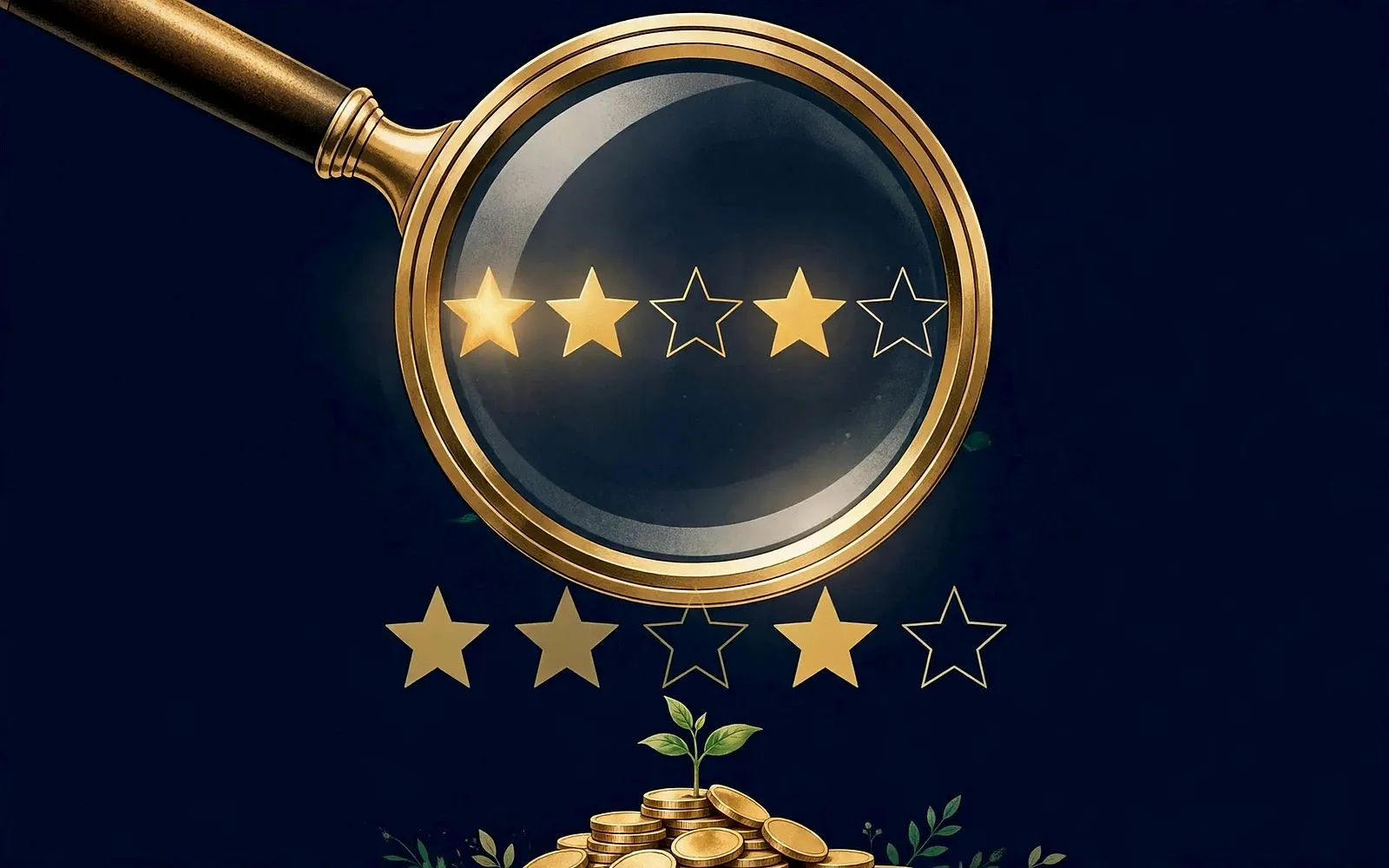
In this article
- How big is the fake-review problem?
- How fake reviews are actually made
- The law finally caught up — in the US and the UK
- Seven red flags that give a fake review away
- 1. The rating shape is wrong
- 2. A burst of reviews arrives all at once
- 3. The reviews are vague, generic, or oddly similar
- 4. The reviewers have no history
- 5. No "Verified Purchase" badge
- 6. The language sounds templated or too perfect
- 7. The photos do not match the words
- The 60-second check before you buy
- Tools that help — and one that disappeared
- What to do if you already bought based on a fake review
- Frequently asked questions
- Key takeaways
Black Friday falls on 27 November this year, and before you click "buy" on that suspiciously perfect 4.9-star gadget, pause. The five stars underneath it may not come from real buyers at all. Amazon alone blocked more than 275 million suspected fake reviews in 2024. Here is how the fakes are made, what the law now says, and a 60-second check that catches most of them before your money is gone.
How big is the fake-review problem?
Nobody outside Amazon knows the exact share of fake reviews. But the numbers we do have all point the same way.
- Amazon blocked more than 275 million suspected fake reviews in 2024, up from more than 250 million in 2023 and more than 200 million in 2020. Those are reviews its systems stopped before customers ever saw them.
- Fakespot judged about 42% of roughly 720 million Amazon reviews it assessed to be unreliable — the high end of the credible range.
- ReviewMeta puts the figure far lower — about 7–11% of products show a clear pattern of manipulated reviews. The gap is itself a trust problem: it depends entirely on what you count.
- A UK government study from 2023 found an estimated 11–15% of 2.1 million reviews across nine UK platforms were fake.
Researchers at UCLA and USC spent years watching the market where reviews are bought. On products that had bought reviews, they estimated about 47% of the reviews were fake. Amazon did delete most of them — but the median wait was 53 days. A fake review only needs to survive until you buy.
The key insight: a fake review is not a harmless white lie. It is a paid advertisement wearing a customer's clothes, and it works precisely because you trust it more than an ad.
How fake reviews are actually made
Fake reviews are rarely written by the seller. They are bought through brokers: private groups — often on Facebook or messaging apps — where "reviewers" buy the product, leave a glowing review, and are refunded the full price plus a small fee. The reviewer keeps the product, the seller keeps the stars, and the platform sees what looks like a genuine verified purchase. Amazon has sued more than 150 people and companies it says ran review schemes.
Generative AI made fakes cheaper: a seller can now generate hundreds of plausible reviews in minutes, and the FTC has said AI-generated fake reviews are covered by its fake-review rule. Two quieter tricks round out the playbook. In review hijacking, a seller takes over a discontinued product's listing and inherits its good reviews for a different item. In review suppression, a business buries negative reviews, sometimes by threatening reviewers. And in the incentivised-review trick, real customers are paid for a review — but only if it is five stars.
The law finally caught up — in the US and the UK
For years, fake reviews lived in a grey area: deceptive, but hard to punish. That changed in both major English-speaking markets.
On 21 October 2024, the Federal Trade Commission's Consumer Reviews and Testimonials Rule (16 CFR Part 465) took effect in the US. It bans fake or false reviews and testimonials (including AI-generated ones), buying or selling fake reviews, paying for a review that has to be positive or negative, undisclosed reviews from company insiders, review suppression, and buying fake social-media signals. Knowing violations can bring civil penalties of up to $53,088 per violation.
Enforcement has started, slowly. In December 2025 the FTC sent warning letters to ten companies. In July 2026 it finalised its first order under the rule against TruHeight, a supplement seller: a $4 million judgment, with $750,000 to be paid. Two years in, the total cash collected under the rule is $750,000 — a rounding error next to the 275 million reviews Amazon blocked in a single year.
In the UK, fake reviews became a banned practice outright on 6 April 2025, under the Digital Markets, Competition and Consumers Act 2024. Submitting or commissioning a fake review, concealing an incentive, and publishing reviews in a misleading way are all banned. The Competition and Markets Authority can now fine businesses directly — up to 10% of global turnover. In March 2026 the CMA opened its first five investigations into online reviews, covering Autotrader, Feefo, Dignity, Just Eat and Pasta Evangelists.
Do not count on the law to protect a single purchase. Regulators move slowly and chase the worst offenders. The fines are real, but they land months or years after you have already bought the dud. Spot the fake yourself, before you pay.
Seven red flags that give a fake review away
No single sign proves a review is fake. Look for patterns — several flags together should make you walk away.
1. The rating shape is wrong
Real products usually have a J-shaped rating curve: lots of five stars, a decent number of four stars, and a tail of one- and two-star reviews. Be suspicious of a product with almost nothing but five stars. A perfect record is a sign that someone is curating it.
2. A burst of reviews arrives all at once
A genuine product accumulates reviews gradually. A sudden cluster — dozens of five-star reviews in a few days, then silence — is the classic signature of a bought batch. Sort by "most recent" and check the timeline.
3. The reviews are vague, generic, or oddly similar
Real reviewers mention specifics: the size ran small, the battery lasted two days, the zip broke after a month. Fake reviews stay vague — "great product, highly recommend, fast shipping" — because the writer never used it. Watch for many reviews using the same unusual phrases or the same three selling points in the same order, a common tell of AI-generated batches.
4. The reviewers have no history
Click the reviewer's profile. A real reviewer usually has a trail of reviews across categories over months or years. A fake-review account often has a handful of reviews, all five stars, all posted within days, all for the same seller.
5. No "Verified Purchase" badge
On Amazon, a "Verified Purchase" badge means Amazon confirmed the reviewer bought the item. It is not a guarantee — refund schemes game it — but its absence is a warning. Amazon's Vine programme is legitimate: selected reviewers receive free products for a review, labelled as Vine reviews. A disclosed free product is not fake; an undisclosed one is.
6. The language sounds templated or too perfect
Watch for reviews that read like a product description: lists of features, marketing language ("premium quality"), or strangely formal English. Also watch for reviews praising things a buyer could not know yet — "this will last for years!" on a product reviewed the day it arrived.
7. The photos do not match the words
A photo showing the product in a real home is a good sign. Stock-style photos, the seller's own marketing images reposted as "customer photos", or photos of a different product are bad signs. If several "different" reviewers post the same image, you are looking at one operation.
| Red flag | What to look for | How much it matters |
|---|---|---|
| Rating shape | Only 5 stars, no criticism | High — real products attract complaints |
| Review timing | Big burst in a few days, then silence | High — the classic bought-batch pattern |
| Vague language | No specifics, repeated phrases | Medium — real reviews can be short too |
| Reviewer history | New account, only 5-star reviews | High — check the profile |
| No verified purchase | Glowing reviews without the badge | Medium — refund schemes can game it |
| Hijacked listing | Reviews describe a different product | High — the stars belong elsewhere |
The 60-second check before you buy
Run this routine on anything over about £25 or $25:
- Sort by most recent. Read the newest ten reviews first. Are they consistent with the overall rating?
- Read the three-star reviews. They are usually the most honest: a real buyer weighing what worked against what did not.
- Check the one-star reviews. The same defect mentioned by several unrelated buyers is worth more than fifty five-star "great product" notes.
- Click two reviewer profiles. If both have only five-star reviews posted within days of each other, the batch was probably bought.
- Search the product name plus "review" outside the store. If the only praise on the entire internet is inside the store's own review section, be careful.
- Compare the price. A product with 2,000 five-star reviews selling for a third of every competitor's price is a trap with good marketing, not a bargain you discovered.
Read the three-star reviews first. They are where real buyers do their honest accounting — and where fake-review operations rarely bother to fake.
Tools that help — and one that disappeared
ReviewMeta still operates: paste an Amazon product link and it analyses the reviews for suspicious patterns and adjusts the rating. It is free and worth using on any purchase you are unsure about.
Fakespot, once the best-known tool of its kind, is gone. Mozilla acquired it in 2023 and shut it down in 2024, after Amazon blocked the data access it needed. Its disappearance is a reminder: the platforms control the data, and tools that depend on scraping it can vanish. Do not rely on a single checker; use the manual routine above as well.
What to do if you already bought based on a fake review
First, use the return window: at least 14 days in the UK for online purchases (Consumer Contracts Regulations) and 30 days on Amazon in the US and UK. Start the return while the window is open.
Second, report the reviews — "Report abuse" on Amazon, flag as fake on Google. Platforms act on volume, so your report matters. Third, report systematic sellers to the regulator: the FTC at ReportFraud.ftc.gov in the US, the Competition and Markets Authority or Citizens Advice in the UK. Finally, leave your own honest review. A specific, factual account — what broke, when, and what the seller did — helps the next buyer more than any star rating.
Frequently asked questions
Are all five-star reviews fake?
No. Most products that earn five stars earned them. The problem is concentrated in cheap, high-volume categories — phone accessories, supplements, kitchen gadgets, beauty products — where a few hundred bought reviews can lift a listing above honest competitors.
Is it illegal to write a fake review?
In the US, yes, since October 2024: the FTC's Consumer Reviews and Testimonials Rule bans writing, buying, or selling fake reviews, with penalties of up to $53,088 per knowing violation. In the UK, fake reviews have been banned since 6 April 2025 under the Digital Markets, Competition and Consumers Act, with fines of up to 10% of global turnover.
Can I trust "Verified Purchase" reviews?
Mostly. The badge confirms the reviewer bought the item through that platform, but refund schemes exploit it by refunding the buyer after the review is posted. Treat the badge as a filter, not a guarantee.
Key takeaways
- Fake reviews are industrial-scale: Amazon blocked 275 million in 2024 alone, and studies estimate 11–42% of reviews are fake or unreliable.
- Fake reviews are now illegal in the US (FTC rule, October 2024) and the UK (DMCC Act, April 2025) — but enforcement is slow, so your own checks matter most.
- Look for patterns, not single signs: a burst of five-star reviews, vague language, reviewers with no history, and no verified-purchase badges together are a warning.
- Read the three-star and one-star reviews first, sort by most recent, and check two reviewer profiles before buying anything over £25.
- Use ReviewMeta on Amazon listings and report fakes — platforms act on volume.
Black Friday rewards the shopper who slows down for one minute before paying. The deal that looks too good to be true usually is — and very often, the five stars underneath it are why it looks that way. Run the 60-second check and let the fakes sell to someone else.
Sources
- FTC — Federal Trade Commission Announces Final Rule Banning Fake Reviews and Testimonials
- Review42 — What Percentage of Amazon Reviews Are Fake?
- FakeFind — Fake Review Statistics
- GoBuy — Two Years of the FTC Fake Review Rule
- zozy.app — Are Amazon reviews fake?
- Snappy Squid — UK Online Reviews Law: Fake Reviews, Incentives & CMA Rules
- Brand Review Network — How to Spot Fake Online Reviews
- HighRegard — What the UK fake review law means in practice
The MoneyHabit editorial desk researches, writes and reviews every article against our editorial policy.
The Sunday Habit
One useful money idea, every week.
A short, practical email every Sunday — no spam, no selling your address, unsubscribe anytime.
Advertisement
More in Smart Spending
Smart Spending · Guide
Black Friday Scams: How to Spot a Fake Deal in 2026
One in three UK adults has already lost money to a purchase scam. With Black Friday on 27 November, here is how to spot fake stores and pay safely.
13 November 2026 · 7 min read

Smart Spending · Guide
Are Sale Prices Really Lower? How to Check Before You Buy
Black Friday is 27 Nov and the fool price debate is viral. A third of deals were cheaper earlier in the season. Here is the 5-minute check.
4 November 2026 · 6 min read
Smart Spending · Guide
Home Sales Hit a Record Low: Buy Now or Wait?
Pending home sales just hit their lowest level since 2001. Here is what the freeze means for buyers — and the maths that decides whether to buy now or wait.
19 November 2026 · 10 min read