News
Record 10% of First-Time Buyers Now Pay All Cash
A record 1 in 10 first-time buyers paid all cash — and the typical one was 54, not 25. What the NAR data says, and what it means if you're still saving.
In this article
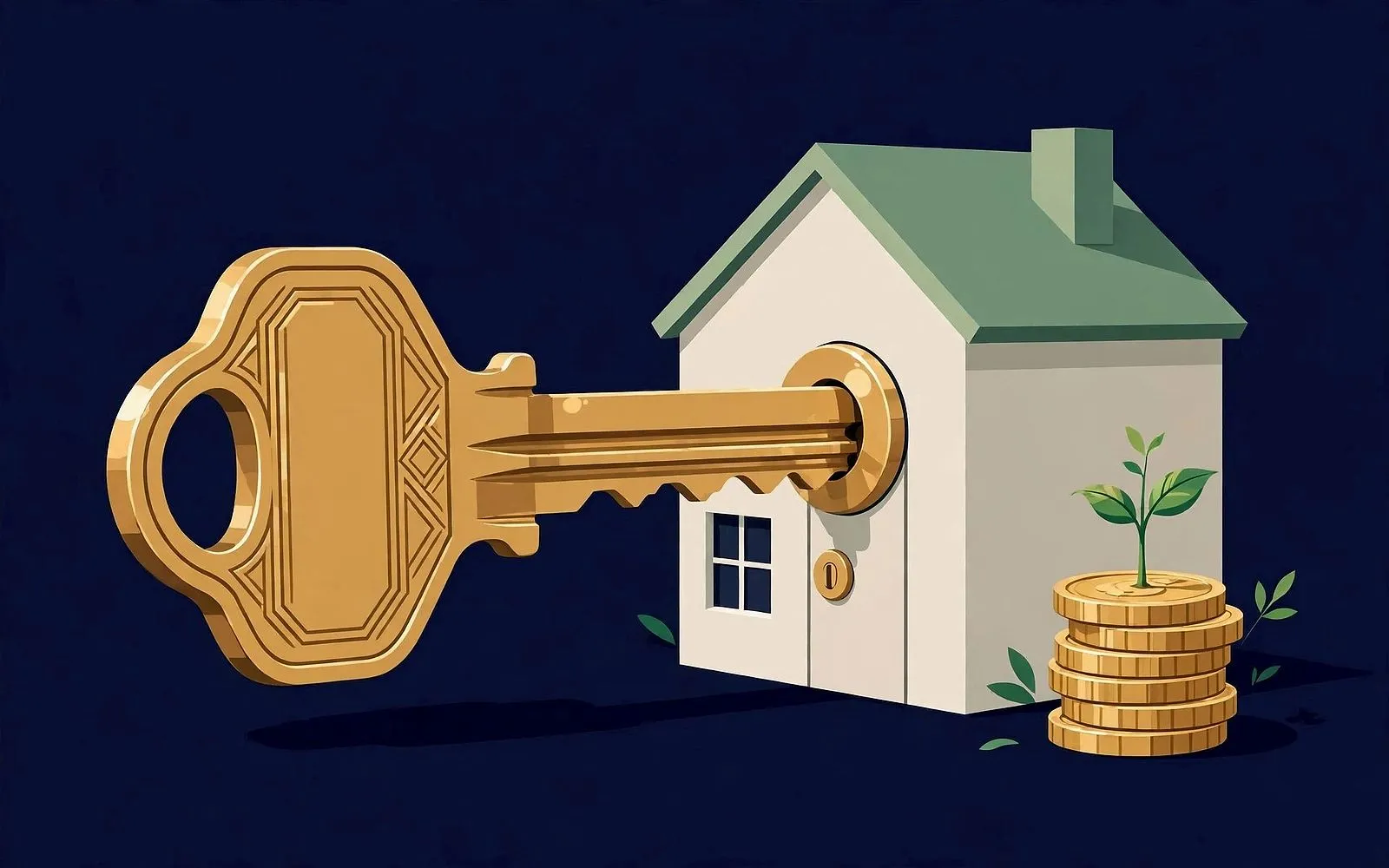
A record one in ten first-time home buyers in the United States paid for their home entirely in cash, according to the National Association of Realtors' 2026 Profile of Home Buyers and Sellers, released on 5 November. The typical first-time buyer is now 40 years old — matching the all-time high — and the typical all-cash first-time buyer is 54.
Buying a first home is increasingly something people do later in life, and increasingly with family money. Here is what the data says, where the cash comes from, and what it means if you are still saving.
What the numbers say
The survey covers primary-residence purchases between July 2025 and June 2026 (7,125 responses; margin of error ±1.16 percentage points).
| Measure | Figure |
|---|---|
| First-time buyers paying all cash | 10% — highest on record (tracked since 2003) |
| Median age, all first-time buyers | 40 — matching the all-time high |
| Median age, all-cash first-time buyers | 54, versus 38 for those who financed |
| First-time buyers' share of purchases | 22%, up from a record low of 21% (pre-2008 norm ~40%) |
| Median down payment, first-time buyers | 9% |
| Inheritance as a down-payment source | 10% — highest on record |
"The housing market is beginning to see a generational transfer of wealth. It's not yet a tsunami, but it is changing who can buy a first home and when. Because people are living longer, the generation receiving that wealth is no longer young adults." — Jessica Lautz, NAR deputy chief economist
Why cash is winning right now
The simplest reason is the cost of borrowing. US mortgage rates are above 7% — Freddie Mac's weekly survey put the 30-year fixed rate at 7.40% in mid-October. For example: on a $400,000 loan at 7.4% over 30 years, the monthly payment is about $2,770 and the total interest comes to roughly $597,000. A buyer who can pay cash sidesteps all of that.
Cash also wins offers: no underwriting to wait for, no risk a lender's approval falls through. As Lautz told MarketWatch, "avoiding higher mortgage interest rates may be the deciding factor to make an all-cash purchase, if they have the financial wherewithal to do so." Paying cash only helps if you have the money — and most first-time cash buyers have had decades to accumulate it, or a family behind them.
Where the cash actually comes from
Among first-time buyers who paid all cash, the biggest source of funds was their own savings, used by 42%. Inheritance was second at 28% — versus just 9% of buyers who financed. Gifts or loans from family and friends were used by 25% of first-time buyers for their down payment, and financial assets such as a 401(k), stocks or cryptocurrency by 30%. The figures overlap because buyers commonly combine several sources.
The striking number is the age gap: the median all-cash first-time buyer is 54, sixteen years older than the median financed buyer at 38. "First-time buyer" increasingly describes someone who has spent decades renting, saving, or waiting for an inheritance — not a twenty-something buying a starter home.
Inheritance as a down-payment source hit 10% across all first-time buyers, the highest on record — the generational wealth transfer Lautz describes.
What to do if you are still saving
The financed route is still how 90% of first-time buyers get in — and the median down payment is only 9%. On a $400,000 home, that is $36,000 (an illustrative example, not the median price). Saving that sum takes $500 a month for six years, or $1,000 a month for three years — a useful way to set a monthly target.
- Delayed financing. If you can raise the cash, buy as a cash buyer, then take out a conventional mortgage after closing.
- An intrafamily loan. Borrow from parents under a formal agreement and repay at a rate lower than the prevailing mortgage rate, while still presenting a cash offer. Put it in writing: lenders and tax authorities both care about the paper trail.
- Ask about family help early. A quarter of first-time buyers used gifts or loans from family. If help is possible, find out before house-hunting — it changes the price range you can search in, and lenders typically ask for a gift letter for gifted deposit money.
Do not fake a cash offer. Some buyers waive the mortgage contingency to look like cash buyers, agreeing to complete the purchase even if they cannot get a mortgage. If the financing falls through, you can lose your deposit or earnest money — and you are still legally bound to complete the purchase.
The UK picture
The same squeeze is visible in the UK, though the ages are lower. The average first-time buyer in England is now 33.9 (Finder, citing government data), and the English Housing Survey puts the average at 34 in 2024/25 — up from 29 in the mid-1990s. L&C Mortgages found the average deposit reached £69,523 in the first eight months of 2026, against an average purchase price of £305,000, with the average buyer aged 33.
The government's Your First Home scheme, announced in October 2026, offers first-time buyers in England a 20% government-backed equity loan on new-build homes with deposits from 2.5%. Modelling by Tembo suggests it could almost halve deposit-saving time, from 34 months to 18 months across the 17 cities analysed. Unlike the US, where mortgage interest can be tax-deductible for some buyers, the UK offers no mortgage-interest relief, and first-time-buyer stamp-duty relief was cut from £425,000 to £300,000 in April 2025.
Frequently asked questions
Does paying cash mean no mortgage at all?
Usually, yes — the buyer pays the full price from savings, investments, inheritance or family money. But some use "delayed financing": buy with cash, then mortgage the property shortly after closing.
Can a first-time buyer really pay cash without an inheritance?
Yes — 42% of all-cash first-time buyers funded the purchase mainly from their own savings. But the median cash buyer was 54, which suggests decades of saving or a high income rather than a quick win.
Is it better to pay cash or take a mortgage?
It depends on the numbers, not on a rule. Above 7%, paying cash saves roughly $597,000 of interest on a $400,000 loan over 30 years (our calculation). But it ties up money that could be invested, and leaves no buffer for emergencies. Compare the mortgage rate with what your savings could earn — and keep an emergency fund either way.
Key takeaways
- A record 10% of US first-time buyers paid all cash — the highest since NAR began tracking the figure in 2003.
- The typical first-time buyer is 40; the typical all-cash first-time buyer is 54, and 28% of them used an inheritance.
- At 7.4%, a $400,000 loan costs about $597,000 in interest over 30 years.
- Financed buyers are still the large majority (90%), with a median down payment of just 9%.
- In the UK, the average first-time buyer is 33.9, with an average deposit of about £69,500 — and Your First Home may halve deposit-saving time.
The first rung of the housing ladder is getting higher and later — but it is not out of reach. Work out your target deposit from the 9% median, set a monthly amount, and have the family-help conversation early.
Sources
- NAR — First-Time Home Buyer Share Inches Up to 22%, Median Age Remains at Record High of 40
- MarketWatch — A record number of first-time home buyers now pay in cash
- Finder — First-time buyer statistics UK: 2026
- Mortgage Solutions — FTB deposits approach £70,000, L&C data shows
- Mortgage Solutions — Tembo analysis: Your First Home may help buyers save faster
- Thinkmoney — Why Can't Young People Afford Houses? UK 2026
The MoneyHabit editorial desk researches, writes and reviews every article against our editorial policy.
The Sunday Habit
One useful money idea, every week.
A short, practical email every Sunday — no spam, no selling your address, unsubscribe anytime.
Advertisement
More in Money News & Explainers

Money News & Explainers · News
NS&I Green Savings Bonds Now Pay 4.73%: Worth It?
NS&I raised its Green Savings Bonds to 4.73% AER for three years. Here’s what Issue 10 offers, how it compares, and whether you should lock your cash away.
21 October 2026 · 7 min read

Money News & Explainers · News
UPI's First Fee Is Delayed Again: What It Means for You
India's 0.4% UPI merchant fee was due on 15 October. It still has no start date — and may slip past the 2027 elections. Who pays, and what stays free.
19 November 2026 · 10 min read
Money News & Explainers · News
Pakistan National Savings Rates Rise: What Savers Get Now
National Savings has revised its profit rates for November 2026. We break down every scheme, what tax takes, and whether your money still beats 9.6% inflation.
19 November 2026 · 10 min read