Guide
Same Debt, Two Futures: What Minimum Payments Really Cost
A viral TikTok says paying just the minimum changes where you are in five years. The math: $5,000 at 22% takes ~19 years and $7,964 in interest.
In this article
- The viral claim
- First, what the minimum actually is
- The math: $5,000 at 22%
- Where they are five years later
- Why minimums keep you in debt for so long
- Four moves that beat the minimum
- 1. Fix your payment above the first minimum
- 2. Stop the balance from growing
- 3. Pick a payoff order and stick to it
- 4. Lower the rate you're fighting
- A note for UK readers
- Frequently asked questions
- Key takeaways
- The bottom line
The viral claim
This week, one of the most-watched finance posts on TikTok is a simple comparison from creator @moneyinmono: "Same debt. One pays the minimum, one pays more. Watch where they are 5 years later." It's sitting at around 666,000 views — part of a series whose other posts (on lifestyle creep and compound interest) are pulling millions. The video's premise is correct. But the actual numbers are worse than most viewers probably assume, and the reason is baked into how minimum payments are designed.
So let's do what the video can't in under a minute: the full math, with real rates, on a realistic balance.
First, what the minimum actually is
Your card statement shows a "minimum payment" — the smallest amount you can pay by the due date without a late fee. The most common formula in the US, described in the CFPB's typical terms, is that month's interest plus about 1% of your balance, with a floor of roughly $25 to $35. Some issuers use a slightly higher percentage instead. Card terms vary, so your own agreement is the final word.
That formula is the whole trap. Because the minimum shrinks as the balance shrinks, you're never really accelerating — you're just matching the interest plus a sliver of principal, every month, for years.
Read the box on your statement. Under the US Credit CARD Act of 2009, every statement must carry a "minimum payment warning" showing how many months it will take to clear your balance paying only the minimum, how much interest that costs, and the fixed payment that would clear it in 36 months. The minimum-payment number is usually 15+ years. Your issuer is legally required to tell you this — most people scroll past it.
The math: $5,000 at 22%
Let's run a clean, stated-terms example so there's no mystique. Assumptions: a $5,000 balance, 22% APR (close to the Federal Reserve's G.19 average of 22.36% for accounts that actually get charged interest, as of August 2026 — so slightly conservative), interest compounded monthly, no new purchases, and a minimum payment of that month's interest plus 1% of the balance, with a $25 floor.
The minimum-only payer. The first payment is about $142 ($92 of interest + $50 of principal). But the payment shrinks every month as the balance shrinks. Paying only the minimum takes 227 months — almost 19 years — and costs $7,964 in interest. You hand your issuer nearly $12,964 for $5,000 of purchases.
The "pays more" payer. Pay a fixed $200 a month instead — just $58 more than the first minimum. The balance is gone in 34 months, total interest $1,750. That's $6,214 saved and more than 16 years of payments eliminated.
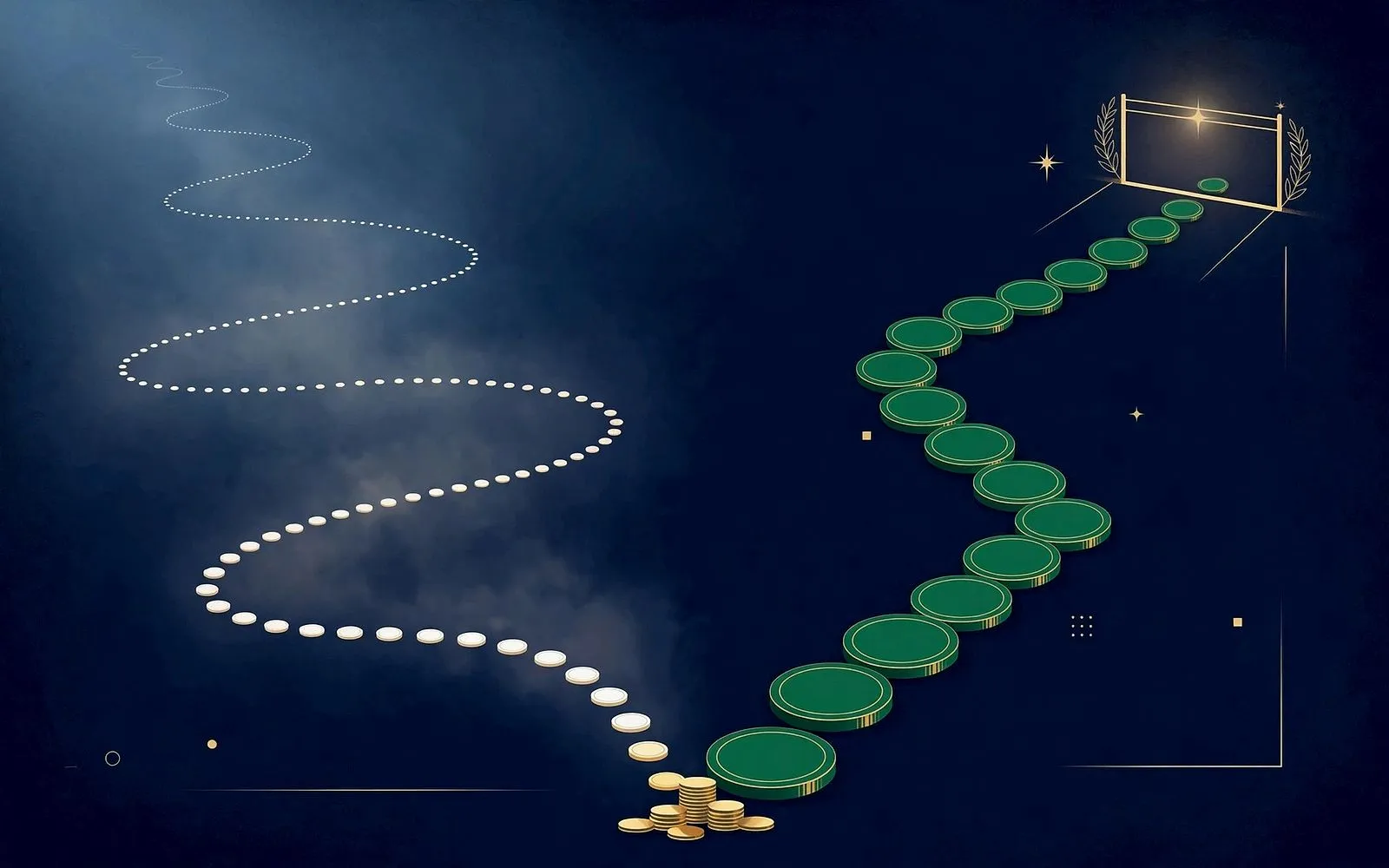
One pays the minimum and is still in debt two decades later. The other pays a fixed $200 and is free in under three years. Same debt, same rate, same starting point.
Where they are five years later
The video asks where the two payers are after five years. Here's the answer on our example:
| Minimum-only payer | Fixed-$200 payer | |
|---|---|---|
| After 1 year | Owes ~$4,422; $1,040 in interest paid | Owes ~$3,561; $961 in interest paid |
| After 5 years | Owes ~$2,706; $4,131 in interest paid | Debt-free since month 34; $1,750 total interest |
| Total timeline | ~19 years, $7,964 interest | 34 months, $1,750 interest |
| Total paid | ~$12,964 | ~$6,750 |
At the five-year mark, the minimum payer has paid over $4,100 in interest and still owes more than half the original debt. The $200 payer finished the whole thing nearly two years earlier. That gap — roughly $2,700 still owed versus zero — is the viral video's "five years later" made concrete.
Why minimums keep you in debt for so long
Three mechanics do the damage:
- The payment shrinks with the balance. Unlike a fixed loan payment, the minimum follows the balance down, so you're always paying just a little more than the interest. There's no acceleration.
- Early payments are almost all interest. At 22% on $5,000, the first month's interest alone is about $92. Of the first ~$142 payment, two-thirds never touches the principal.
- Interest compounds daily. Issuers convert your APR into a daily rate (APR ÷ 365) applied to your average daily balance — so yesterday's unpaid interest becomes part of today's balance.
The minimum is a compliance feature, not a plan. Issuers set it low enough that almost anyone can pay it. That's good for avoiding late fees — and terrible as a payoff strategy. Never confuse "what keeps the account current" with "what gets me out of debt."
Four moves that beat the minimum
1. Fix your payment above the first minimum
Take whatever the statement asks for this month, add whatever you can — even $50 — and pay that fixed amount every month. The example above shows the scale of the win: locking in the payment is the single biggest lever because it stops the minimum from shrinking.
2. Stop the balance from growing
The math above assumes no new purchases. Every new charge at 22% resets the clock you were trying to beat. While you're paying down, the card is a payment tool, not a credit line — spend only what you can clear in full.
3. Pick a payoff order and stick to it
If you carry multiple balances, two proven orders work: avalanche (highest rate first — mathematically cheapest) or snowball (smallest balance first — fastest psychological win). The difference between them is smaller than the difference between either one and paying minimums.
4. Lower the rate you're fighting
Options, in rough order of effort: call your issuer and ask for a rate reduction (a meaningful share of cardholders who ask get one); move the balance to a 0% introductory balance-transfer card — but only if you have a payoff plan inside the promo window, because the deferred interest and transfer fees can bite; or consolidate with a lower-rate personal loan, which converts shrinking minimums into a fixed payoff date.
A note for UK readers
The CARD Act box is a US requirement, but the mechanics are universal. UK minimums are also typically a small percentage of the balance (often around 2–3%) plus interest, or a flat few pounds — whichever is higher. The shrinking-payment math punishes minimum-only payers exactly the same way, and the same fix applies: fix your monthly payment above the minimum and don't let it shrink.
Frequently asked questions
Is paying only the minimum ever the right move?
As a strategy, no. As an emergency measure for a month or two — say, to keep the account current during a cash crunch — yes, it's far better than missing a payment, which adds late fees and damages your credit. Just don't let it become the plan.
Where do I find my real payoff timeline?
On your statement: the minimum payment warning box (US) or your online account's repayment estimator. It will show the months-to-payoff and total interest at your current minimum — numbers most people find sobering.
Does paying the minimum hurt my credit score?
Paying the minimum keeps you "current," which protects your payment history. But a high balance keeps your credit utilization high, which can weigh on your score. Paying more lowers utilization faster — which is one reason the $200 payer's score would typically recover much sooner.
What if I can't afford more than the minimum right now?
Then the minimum is your lifeline — pay it on time, every time. In parallel, call your issuer: hardship programs, temporary rate reductions, and payment plans exist and are used more often than people think. And revisit your budget for even $25–$50 a month extra; small fixed additions compound in your favor.
Key takeaways
- A $5,000 balance at 22% takes ~19 years and $7,964 in interest on minimum payments alone — versus 34 months and $1,750 at a fixed $200/month.
- Minimums are designed to shrink with the balance, so your payment never accelerates. Fix your payment above the first minimum instead.
- Your statement already discloses the minimum-payment timeline (US CARD Act box) — read it before deciding your payment.
- The biggest wins, in order: stop adding to the balance, fix a higher payment, pick avalanche or snowball, then attack the rate itself.
The bottom line
The viral video got the shape of the truth right: five years in, the minimum payer is still more than halfway underwater while the other payer has been free for years. But the mechanism matters more than the meme. Minimums aren't neutral — they're structured so that the least you can pay keeps you paying the longest. Decide your payment on purpose, fix it in place, and let the math work for you instead of your issuer.
Sources
The MoneyHabit editorial desk researches, writes and reviews every article against our editorial policy.
The Sunday Habit
One useful money idea, every week.
A short, practical email every Sunday — no spam, no selling your address, unsubscribe anytime.
Advertisement
More in Debt & Credit Education

Debt & Credit Education · Guide
Micro-Payments: The Daily Debt Trick Going Viral
Creators are paying off debt a few dollars at a time and posting every payment. Here's how micro-payments work and when the maths helps.
17 November 2026 · 10 min read

Debt & Credit Education · Guide
Only Paying the Minimum? The Real Cost in Numbers
Two surveys this month show half of cardholders stuck on minimum payments. We ran the numbers on what minimum-only payments really cost.
22 October 2026 · 7 min read
Debt & Credit Education · Explainer
Cash App Borrow Explained: Fees, Limits, Real Cost
A viral reel jokes that Cash App wants its money back. Here is what Borrow really costs, who can get it, and what happens if you do not repay.
19 November 2026 · 10 min read