Guide
SEC's $37M Fake Crypto Platforms: How to Spot One
The SEC says eight fake advisers and crypto platforms took $37.4M from 1,500 investors. Here's the five-minute check that exposes a fake platform.
In this article
On November 19, 2026, the U.S. Securities and Exchange Commission charged eight Colorado-based entities with running a fraud that took more than $37 million from over 1,500 American investors. The advisers were fake. The crypto trading platforms were fake. The crypto assets investors believed they were buying never existed.
What makes this case worth your attention is not just the size of the loss. It is how the operators made themselves look legitimate: they showed victims fake SEC certificates, pointed doubters to real filings on the SEC's own systems, and rotated through four different adviser-and-platform pairings over nearly two years. If you invest online or trade crypto, the five-minute check at the end of this guide is the single most useful thing you can learn today.
What the SEC says happened
According to the SEC's complaint, filed in the U.S. District Court for the District of Colorado (case no. 1:26-cv-06302), the scheme ran from at least August 2024 through May 2026. Eight entities, likely operated by people overseas, worked in four adviser-and-platform pairs. Each pair operated for roughly six months before the operators abandoned it and moved on to the next one.
| Period | Purported adviser | Purported platform | Money taken |
|---|---|---|---|
| Aug–Dec 2024 | Advisor WeChat Capital | Tech Brokerage Asset Alliance Ltd. | At least $7.3 million |
| Jan–Jul 2025 | HB Wealth Advisors | IdeaCrypto Exchange LLC | At least $13.6 million |
| Jul–Dec 2025 | Convergent Wealth Advisors Inc. | RealSimple Crypto Exchange Inc. | At least $10.4 million |
| Jan–May 2026 | Associated Wealth Advisors Ltd. | Essential Crypto Exchange | At least $4.2 million |
The SEC puts the total at $37,445,800: about $35.5 million in cryptocurrency deposits to four wallet addresses the defendants controlled, plus about $1.9 million in fiat payments. The average loss works out to roughly $25,000 per investor — but averages hide the worst cases. The complaint describes one investor who lost about $1.6 million, including their house and an individual retirement account.
All eight entities face charges under Section 10(b) of the Securities Exchange Act and Rule 10b-5, with additional charges under the Investment Advisers Act for the four purported advisers. The SEC is seeking permanent injunctions, disgorgement of ill-gotten gains with prejudgment interest, and civil penalties. No individual operator is named in the complaint, and these are allegations in a civil case — they have not been proven in court.
How the trap worked, step by step
The scheme followed a repeatable playbook. Understanding the sequence matters, because each step on its own can look plausible — it is the combination that gives the fraud away.
- The ad. Social media advertisements promised expert investment help and directed people who clicked into WhatsApp group chats and private chats controlled by the operators.
- The warm-up. People in the chats, claiming to be associated with an investment adviser, first gave advice on trading U.S. stocks. This built trust: the advice was free, the conversation felt personal, and nothing was asked for yet.
- The escalation. Once trust was established, the advisers urged victims to sell assets — including stocks, 401(k) holdings, retirement savings, and even real property — and send as much money as possible to a supposed crypto trading platform.
- The funding detour. Victims were typically told to fund an account at a known, legitimate U.S. crypto platform, buy assets such as ETH, USDT or USDC, move them into a personal wallet, and then transfer them to a wallet address the operators supplied. The fake platform then displayed the transferred balance — and invented gains.
- The vanishing act. The crypto assets investors thought they were buying did not exist. When a pair had run for a few months, the operators moved on to the next adviser-and-platform combination and started again.
The funding detour in step four is the detail to remember. Because victims bought their crypto on a real exchange first, the transaction felt normal. The theft happened at the moment the crypto left the victim's own wallet for an address controlled by strangers.
The cleverest trick: real paperwork, fake legitimacy
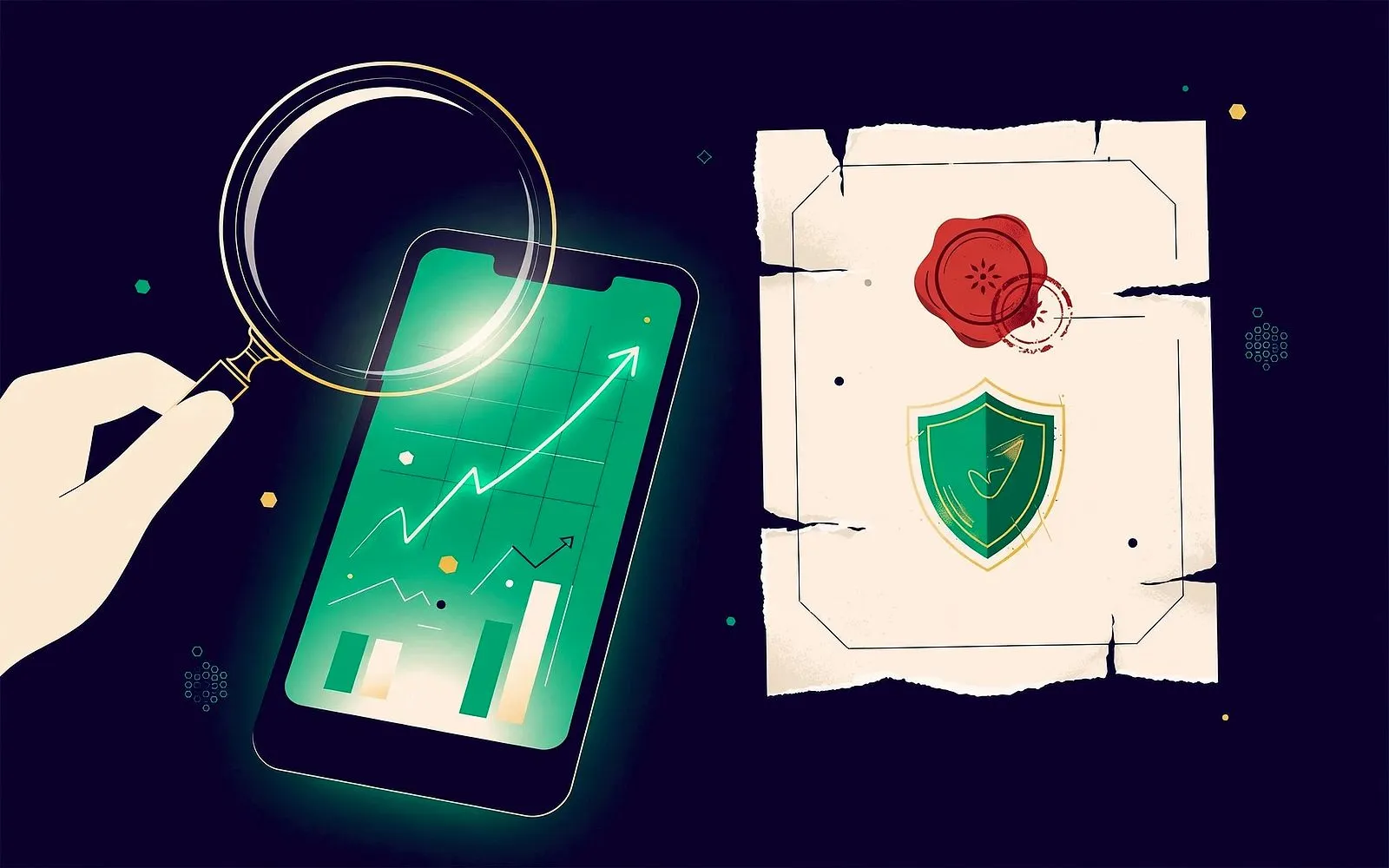
Most investment scams rely on urgency and secrecy. This one added something more sophisticated: paperwork. When investors grew suspicious, the operators showed them fake SEC certificates and pointed them to real filings — a Form D filed by Tech Brokerage Asset Alliance, and Forms ADV filed by Convergent Wealth Advisors and Essential Crypto Exchange. The filings existed on SEC systems. They carried no regulatory approval, but to a doubtful investor they looked like proof.
That is the lesson the SEC wants the public to take from this case. A filing is not an endorsement. EDGAR, the SEC's filing database, accepts filings from entities that are not approved, licensed, or vetted in any way. A Form ADV is a disclosure document an adviser files; its existence says nothing about whether the adviser is honest, competent, or even real. The SEC has since removed the Form D and both Forms ADV from its website.
"The SEC continues to seek out and expose fraudulent investment scams that prey on U.S. investors."
— Laura D'Allaird, Chief of the SEC Enforcement Division's Cyber and Emerging Technologies Unit
The rule to remember: a certificate, a filing, or a registration number proves that a piece of paper exists. It does not prove that the person showing it to you is who they claim to be. The only check that matters is the one you run yourself, on the regulator's own website, using the name and number you typed in — never a link someone sent you.
Seven red flags this scheme used
Every one of these appeared in the SEC's account of the case. Any single flag is a reason to stop; two or more is a reason to walk away entirely.
- Recruited through a social media ad into a WhatsApp or Telegram chat. Legitimate advisers do not prospect clients through anonymous group chats. The SEC has issued investor alerts specifically warning that fraudsters use group chats to lure investors.
- Advice starts free, then turns into pressure to move money. Real advisers discuss your goals and fees before asking you to move a dollar. Scammers build rapport first and create urgency later.
- You are told to sell retirement savings or property to invest. Being urged to cash out a 401(k) or sell a house to buy crypto is an extreme red flag on its own.
- You must send crypto to a wallet address someone gave you in a chat. Once crypto leaves your wallet, the transfer is effectively irreversible. No legitimate platform asks you to send funds to an address handed out in a messaging app.
- The platform shows profits you cannot withdraw. A dashboard that only ever goes up, combined with delays, fees, or new conditions when you try to take money out, is the classic shape of a fake platform.
- Proof of legitimacy arrives as a screenshot or a PDF. Certificates, licences, and filings sent to you by the person you are checking are worthless as evidence. Check the regulator's database yourself.
- The firm keeps changing its name. Four adviser-platform pairs in 21 months is not a business pivoting. It is an operation discarding identities as complaints accumulate.
The five-minute check before you trust anyone
The SEC's own guidance is blunt: check the background of anyone offering or selling you an investment, even if a friend or family member recommended them. The checks are free, and the person you are checking is not notified. Here is the sequence, in order.
- Ask for the CRD number. Every registered investment professional and firm carries a unique Central Registration Depository (CRD) number. A registered professional knows theirs and will give it without hesitation. Refusal or confusion is itself an answer.
- Search Investor.gov. The SEC's free search tool at investor.gov directs you to the Investment Adviser Public Disclosure (IAPD) website, where you can confirm whether the person or firm is currently registered, who regulates them, and whether they have any disciplinary history. You can also go directly to adviserinfo.sec.gov and search by name or CRD number.
- Check FINRA BrokerCheck too. If the person is or was a broker, BrokerCheck shows employment history, exams passed, customer complaints, and regulatory events. IAPD and BrokerCheck redirect to each other when needed.
- Read the Form ADV. A real adviser's Form ADV brochure is public on IAPD. It lists fees, conflicts of interest, and business practices. If the firm cannot be found on IAPD at all, there is no registration to rely on.
- Confirm with your state regulator. Smaller advisers are regulated by states, not the SEC. Your state securities regulator can confirm registration and may hold information beyond what IAPD shows.
One more check, specific to crypto: a money services business registration with FinCEN is a filing, not a licence and not an endorsement. The operators in this case made filings with FinCEN as part of their cover. A registration number on a website proves as little as a certificate in a PDF.
If you have already sent money: stop sending more, even if the platform says a final payment will unlock your withdrawal. That is the standard recovery-fee trap. Save every screenshot, chat log, wallet address, and transaction hash. Then report it — the SEC's online portal, the FBI's Internet Crime Complaint Center (IC3), and the FTC's ReportFraud site all accept reports from the public. Recovery is rare once crypto has been transferred, which is exactly why the five-minute check matters more than any step after the fact.
What to do if you have been targeted
If a chat, ad, or "adviser" has already contacted you, do not argue with them and do not try to test the platform with a small deposit — small deposits are how the trap is set. Block the contact, keep the evidence, and report the scheme. Reports help regulators connect cases: the SEC noted assistance from regulators in Hong Kong, Singapore, mainland China, and Switzerland in this investigation, and the pattern only becomes visible when victims speak up.
| What they showed victims | What it actually proves |
|---|---|
| A certificate with the SEC's name on it | Nothing — the SEC says the certificates were fake |
| A Form ADV or Form D on SEC systems | Only that a filing was made; filings are not approvals |
| A FinCEN registration | Only that a form was filed; it is not a licence or an endorsement |
| A platform dashboard showing gains | Nothing — the balances and gains were invented |
| A Colorado business registration | Only that an entity was formed; anyone can register a company |
| A listing on IAPD or BrokerCheck, found by you | Real evidence — registration, history, and disclosures you verified yourself |
In the UK, the equivalent checks are the FCA's Firm Checker and its Warning List of unauthorised firms. If a firm is not on the FCA Register, you will not be covered by the Financial Ombudsman Service if things go wrong — and if you sent money to a fraudster on or after 7 October 2024, ask your bank about the reimbursement protections introduced by the Payment Systems Regulator.
As of November 20, 2026, the case is a newly filed civil complaint. There is no judgment, no finding of fraud, and no distribution plan for victims. Anyone promising to recover your money from this scheme for an upfront fee is almost certainly running a second scam on top of the first.
Frequently asked questions
Has the fraud in this case been proven?
No. The SEC filed a civil complaint, and the allegations have not been tested in court. The eight entities are charged, no individuals are named as defendants, and there is no judgment yet. What is established is that the SEC brought the case and the filings the operators relied on have since been removed from the SEC's website.
Does an SEC filing mean a firm is approved or safe?
No. EDGAR accepts filings without approving the filer. A Form D or Form ADV proves a document was submitted, not that the business behind it is legitimate. The SEC's press release makes exactly this point: the operators used filings to feign legitimacy. The check that counts is a live search on Investor.gov or IAPD, done by you.
Can victims of this scheme get their money back?
Probably not, or not much. The SEC is seeking disgorgement of ill-gotten gains, but there is no distribution plan yet and the complaint seeks no asset freeze. Crypto sent to a scammer's wallet is effectively unrecoverable. That is why prevention — the five-minute check — is the whole game.
How is this different from a legitimate crypto exchange?
A legitimate exchange is a registered, findable business: you can verify its registration, withdraw funds, and contact real support through channels you found yourself. In this scheme, the platforms existed only as apps and websites the operators controlled, the assets shown on screen never existed, and every route in ran through a private chat.
I was contacted by an adviser on WhatsApp. What should I do?
Do not send money, do not send crypto, and do not share personal documents. Ask for the adviser's full legal name and CRD number, then check it yourself on Investor.gov. If there is no record, or the name does not match, stop there and report the contact to the SEC and the FBI's IC3.
Key takeaways
- The SEC charged eight entities on November 19, 2026, alleging they took $37.4 million from more than 1,500 investors through four rotating pairs of fake advisers and fake crypto platforms.
- Victims were recruited through social media ads into WhatsApp chats, advised on stocks first, then pushed to sell assets and send crypto to wallet addresses the operators controlled.
- The operators used fake SEC certificates and pointed doubters to real SEC filings — but a filing is not an approval, and the SEC has since removed those filings.
- Before trusting anyone with your money, search their name and CRD number yourself on Investor.gov or IAPD, check FINRA BrokerCheck, and read their Form ADV.
- Once crypto leaves your wallet for a stranger's address, it is effectively gone. The five-minute check is the protection — there is no reliable recovery afterwards.
The bottom line
This case is a reminder that the most dangerous scams are not the ones that look shady. Four polished identities, real filings, plausible stock advice, and a working-looking trading platform carried this operation for nearly two years and $37 million. The defence is not suspicion of everything — it is one specific habit: never trust a credential you were handed. Look the person up yourself, on the regulator's own site, before a single dollar moves. It takes five minutes, it costs nothing, and in this case it would have been enough.
Sources
- SEC press release: Eight Entities Used Fake Crypto Asset Trading Platforms
- SEC complaint, SEC v. Advisor WeChat Capital et al. (PDF)
- Cointelegraph: SEC Charges Eight Firms over Fake Crypto Platforms
- Bitcoin Magazine: SEC Charges 8 Firms in $37M Fake Crypto Scam
- TechTimes: SEC Charges Eight Entities Over Fake Crypto Platforms
- DaveFinances: SEC Sues Eight Fake Crypto Firms over $37.4M Fraud
- Investor.gov: Financial Professionals – Background Checks
- SEC Investor Bulletin: How to Check Out Your Investment Professional
- FCA Warning List of unauthorised firms
The MoneyHabit editorial desk researches, writes and reviews every article against our editorial policy.
The Sunday Habit
One useful money idea, every week.
A short, practical email every Sunday — no spam, no selling your address, unsubscribe anytime.
Advertisement
More in Financial Literacy

Financial Literacy · Guide
Viral Money Hoaxes: How to Spot a Fake Bank Notice
Two fake currency claims went viral in India this week, and both were debunked. The pattern behind money hoaxes — and a 5-minute check that stops them.
4 November 2026 · 8 min read

Financial Literacy · Guide
Cut Your Hospital Bill in Half With One Phone Call
One phone call can cut a hospital bill in half. Here is the exact script, the charity-care rule most people miss, and what to do if the hospital says no.
21 November 2026 · 11 min read
Financial Literacy · Guide
How to Read Your Bank Statement: Spot Errors Fast
Your bank statement is a monthly report card for your money. Learn to read every section, check the maths, and catch errors before the 60-day deadline passes.
20 November 2026 · 12 min read