Guide
Your Two Biggest Bills Eat 60% of Your Pay — Now What?
Rent and a car payment can swallow 60% of a paycheck before groceries. Here's how to find your real number — and the three levers that actually move it.
In this article
This week, the most honest budgeting post on the internet wasn't a spreadsheet or a savings challenge. It was a screenshot of a real monthly budget — and the maths in it made a lot of people uncomfortable.
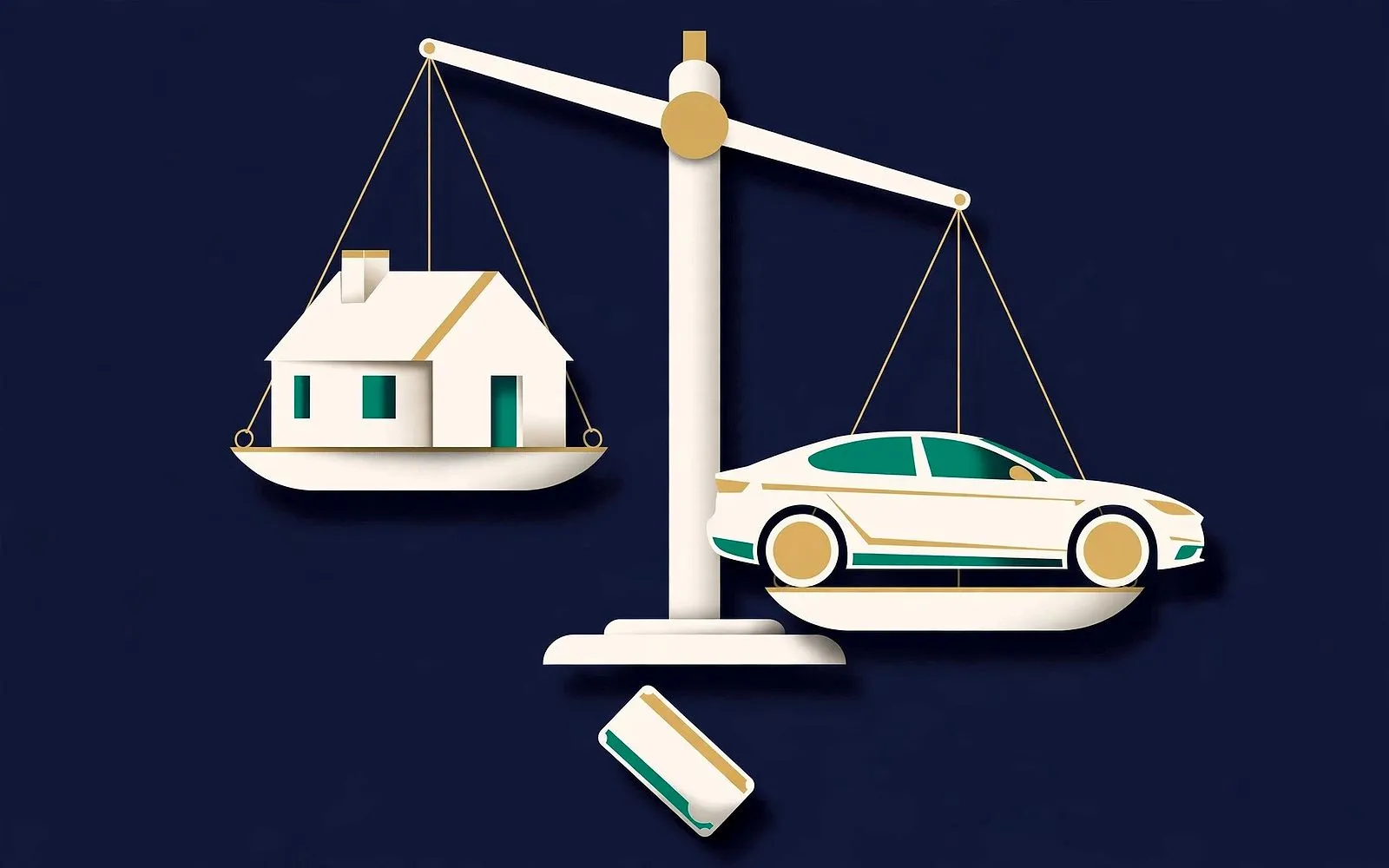
Financial educator Anthony O'Neal posted a sample budget on Instagram on 3 November: $4,000 a month in take-home pay, $3,780 in bills, $220 left over. His caption cut straight to the point: rent ($1,500) plus the car payment ($520) plus insurance ($210) plus petrol ($180) comes to $2,410 — about 60% of the paycheque. "One flat tire and the month is gone," one slide reads. And the fix, he argued, isn't cancelling a streaming subscription. "Cutting subscriptions or eating out won't fix a 60% problem."
The post landed in the middle of a wider "budget with me" wave — creators filming themselves splitting real paycheques line by line, from a doctor breaking down a $13,535 gross pay period to a creator budgeting $2,779.80 while in debt. The videos work because they show the same thing O'Neal's carousel shows: for most people, the budget isn't being wrecked by lattes. It's being eaten by two lines — housing and transport — before anything else gets a look in.
The maths behind the 60% problem
Here's O'Neal's budget, line by line:
| Line | Monthly cost | Share of $4,000 take-home |
|---|---|---|
| Rent | $1,500 | 37.5% |
| Car payment | $520 | 13% |
| Car insurance | $210 | 5.25% |
| Petrol | $180 | 4.5% |
| Groceries | $600 | 15% |
| Utilities | $260 | 6.5% |
| Phone and internet | $170 | 4.25% |
| Student loan | $280 | 7% |
| Subscriptions | $60 | 1.5% |
| Total | $3,780 | 94.5% |
Rent and the car payment alone take just over half the paycheque. Add insurance and fuel and the four "keep a roof over your head and get to work" lines reach 60%. That leaves 40% for food, utilities, phone, debt, subscriptions — and everything else life throws at you. The $220 that's left is the entire margin: one flat tyre, one parking ticket, one annual gym fee appearing out of nowhere, and the month is underwater.
Notice what the famous 50/30/20 rule would say about this budget. The rule caps "needs" at 50% of take-home pay. Here, needs alone are running at roughly 90%. The rule isn't wrong — it's just describing a budget that no longer exists for millions of households. When two fixed costs eat 60%, no amount of cleverness in the remaining 40% closes the gap.
This isn't a willpower problem
It's tempting to read a budget like this as a personal failure. The national data says otherwise.
On housing, Harvard University's Joint Center for Housing Studies reported in its America's Rental Housing 2026 study that a record 22.7 million renter households — nearly half of all renters — spent more than 30% of their income on rent and utilities in 2024, the standard definition of "cost burdened." 12.1 million spent more than half. The median renter now spends 31% of income on rent and utilities, up from 27% in 2001. For renters earning under $30,000 a year, the median household had just $210 left each month after housing costs — a 60% drop since 2001.
On cars, Edmunds' Q3 2026 financing data shows the average new-car payment hit a record $787 a month, on an average amount financed of $44,664 at 7.0% APR. The average buyer will pay $9,938 in interest over the life of the loan, and a quarter of new-car loans now run 84 months or longer. More than one in five financed buyers (21.2%) now pays $1,000 or more a month. And the payment is only part of it: AAA's 2026 Your Driving Costs study puts the total cost of owning and running a new car at $12,863 a year — about $1,072 a month — once fuel, insurance, maintenance and depreciation are counted.
When rent and a car payment take 60% of your pay, the problem isn't your coffee habit. It's the size of the two biggest lines — and those are the only lines big enough to fix it.
That is why the "cancel your subscriptions" advice feels so hollow to people living this budget. O'Neal's sample household spends $60 a month on subscriptions — 1.5% of take-home. Cancelling every single one frees $720 a year. Useful, but it doesn't change the shape of the budget. Dropping the car payment by $150 a month frees $1,800 a year. The maths is not close.
Find your real number in two minutes
Before changing anything, calculate the figure O'Neal calls "your real number":
- Add up your rent or mortgage, car payment, car insurance and fuel (or transit pass). Include nothing else.
- Divide that total by your monthly take-home pay — what actually lands in your account, not your gross salary.
- Multiply by 100. That's your percentage.
The bands: Under 50% — your fixed costs leave room to save and absorb surprises. 50–60% — tight; one shock can break the month, so a small buffer matters more than extra savings. Over 60% — structural; no amount of trimming small spending will fix it, and the levers below are the ones that count.
Do the same exercise with housing alone. The long-standing affordability benchmark is 30% of gross income on housing costs. If your rent alone is over 40% of take-home pay, housing — not spending — is the problem to solve first.
The three levers that actually move it
When two lines eat 60%, only three levers are big enough to matter. In order of impact:
1. Shrink the housing line
This is the hardest lever and the most powerful one, because rent is usually the single biggest line in the budget. Options worth pricing honestly: a roommate or housemate (often the single biggest saving available to a renter), moving to a cheaper area or smaller place when the lease ends, or negotiating with your landlord — a renewal at the same rent is a real saving when market rents are rising. In the UK, the average private rent was £1,400 a month in August 2026 according to the ONS, up 3.8% in a year, and private renters in England now spend about 36% of their gross income on rent, per Generation Rent's analysis of ONS data. If moving isn't possible, treat the lease end date as a deadline: start looking three months early, when you still have leverage.
2. Shrink the transport line
The car is usually the second-biggest line — and the one people overpay for most often. A $787 average payment is not a law of nature; it's the result of a $44,664 loan stretched over nearly six years. Before your next car, price the total cost, not the monthly payment: a cheaper car bought outright, or a shorter loan on a used car, can cut the payment by $150–$300 a month. If you already have the loan, check whether refinancing at a lower rate helps — but only if it doesn't stretch the term. And run the numbers on going car-free or car-lite: in many cities, a transit pass plus occasional rideshare costs less than a payment, insurance and fuel combined.
Don't "fix" a high payment by stretching the loan. Extending a car loan from 60 to 84 months lowers the monthly payment but adds thousands in interest — Edmunds' average buyer already pays $9,938 in interest — and leaves you owing money on a car that's worth less than the loan. A lower payment that costs more overall is not a saving.
3. Grow the denominator
The other two levers shrink the numerator. This one grows the number you divide by. A raise, a second income stream, overtime, or a skills move that lifts your pay by 10% does more for a 60% budget than a year of skipping takeaways: on $4,000 of take-home, a 10% lift is $400 a month — more than the entire subscriptions line, six times over. That's also why the "budget with me" creators keep coming back to income: when fixed costs are structural, earning more is often the honest answer, not a cop-out.
What to do this week
- Calculate your real number using the two-minute exercise above. Write it down; it's the figure every other decision should be judged against.
- Audit the two big lines, not the small ones. Check your lease end date and your car loan's remaining term, rate and balance. Know exactly when each one can change.
- Price one alternative for each. One cheaper housing option and one cheaper transport option, with real numbers. Even if you don't act now, you'll know what the saving is worth.
- Build a $500 "flat tyre fund" before anything else. When the margin is $220 a month, a small buffer that stops one surprise becoming debt matters more than an extra $50 into investments.
- Stop grading yourself on the small stuff. A $60 subscriptions line is 1.5% of the budget. Spend your budgeting energy where the money actually is.
Frequently asked questions
Is 60% on housing and transport really that bad?
It's a warning sign, not a verdict. It means there's almost no slack: the median renter household earning under $30,000 has just $210 left after housing alone, per Harvard's housing centre. At 60%+, the priority is a buffer and a plan to move one of the two big lines — not guilt about small spending.
Does the 50/30/20 rule still work?
As a target, yes; as a description of many real budgets, no. If your needs already exceed 50%, the rule tells you the budget is out of balance — it doesn't tell you to cut food to make the percentages fit. Use it to diagnose, then fix the biggest lines first.
Should I sell my car to fix the budget?
Only if the maths works after counting everything: the payment, insurance, fuel and maintenance you're giving up, minus what replacement transport actually costs. Check whether you're upside down on the loan first — Edmunds found 29.6% of trade-ins in Q2 2026 had negative equity, owing $6,884 more than the car was worth on average. Selling while upside down can mean paying off a loan on a car you no longer own.
What if I can't move or change cars right now?
Then the levers are time and income: build the small buffer first, set a date for the next decision point (lease renewal, loan payoff), and put your energy into the denominator — a raise, extra hours, or a skill that lifts pay. A budget with a plan beats a budget with only cuts.
Key takeaways
- Rent plus a car payment can eat 60% of a paycheque before anything else is paid — and the viral "budget with me" wave is showing the maths in public.
- Nearly half of US renters are cost-burdened, and the average new-car payment is a record $787 a month. This is structural, not a willpower failure.
- Your real number is (rent + car + insurance + fuel) ÷ take-home pay. Over 60% means the fix has to come from the big lines, not the small ones.
- Three levers matter: cheaper housing, cheaper transport, and a bigger paycheque. Stretching a car loan to lower the payment is not one of them.
- When the margin is thin, a small "flat tyre fund" matters more than optimising the last $60 of subscriptions.
The budget that went viral this week didn't go viral because it was shocking. It went viral because it was familiar. If your two biggest bills take 60% of your pay, you don't have a spending problem — you have a fixed-costs problem. Name the number, price the alternatives, and put your energy where the money actually is.
Sources
- Anthony O'Neal — Instagram budget carousel, 3 Nov 2026
- Edmunds — New-Car Financing Records Pile Up in Q3 2026
- NLIHC — JCHS America's Rental Housing 2026 findings
- AAA 2026 Your Driving Costs (via Jairo Oliva)
- ONS average UK private rent, August 2026 (via My Easy Calculator)
- Generation Rent — Renters lose over four months of pay a year
- USA Today — Why a $1,000 car payment is a bad idea
The MoneyHabit editorial desk researches, writes and reviews every article against our editorial policy.
The Sunday Habit
One useful money idea, every week.
A short, practical email every Sunday — no spam, no selling your address, unsubscribe anytime.
Advertisement
More in Budgeting & Saving

Budgeting & Saving · Explainer
I Bonds Now Pay 5.51%: Should You Buy One?
I Bonds issued from November 1 earn 5.51% with a fixed rate at a 20-year high of 1.40%. Here's how they work, who they suit, and the timing trick to buy smart.
31 October 2026 · 7 min read

Budgeting & Saving · Guide
Sinking Funds for Irregular Bills: The Quarterly Calendar
Car insurance, Christmas and car repairs aren't surprises — they're predictable bills that arrive in lumps. A sinking fund turns each into a monthly transfer.
11 November 2026 · 12 min read
Budgeting & Saving · Guide
The Cash-Flow Calendar: Time Your Bills to Your Paydays
Most budgets fail on timing, not totals. A cash-flow calendar lines every bill up with a payday — build yours in 30 minutes and stop the end-of-month scramble.
7 November 2026 · 13 min read