Guide
PayPal Will Pay You Two Days Early: How It Works
PayPal has teamed up with Workday and Paychex to pay workers up to two days early. Here is who qualifies, how it works, and the catches to check first.
In this article
- What PayPal just announced
- How getting paid two days early actually works
- Who can use it — and who cannot yet
- What happens to your money once it lands
- The maths: what two days early is really worth
- PayPal vs the early-pay apps you already know
- The protection gap: read this before you switch
- Should you switch your direct deposit to PayPal?
- What about UK workers?
- Frequently asked questions
- Key takeaways
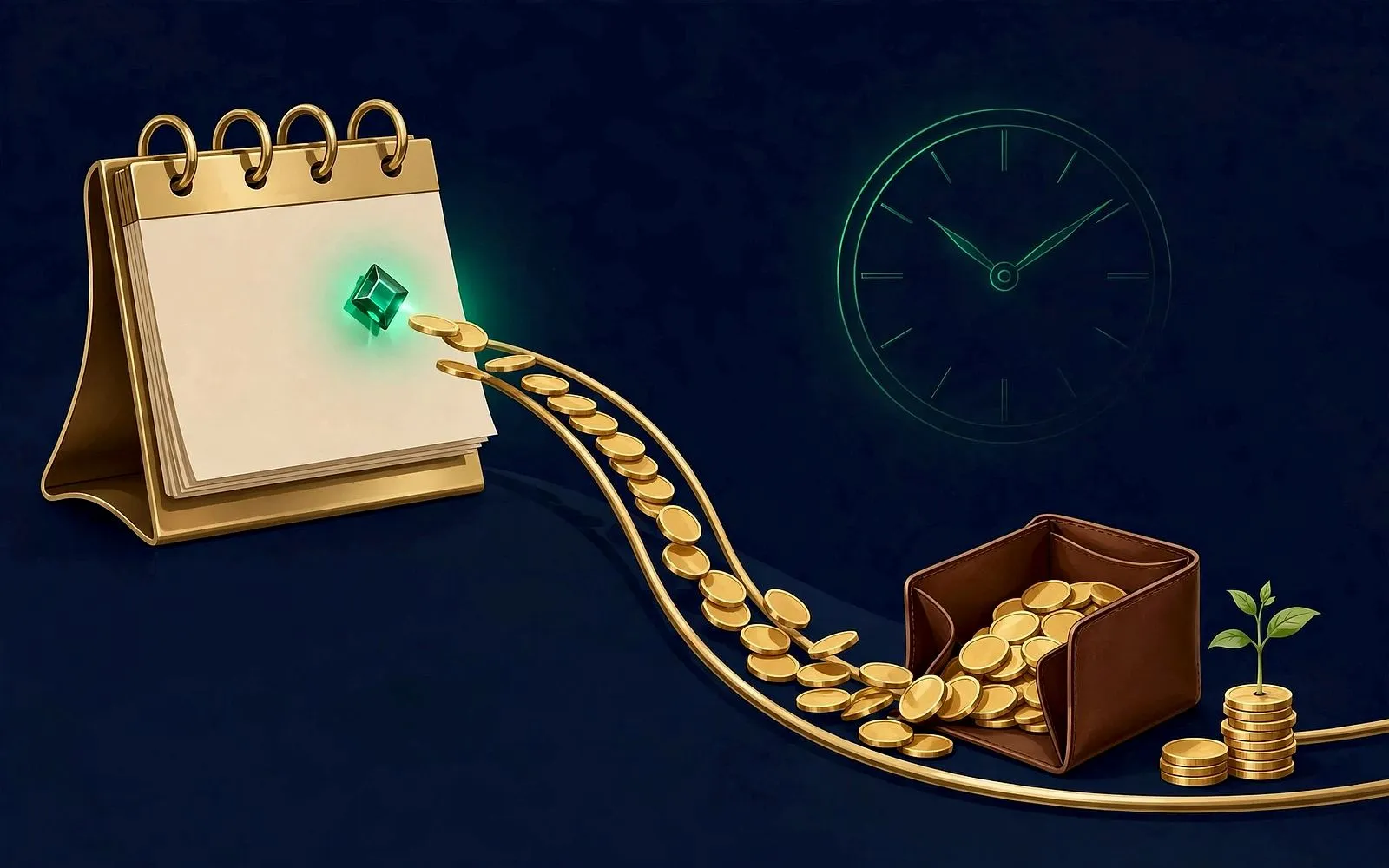
PayPal wants to be where your paycheck lands. On 12 November 2026 the payments giant announced a partnership with Workday that lets employees at participating US employers route their salary straight into a PayPal Balance account — and get it up to two days before their scheduled payday. A second deal, with payroll provider Paychex, followed within days, offering the same early-pay option to small-business workers.
Early pay is not new — Chime and Cash App have offered it for years — but this is the first time it has arrived inside the payroll systems millions of Americans already use at work. The question is not whether two days early sounds good. It does. The question is whether routing your salary through PayPal, rather than a bank, is a good trade.
What PayPal just announced
PayPal Direct Deposit is now an option inside Workday's Enhanced Direct Deposit (EDD) programme. Employees at participating Workday US Payroll customers can pick PayPal as their direct deposit destination in the same payroll portal where they would normally enter a bank account. There is no separate enrolment form and no routing number to type in: PayPal connects through Workday's EDD Switch, so the details populate automatically.
Once set up, employees get pay up to two days early, landing in a PayPal Balance account. From there it can be sent to friends and family, spent at merchants that accept PayPal, or moved into PayPal Savings. Holders of the PayPal Debit Mastercard can earn 5% back on up to $1,000 of spending a month in a category they choose. PayPal says the feature is live now for employees at participating employers, with no added cost or setup work for the employer. The Paychex deal extends the same arrangement to small-business workers.
How getting paid two days early actually works
The mechanism is the same at PayPal, Chime and Cash App. Normally your employer sends a payment file to its bank a day or two before payday, and the money is held until the scheduled date. An early-pay provider releases the money as soon as the file arrives instead of waiting.
That makes "up to two days early" a ceiling, not a promise. PayPal's own footnote says early access depends on payer availability and on when PayPal receives the payment instructions from Workday. If your employer sends its payroll file late, your pay arrives on the normal day.
Two days early is a ceiling, not a promise. The money is released when your employer's payment file arrives — if the file is late, payday is payday.
Who can use it — and who cannot yet
Eligibility is narrower than the headlines suggest. The Workday integration is available only to employees of participating Workday US Payroll customers — your employer has to be a Workday customer, and it has to have the option switched on. The Paychex version is available to employees of Paychex clients through Flex Perks. If your employer uses a different payroll provider, there is nothing to sign up for yet.
You also need a PayPal account with a PayPal Balance account, which is the account type that can hold and use a balance. PayPal is pitching the feature partly at the roughly 5.6 million US households without a bank account, per FDIC data cited in the Paychex announcement.
What happens to your money once it lands
Send it on. Money in your PayPal Balance can be sent to friends and family instantly — splitting rent or repaying a friend without waiting for a bank transfer to clear.
Save it. Pay can be moved into PayPal Savings, a high-yield savings account provided by Synchrony Bank, with no fees or minimum balance. One independent guide put the variable annual percentage yield at 3.50% as of January 2026; rates move, so check the current figure in the app.
Spend it. The balance works at the tens of millions of merchants that accept PayPal, and the PayPal Debit Mastercard — issued by The Bancorp Bank — pays 5% back on up to $1,000 of spending a month in a chosen category: $50 a month at most.
Move it out. A standard transfer from PayPal to your bank account is free and takes one to three business days. An instant transfer costs 1.75% of the amount, with a $0.25 minimum and a $25 maximum. On a $500 transfer that is $8.75; on $2,000 it is $25, because the 1.75% fee would otherwise be $35 and the cap kicks in at $1,428.57.
The maths: what two days early is really worth
Two days early does not mean two days' extra pay — you get the same salary, just sooner. The value is timing: bills that would otherwise be late get paid on time, and the gap between paydays shortens. A PYMNTS Intelligence survey found that 54% of "labor economy" workers had needed money before payday for an essential expense within the previous 90 days, and 16% had faced that at least four times. On a biweekly schedule, two days early on every paycheck adds up to 52 days a year when your money is in your hands sooner (our calculation: 26 paydays × 2 days). For a household that lives close to payday, that can be the difference between an overdraft fee and none.
But the benefit only holds if the money stays usable. If you route your salary to PayPal and then pay 1.75% every payday to move it instantly to your bank, a $2,000 paycheck costs $25 a time, or $650 a year (our calculation: 26 × $25). That wipes out the point of early pay entirely.
Rule of thumb: pick one home for your pay — spend and save inside PayPal, or use the free standard transfer. Paying 1.75% every payday turns early pay into a subscription you did not sign up for.
PayPal vs the early-pay apps you already know
Early pay has been a standard feature of app-based banking for years; the differences now are about what surrounds the paycheck rather than the early pay itself.
| Provider | Early pay | What holds your money | Savings rate (variable) |
|---|---|---|---|
| PayPal Direct Deposit | Up to 2 days early | PayPal Balance (fintech, not a bank) | PayPal Savings ~3.50% APY (Jan 2026) |
| Chime | Up to 2 days early | The Bancorp Bank / Stride Bank (FDIC members) | 1.00% standard; up to 4.00% top tier (Oct 2026) |
| Cash App | Up to 2 days early | Sutton Bank / Wells Fargo (FDIC members) | 1.5% base; up to 3.25% Green tier (Aug 2026) |
The important column is the middle one. Chime and Cash App sit on FDIC-insured partner banks. PayPal is a financial technology company, not a bank — and that has a concrete consequence for your money.
The protection gap: read this before you switch
Money in a bank account is covered by FDIC insurance up to $250,000 if the bank fails. Money in a PayPal Balance is not automatically covered the same way — the single most important thing to understand before routing your salary there.
Here is the nuance. PayPal can place eligible US dollar balances in pooled custodial accounts at its programme banks — currently Goldman Sachs Bank USA, Wells Fargo and JPMorgan Chase — where the funds become eligible for pass-through FDIC insurance up to $250,000 per depositor, per bank. But a balance only qualifies if you have done at least one of three things: opened a PayPal Debit Card account, enrolled in Direct Deposit, or bought or received cryptocurrency through your PayPal Balance account. Enrolling in Direct Deposit is one of the triggers, so a salary routed to PayPal should qualify — but the protection covers the failure of the programme bank holding the funds, not the failure of PayPal itself. PayPal Savings is different and simpler: the money is held directly at Synchrony Bank, an FDIC member, and is eligible for FDIC insurance up to $250,000. That is the safest place inside PayPal to park money you do not need immediately.
Do not treat your PayPal Balance like a bank account. It is a fintech balance with conditional, pass-through protection — not a deposit at an FDIC-insured bank. Keep your emergency fund in an FDIC-insured bank or in PayPal Savings at Synchrony Bank, and keep only spending money in the Balance itself.
Should you switch your direct deposit to PayPal?
It depends on what you already have. Work through this checklist before changing anything.
- You are paid by cheque or prepaid card today. Switching is likely an upgrade: faster access, a debit card, and a savings option with no fees or minimums.
- Your bank already pays you up to two days early. There is little to gain from switching.
- You live paycheck to paycheck. The two-day head start is genuinely useful — but only if you avoid the instant-transfer fee.
- You want the 5% debit-card category. It is worth up to $50 a month, but only on $1,000 of spending in one chosen category.
- Your side income already lands in PayPal. Consolidating your salary there simplifies your money life — but keep the emergency fund somewhere FDIC-insured.
Whatever you decide, do not switch on the first payday before a big bill is due. Run one normal pay cycle first and watch when the money actually lands.
What about UK workers?
This launch is US-only: it applies to employees of participating Workday US Payroll customers and Paychex clients. PayPal has announced no equivalent for the UK, where salaries are normally paid by Bacs and arrive on the scheduled day, and where "get paid early" features come instead from employer earned-wage-access schemes such as Wagestream. If you are paid in the UK, this changes nothing for your next payday.
Frequently asked questions
Is PayPal Direct Deposit free?
Setting it up and receiving your pay costs nothing, and a standard transfer to your bank is free. The only charge to watch is the instant transfer: 1.75% of the amount, with a $0.25 minimum and a $25 maximum.
Will every paycheck arrive two days early?
No. Early access depends on when your employer sends the payroll file and when PayPal receives the payment instructions. If the file is late, your pay arrives on the normal payday. Treat "up to two days early" as the best case, not a guarantee.
Is my money FDIC-insured in PayPal?
It depends where it sits. Money in PayPal Savings is held at Synchrony Bank and is eligible for FDIC insurance up to $250,000. A PayPal Balance becomes eligible for pass-through FDIC insurance once you enrol in Direct Deposit, and that protection covers a programme bank failing — not PayPal itself.
Do I have to close my bank account to use it?
No. You can keep your bank account, spend from your PayPal Balance, and move money to your bank with a free standard transfer when you need it there.
Key takeaways
- PayPal Direct Deposit, announced 12 November 2026, lets employees at participating Workday and Paychex employers get paid up to two days early — live now in the US.
- Early pay is released when your employer's payroll file arrives, so it is "up to" two days, not a guarantee.
- The extras — PayPal Savings and 5% back on up to $1,000 a month with the debit card — matter more than the two days alone.
- Never pay the 1.75% instant-transfer fee every payday: on a $2,000 salary that is $25 a time, or $650 a year.
- Keep your emergency fund FDIC-insured — in a bank or in PayPal Savings at Synchrony Bank — not sitting in a PayPal Balance.
Early pay is moving from challenger apps into the payroll systems employers already run. For everyone else, the protection gap and the transfer fees decide whether it is worth it. Check whether your employer offers it, run one pay cycle to see the real timing, and keep your safety-net money where the insurance is unconditional.
Sources
- PayPal Newsroom — PayPal Partners With Workday
- PR Newswire — PayPal Partners With Workday
- PYMNTS — PayPal Pursues Paycheck Deposits Through Workday
- LegalClarity — Is PayPal Insured? FDIC Coverage for Your Balance
- The College Investor — Best Banks for Early Direct Deposit 2026
- FeeCalcPro — PayPal Fees Explained (2026)
- MarketWireNews — Paychex and PayPal Team Up on Direct Deposit
The MoneyHabit editorial desk researches, writes and reviews every article against our editorial policy.
The Sunday Habit
One useful money idea, every week.
A short, practical email every Sunday — no spam, no selling your address, unsubscribe anytime.
Advertisement
More in Financial Technology
Financial Technology · Explainer
Pay Government Bills in Crypto? Dubai & Miami Say Yes
Dubai will let you pay government fees in crypto, and Miami-Dade now takes Bitcoin for property tax. What's actually live — and the tax catch.
17 November 2026 · 10 min read

Financial Technology · Explainer
Thailand Now Lets Tourists Pay With Crypto
Thailand’s new WORPT app lets foreign tourists convert USDT or USDC into baht and pay by QR code — no Thai bank account needed. How it works and what it costs.
13 November 2026 · 8 min read
Financial Technology · Explainer
PayPal's Surcharge Ban May Be Illegal in Germany
Germany's competition watchdog says PayPal's ban on merchant surcharges may break the law. Here's what it means for shoppers, sellers, and your checkout.
13 November 2026 · 8 min read