Explainer
Direct Debit vs Standing Order: Which to Use When
Direct debits and standing orders both automate your bills, but they work in opposite directions — and the wrong choice can cost you fees and protection.
In this article
- The one-question test: who is in charge?
- Direct debit vs standing order at a glance
- The Direct Debit Guarantee: the strongest protection in UK banking
- When to use a direct debit
- When to use a standing order
- What happens when the money is not there
- The third option: recurring card payments
- How the US does it: ACH debit vs bill-pay
- Setting up your payments properly: a five-step audit
- Five mistakes that cost real money
- Frequently asked questions
- Key takeaways
Your rent, your energy bill, your gym membership and your savings transfer can all leave your account without you lifting a finger — but the mechanism behind each one matters more than most people realise. Direct debits and standing orders look identical on a bank statement. They are not. One lets a company pull money from your account; the other lets you push a fixed amount out of it. Pick the wrong one for a bill that changes, and you can overpay, underpay, lose a refund right, or get charged for a payment that never happened.
The UK ran a record 5.03 billion direct debits in 2025, according to Pay.UK, and around 73% of household bills are collected this way. Standing orders are far smaller in number — 112.5 million transactions in 2024 — but they quietly move rent, savings and support payments for millions of people. Both are free to set up at most banks. The difference is control, and control decides which one belongs on each of your bills.
The one-question test: who is in charge?
Ask a single question about any automatic payment: who decides the amount?
With a direct debit, the company decides. You give a business — your energy supplier, insurer, council or gym — a mandate authorising it to collect money from your account on agreed dates. The amount can be fixed, like a £120 monthly insurance premium, or variable, like a gas bill that rises in winter. Before the company takes a different amount or changes the date, it must normally tell you at least ten working days in advance.
With a standing order, you decide. You instruct your own bank to send an exact amount to another account on a set date — weekly, monthly or quarterly. The amount never changes unless you change it. The recipient cannot raise it, lower it or take it early. You can set an end date, a fixed number of payments, or leave it running until you cancel it.
That is the whole distinction, and everything else follows from it.
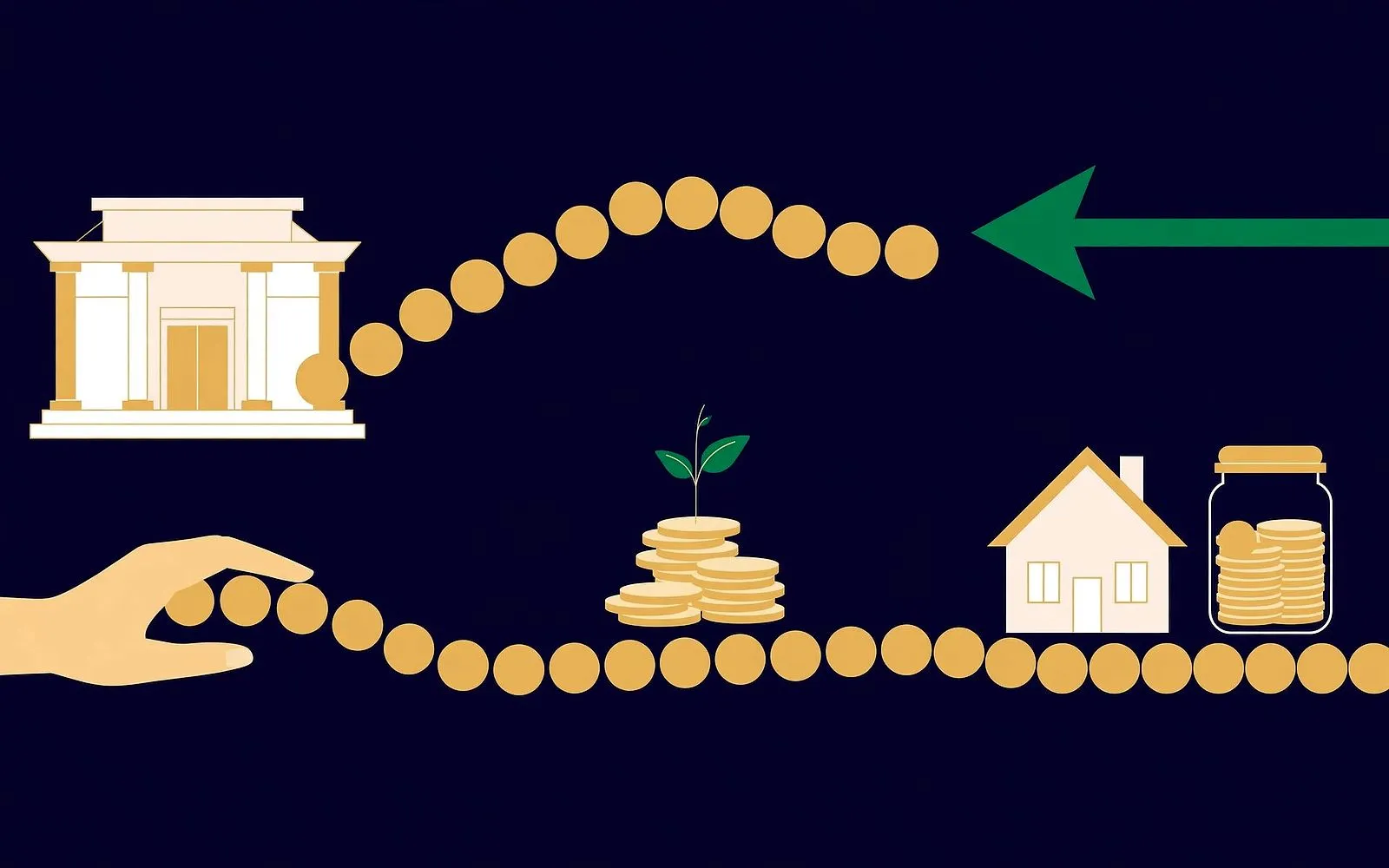
Direct debit is a pull: the company reaches in. A standing order is a push: you send it out. The protection, the failure mode and the right use for each all follow from that one difference.
Direct debit vs standing order at a glance
| Direct debit | Standing order | |
|---|---|---|
| Who controls the amount? | The company (with advance notice) | You — fixed until you change it |
| Amount | Fixed or variable | Fixed only |
| Who sets it up? | The company, using your mandate | You, through your bank or app |
| Payment system | Bacs — three working-day cycle | Usually Faster Payments — same day |
| Protection | Direct Debit Guarantee: full, immediate refund for errors | None — a wrong payment is hard to recover |
| If funds are short | Payment can bounce; bank may charge £5–£25, and the company may add its own fee | Payment simply does not go through |
| Cancelling | Tell your bank (and the company) — your bank must act | Cancel in your app; no one else needs telling |
| Best for | Bills that change: energy, water, council tax, credit cards, insurance | Fixed payments: rent, savings, regular donations, family support |
The Direct Debit Guarantee: the strongest protection in UK banking
Every UK direct debit carries the Direct Debit Guarantee, a set of rules run by Pay.UK that makes the bank — not you — responsible when something goes wrong. Its core promise is simple: if the company or your bank makes an error in a direct debit payment, you are entitled to a full and immediate refund from your bank.
In practice that covers three situations. The company takes the wrong amount. It takes money on the wrong date. Or it takes money after you cancelled the mandate. In each case you claim from your bank, and the refund is immediate — you do not have to argue with the company first or wait for an investigation. The guarantee does not cover a dispute about the goods or service themselves, or a company going bust; those are separate problems with separate routes.
The guarantee has a second, quieter benefit. Because the company must give you advance notice of any change — normally ten working days — a direct debit cannot silently take more than you expected. If the notice never arrives, the collection itself is an error, and the guarantee applies.
Standing orders have no equivalent. If you send a standing order to the wrong account, for the wrong amount, or after you meant to stop it, your bank is under no obligation to refund you. Recovery depends on the receiving bank's goodwill and the recipient's cooperation. That is why the first rule of standing orders is simple: only send them to people and accounts you trust.
When to use a direct debit
Use a direct debit whenever the amount can change and the bill must be paid in full. That covers most household bills:
- Energy and water — usage varies by season, and the supplier adjusts the collection. A standing order here is a trap: send £150 a month against a £190 winter bill and you fall behind; send £150 against a £120 summer bill and you overpay for months.
- Council tax — the amount changes annually, and the council collects it. Many councils also offer a small discount or a spread of instalments for direct debit payers.
- Credit card minimum payments — a direct debit for at least the minimum protects your credit record from a missed-payment mark. MoneyHelper notes that paying by direct debit avoids late fines and penalties.
- Insurance premiums and phone contracts — the provider may adjust the amount at renewal, and the guarantee protects you if it takes the wrong figure.
- Subscriptions that change price — a gym or streaming service that raises its price must notify you first, and the new amount is collected automatically.
There is a timing detail worth knowing. Direct debits run on Bacs, which follows a fixed three-working-day cycle: the company submits the collection, Bacs processes it, and the money leaves your account on the third day. If a payment date falls on a weekend or bank holiday, the money is normally taken the next working day. That is why a direct debit set up today will not collect tomorrow — allow a few working days, and do not cancel a mandate the day before a collection is due.
When to use a standing order
Use a standing order whenever you want to control the exact amount and the recipient never needs to vary it:
- Rent — fixed, monthly, and yours to control. If your rent changes, you amend the order yourself. A landlord cannot take more than the agreed rent, and you can cancel the moment the tenancy ends.
- Paying yourself first — a standing order moving money to a savings account on payday is the classic automation habit: the money leaves before you can spend it, at an amount you chose.
- Regular donations — a fixed monthly gift to a charity or a family member, where you want the amount to stay exactly as you set it.
- Moving money between your own accounts — for example, sweeping a fixed amount from a current account into a savings account at another bank each month.
Standing orders are also the right tool when the recipient is a person rather than a company. You would not give a landlord or a relative a direct debit mandate — that would hand them the power to vary the amount. A standing order keeps the power with you.
The rent trap: never pay rent by direct debit. A direct debit lets the recipient change the amount with ten days' notice. Rent should always be a standing order — fixed, controlled by you, and cancellable in your app the day you move out.
What happens when the money is not there
Both methods need enough money in your account on the payment date, and both fail without it — but they fail differently, and the costs differ.
A failed direct debit can be expensive. If your bank refuses the collection, it may charge you — typically £5 to £25 — and the company may add its own late-payment or administration fee on top. A missed credit card or loan payment can also be marked on your credit file. There is, however, a safety net many people miss: under the Bacs retry process, you have until at least 2pm on the payment day to put funds into the account and have the payment retried the same day. Many banks will also contact you when a payment fails, giving you time to cover it. If your bank does not offer a retry, consider switching to one that does.
A failed standing order is usually cheaper but still damaging. The payment simply does not go through, and most banks do not charge for a failed standing order. The damage is indirect: your rent is late, your savings transfer never happens, or a donation misses its month — and the recipient may charge you a late fee of their own. Because standing orders carry no error notification, a failed one can go unnoticed for weeks. Check your standing orders monthly, the same way you check your direct debits.
Do not ignore a failed payment. A bounced direct debit on a credit card or loan can be recorded on your credit file within days, and a lapsed insurance premium can leave you uninsured. If a payment fails, pay the amount manually the same day and check whether a fee was charged — then ask your bank whether it can be waived as a first occurrence.
The third option: recurring card payments
There is a third automatic payment that people often confuse with a direct debit: the recurring card payment, also called a continuous payment authority. This is what happens when you give a company your debit or credit card number for a subscription — Netflix, a gym, a magazine. The company charges your card on a schedule, and the payment runs on the card network rather than through your bank account.
The practical difference is fragility. A recurring card payment stops the moment your card expires, is lost, or is replaced — and then the subscription fails until you update the details. A direct debit survives card replacements entirely, because it sits at the bank-account level. Recurring card payments also carry no Direct Debit Guarantee; your rights come from card scheme rules instead, which are weaker for bank-account errors.
MoneyHelper's advice is to know which of the three you have set up for each regular payment, because cancelling them works differently: a direct debit is cancelled through your bank, a standing order through your bank, and a recurring card payment through the company — though your bank must also stop one if you ask it to. If a subscription keeps charging after you thought you had cancelled it, check whether it was a card payment rather than a direct debit.
How the US does it: ACH debit vs bill-pay
The UK distinction has an American twin, and the logic is identical. In the US, the Automated Clearing House (ACH) network moves money between bank accounts — 35.2 billion payments worth $93 trillion in 2025, according to Nacha, the network's rule-maker.
- ACH debit is the direct debit: you authorise a company to pull money from your checking account — the electric company, the insurer, the card issuer. Under Regulation E, that authorisation must be in writing (or electronically signed), and the company must give you written notice if the amount varies.
- Recurring bill-pay is the standing order: you instruct your own bank to push a fixed payment to a company on a schedule. You control the amount and the date; the company cannot change either.
The Consumer Financial Protection Bureau draws the same line MoneyHelper draws in the UK: with automatic payments you give permission to the company to take money; with recurring bill-pay you give permission to your bank to send it. US protections differ in the details — there is no equivalent of the Direct Debit Guarantee, and dispute rights depend on whether the payment ran through ACH or a card network — but the decision rule is the same. Variable bill, company pulls. Fixed payment, you push.
Setting up your payments properly: a five-step audit
Most people's automatic payments accumulate over years — a gym here, a charity there, an old energy supplier still collecting. A twenty-minute audit once a year is enough to catch the expensive mistakes.
- List every automatic payment. Open your banking app and list every direct debit, standing order and recurring card payment. Most apps show them on one screen now.
- Match each one to the right method. Any bill that varies — energy, water, credit card, insurance — should be a direct debit. Any fixed payment you control — rent, savings, donations — should be a standing order. Anything on a card that could be a direct debit probably should be.
- Check the amounts. Compare each direct debit with the last bill. A standing order that has not changed in two years while the bill has risen is a debt building quietly in the background.
- Cancel the dead ones. Old gym memberships, lapsed subscriptions and a previous supplier's mandate are the most common leaks. Cancelling a direct debit through your bank takes seconds, and your bank must act on it.
- Time them after payday. Schedule direct debits for a day or two after your salary lands, not the day before. The most common reason a direct debit fails is timing, not poverty — and the FCA has found that people who sign up to both a mobile banking app and text alerts see their unarranged overdraft charges fall by 24% in total.
Five mistakes that cost real money
- Paying a variable bill by standing order. The amount never adjusts, so you drift into arrears — or overpay for months without noticing.
- Paying rent by direct debit. You hand the landlord the power to vary the amount. Rent is a standing order, always.
- Forgetting a card payment when the card is replaced. Recurring card payments die with the old card. A direct debit does not.
- Cancelling with the company but not the bank. Telling a gym you are leaving does not always stop the mandate. Cancel the direct debit with your bank too, and check the next statement.
- Setting payment dates before payday. A direct debit due the day before your salary lands is a failed payment waiting to happen — plus a fee of £5 to £25.
Frequently asked questions
Can a company take more than I agreed with a direct debit?
Only with advance notice. The company must normally tell you at least ten working days before taking a different amount or changing the date. If it takes more without notice, that is an error under the Direct Debit Guarantee and your bank must refund you immediately.
Can I cancel a direct debit at any time?
Yes. You can cancel a direct debit through your bank at any time, and your bank must act on your instruction. Tell the company as well, so it does not chase you for a payment you have cancelled — but the cancellation itself is yours to make, unilaterally.
Is a standing order safer than a direct debit?
It depends on what "safer" means. A standing order is safer in one sense: nobody can take more than you set. A direct debit is safer in another: if anything goes wrong, the Direct Debit Guarantee gives you a full, immediate refund. For variable bills, the guarantee makes the direct debit the safer choice. For fixed payments to people, the standing order wins.
What happens if I switch banks?
Under the UK Current Account Switch Service, your direct debits and standing orders move to the new account automatically, and the switch is guaranteed within seven working days. If anything goes wrong with the transfer, the new bank must refund any charges or lost interest. In the US there is no equivalent automatic switch — you must set up each ACH authorisation and bill-pay instruction again at the new bank.
Do direct debits affect my credit score?
The payment method itself does not, but the outcome does. A direct debit that pays at least the minimum on a credit card or loan on time protects your record. A failed direct debit that leaves a payment missed can be reported to the credit reference agencies. A standing order that fails has the same effect — the missed payment is what matters, not how it was supposed to be made.
Key takeaways
- Direct debit is a pull: the company takes a fixed or variable amount, with ten working days' notice of changes — and the Direct Debit Guarantee gives you a full, immediate refund for any error.
- Standing order is a push: you send a fixed amount you control, with no guarantee — so use it only for fixed payments to people and accounts you trust.
- Variable bills (energy, water, council tax, credit cards) belong on direct debit; fixed payments (rent, savings, donations) belong on standing order.
- Recurring card payments are the fragile third option — they stop when your card is replaced, and they carry no Direct Debit Guarantee.
- A failed direct debit can cost £5–£25 plus the company's own fee, but the Bacs retry process gives you until at least 2pm on the day to top up and have it retried.
- Audit your automatic payments once a year, cancel the dead ones, and schedule collections for just after payday.
Neither method is better in the abstract — they are opposite tools for opposite jobs. The mistake is not choosing one over the other; it is using the same one for everything. Spend twenty minutes this week listing your automatic payments, and move each one to the method that matches how its amount behaves. The bills that vary go on direct debit, the payments that never change go on standing order, and the card subscriptions that keep failing go on direct debit too. Your future self — the one who never pays a £25 failed-payment fee — will be glad you did.
Sources
- MoneyHelper — Direct Debits and standing orders
- Pay.UK — Annual Report and Financial Statements 2024
- Interbacs — Bacs statistics 2025: record Direct Debits
- WeArePlanet — What is a Bacs payment?
- Hastee — Direct Debits and standing orders
- money.co.uk — What is a Direct Debit?
- LegalClarity — Recurring Payments vs Autopay
- LegalClarity — What Is the Difference Between ACH and Autopay?
- Anna.money — Standing Order vs Direct Debit
The MoneyHabit editorial desk researches, writes and reviews every article against our editorial policy.
The Sunday Habit
One useful money idea, every week.
A short, practical email every Sunday — no spam, no selling your address, unsubscribe anytime.
Advertisement
More in Financial Technology
Financial Technology · Explainer
Variable Recurring Payments: The Direct Debit Replacement
Commercial variable recurring payments went live in the UK in June 2026. Here is how they work, what they replace, and when to switch your bills over.
15 November 2026 · 10 min read

Financial Technology · Explainer
The Card-Freeze Button: When to Use It (and When Not To)
Your banking app's freeze button can stop a thief in seconds — but it won't stop subscriptions. Here's what it blocks, what slips through, and when to use it.
16 November 2026 · 10 min read

Financial Technology · News
Stripe's Parafin Deal: What It Means for Small Firms
Stripe closed its Parafin deal on 11 November, putting the credit engine behind DoorDash, Amazon and Gusto inside Stripe. Here's what changes.
19 November 2026 · 10 min read